Every parent knows the reflex: your baby goes quiet in the back seat, and you crane your neck to check on them at exactly the wrong moment. A baby car camera fixes that by putting a live view of the rear-facing seat on a screen up front, so a quick glance replaces a dangerous turn. The catch is that a fuzzy picture or a mount that shakes loose is worse than nothing. We analyzed thousands of verified buyer reviews, recent sales data, and expert evaluations to find six baby car cameras that stay put, stay clear, and actually let you see your child when the light is gone.
Every product we compared, in ranked order. Tap through to Amazon to check today's price, or jump to the full review below.
1
Babyvue BV6PRO
Best Overall
Babyvue BV6PRO Wireless Dual Car Camera
5.0
5.2-inch split screen · Dual wireless cameras · IR night vision
Our Best Overall pick: a wireless split-screen system that shows two rear car seats at once with no cables to route, from a brand recognized by Parents' Picks Awards for parent-first, safety-focused design.
The single-camera, fully wireless sibling to the BV6PRO above: a 5.2-inch display with a 92-degree view, 3x zoom and no cables to route between the front and back seat.
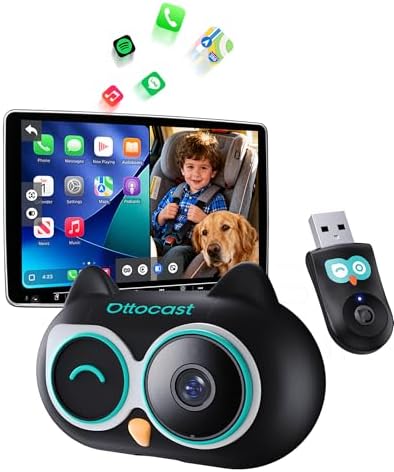
OTTOCAST Cabin Care Wireless CarPlay Adapter with Baby Camera
4.9
150-degree camera · Displays on car screen · CarPlay required
A different kind of product in this comparison: primarily a wireless Apple CarPlay adapter that adds a rear-seat baby camera as a bonus feature, displayed on your car's own touchscreen rather than a dedicated monitor.
WEMOH NO.1 Magnetic Baby Car Camera (White, Single Cam)
4.8
5-inch IPS screen · Magnetic snap mount · 940nm IR night vision
Our Best Affordable pick: the lowest-priced camera still available in this comparison, a single-camera monitor with a patent-pending magnetic mount that snaps the display on and off in about a second.
Our Best for Two Kids pick: a dual-camera split screen on the largest display here, 7.2 inches, with a 22-foot cable long enough to reach both back rows in SUVs and minivans.
5-inch IPS screen · Magnetic snap mount · Zoom/Mirror modes
A single-camera monitor built around a patent-pending magnetic mount - the screen snaps on and off a magnetic car-phone holder in about a second, with zoom and mirror viewing modes.
Short on time? These three cover most buyers: our Best Overall wireless Babyvue split-screen setup, the WEMOH NO.1 as the most affordable single-camera pick, and the Luckview BM5PRO for watching two kids on one big screen.
Baby Car Cameras 101: What They Do & How to Choose
Understand the category before you buy - what the science actually says, and which specs matter.
These devices look simple, but two things quietly separate a camera you trust from one you ignore: how well it sees in the dark, and how securely it holds on. Here is how they work, why night vision and the mount matter more than the spec sheet suggests, and the features worth comparing before you buy.
What does a baby car camera actually do?
A baby car camera aims at your rear-facing car seat and streams that view to a display near the driver, so you can keep your eyes forward and still see your child. It is a two-part system:
A camera that clips, straps, or snaps onto the back seat or headrest, pointed at the car seat.
A monitor up front, either a dedicated screen like the 5 inch LUCKVIEW BM1 or the 7.2 inch Luckview BM5PRO, or your car's own display, as with the OTTOCAST Cabin Care that runs through wired CarPlay.
Some models cover two kids at once. The Babyvue BV6PRO and the Luckview BM5PRO both use dual cameras with a split-screen view, so siblings each get their own window.
Night vision and the mount are what make it genuinely useful
Here is the part most shoppers miss. The two moments you most want to check on your baby are also the two hardest for a camera: at night, and under a pulled-down canopy in the daytime. The back seat is dark exactly when it matters, so infrared night vision is not a bonus feature, it is the whole point. Every camera in this lineup uses automatic IR that switches on in low light, and the better ones do it without a visible glow that would wake a sleeping child. The Luckview BM5PRO and the Babyvue BV6 advertise no visible glow, and the NO.1 Magnetic and the LUCKVIEW BM2A use 940nm and no-glow infrared respectively, wavelengths that stay invisible to the eye.
The second half is the mount, because a camera is only useful if it is pointed the right way and stays there. In a hard stop, a loosely attached camera can swing off target or, worse, become a projectile. The choices here range from suction cup and adhesive on the Babyvue BV6, to a magnetic snap on the NO.1 Magnetic, to headrest straps on the Luckview BM5PRO, OTTOCAST and LUCKVIEW BM2A. All install without tools in a few minutes, but a strap or clip that wraps the headrest tends to hold its aim better over bumps than a light adhesive pad.
Then there is power. Wired units like the Luckview BM5PRO, the NO.1 Magnetic and the LUCKVIEW BM2A draw from the car's own power and never die mid-trip, which matters on a long drive. Battery models like the Babyvue BV6 and BV6PRO are rechargeable and cordless, so they are far easier to move between cars. Pick wired for a single family car you never want to think about, and battery if the camera has to follow the child from one vehicle to another.
Which specs actually matter?
Night vision quality: Automatic IR is standard here, but look for no-glow or 940nm infrared, like the NO.1 Magnetic, so the light does not disturb a sleeping baby.
Mount type: No-tools mounts range from suction cup and adhesive to magnetic and headrest strap. A wrap-around strap or clip resists shaking loose better than a stick-on pad.
Power source: Wired 12V units, such as the Luckview BM5PRO, run indefinitely on a trip; rechargeable battery units, like the Babyvue pair, move between cars easily.
Screen and display: Dedicated monitors run from 5 to 7.2 inches, with the Luckview BM5PRO the largest. The OTTOCAST skips its own screen and shows the feed on your car's CarPlay display instead.
Field of view: Coverage spans 43 to 170 degrees here. A wider angle like the LUCKVIEW BM2A's 170 degrees captures more of the seat; a narrower one fills the frame with the child's face.
Single vs dual camera: One camera covers one seat. For two kids, the BV6PRO and BM5PRO run dual cameras on a split screen.
Zoom and mirror mode: Extras like 3x zoom or the NO.1's mirror mode help you frame a rear-facing seat, where the view is otherwise upside down or reversed.
How we grade products
Graded Picks rankings are aggregated from several independent signals: verified buyer ratings and the size of the review base for credibility, recent monthly purchase volume for relevance, assessments from trusted parenting and auto publications, and how each product places in leading category lineups. For baby car cameras we weigh:
Night vision clarity and no-glow behavior
Mount security and ease of a no-tools install
Wired reliability or battery convenience
Screen size and image quality
Field of view and framing control
Single or dual camera flexibility
Overall value for the price
Safety note: A baby car camera is a convenience, not a substitute for proper care. If your child needs attention, find a safe place and pull over rather than trying to help from the driver's seat. Never adjust, aim, or fuss with the camera or monitor while the car is moving, and set everything up before you start the trip.
In-Depth Reviews
Everything we learned from buyer reviews and expert testing, product by product.
Babyvue BV6PRO
Best Overall
1. Babyvue BV6PRO Wireless Dual Car Camera
5.0
Our Best Overall pick. The BV6PRO is Babyvue's flagship wireless model, feeding a genuine split-screen display from two separate cameras rather than cropping one wide lens. The wireless design means no cables crossing the dashboard or back seat, a cleaner install than the wired units in this comparison, though both cameras and the display carry their own rechargeable battery. A 5.2-inch screen with automatic infrared night vision and variable zoom keeps both car seats visible in low light, and the unit is rated to keep working across a wide temperature range for year-round use. Babyvue has been recognized by Parents' Picks Awards for pairing parent-first design with practical safety technology, ships the BV6PRO with a storage bag, and backs it with a 2-year warranty, longer than most rivals here.
Camera countDual camera, split screen
Screen size5.2 inches
Night visionAutomatic IR
ZoomVariable
Field of view43 degrees
Mount / powerClasp/strap mount, wireless (rechargeable)
Warranty2 years
Pros
Genuine dual-camera split screen for watching two car seats at once
Fully wireless - no cables crossing the dashboard or back seat
Babyvue is a Parents' Picks Awards-recognized brand for safety-focused design
Automatic infrared night vision for both cameras
2-year manufacturer warranty, longer than most rivals here
Cons
Wireless design means both cameras and the display need regular charging
43-degree field of view is narrower than some wired competitors
Costs more upfront than the single-camera and wired options in this comparison
Who is it for?
Parents of two children who want a clean, wireless dual-camera setup with no cable routing.
Who is it not for?
Anyone who wants a set-and-forget system with no charging to manage should consider a wired dual-camera model instead.
The BV6 is Babyvue's single-camera wireless model, built for parents who want the brand's award-recognized design and clear picture without the split-screen setup of the BV6PRO above. A 5.2-inch IPS display connects to the rear camera over a stable 2.4GHz direct link rather than WiFi, so there's no app, account or cloud dependency, and a 92-degree wide-angle lens keeps most of a rear-facing car seat in view. Automatic infrared night vision switches on without a visible glow as the cabin darkens, and 3x zoom lets you check smaller details like a buckle or pacifier. Because it's fully wireless, both the vacuum-suction-mounted camera and the display run on their own rechargeable battery - Babyvue rates the pack for about 9 hours of continuous use or roughly 14 days on standby, with a 5.5-hour recharge over USB. Babyvue backs it with a 12-month warranty, extendable to 18 months with product registration, and the same Parents' Picks Awards recognition the brand has earned for parent-first, safety-focused design applies here as it does across the lineup.
Camera countSingle camera
Screen size5.2 inches (IPS)
Night visionAutomatic IR, no visible glow
Zoom3x
Field of view92 degrees
Mount / powerSuction cup/adhesive mount, wireless (rechargeable)
Warranty12 months (18 months with registration)
Pros
Fully wireless single-camera setup with no cables to route front to back
92-degree wide-angle lens keeps most of the car seat in view
Automatic infrared night vision with no visible glow
Babyvue is a Parents' Picks Awards-recognized brand for safety-focused design
18-month warranty available with free product registration
Cons
Single camera only covers one car seat, not two
Both camera and display need their own charge since it's fully wireless
Limited independent professional coverage beyond brand-level recognition
Who is it for?
Parents who want a single, fully wireless camera with Babyvue's recognized design and no cables to route.
Who is it not for?
Parents watching two children at once should choose the dual-camera Babyvue BV6PRO above or the Luckview BM5PRO in this comparison instead.
3. OTTOCAST Cabin Care Wireless CarPlay Adapter with Baby Camera
4.9
Unlike every other product in this comparison, the Cabin Care's baby camera isn't the main feature - it's an add-on to a wireless Apple CarPlay adapter, and XDA Developers' review called the combination "the ultimate in-car baby monitor" specifically because the picture-in-picture camera view appears right on the car's existing infotainment screen rather than a separate display to mount. CarPlayLife's hands-on testing found the wireless CarPlay performance itself merely functional with noticeable input lag rather than best-in-class, but rated the camera integration as the feature that actually justifies buying it, and AndroidGuys covered it similarly as a CarPlay adapter with a genuinely useful monitoring bonus. The 1080p rear camera offers a 150-degree wide view with no-glow night vision and mounts via a headrest strap or rod clips. The hard requirement that limits who this works for: your vehicle needs to already support wired Apple CarPlay, and it does not work with Android Auto at all.
Camera countSingle camera
Screen sizeDisplays on car's own screen (CarPlay)
Night visionNo-glow IR
Field of view150 degrees
CompatibilityWired CarPlay required; no Android Auto
Mount / powerHeadrest strap or rod clips, USB-C powered
Warranty2 years
Pros
XDA Developers called the camera-plus-CarPlay combination the ultimate in-car baby monitor
Picture-in-picture camera view appears directly on your car's existing screen
150-degree wide view with no-glow night vision
Doubles as a wireless CarPlay adapter, not just a camera
Cons
Requires a vehicle that already supports wired Apple CarPlay - incompatible with Android Auto
CarPlayLife's testing found noticeable input lag compared to dedicated CarPlay-only adapters
Buyer sentiment on the combined device has been more mixed than the dedicated baby-camera products in this comparison
Who is it for?
Apple CarPlay owners who want a baby camera view built into their existing car screen instead of a separate monitor.
Who is it not for?
Android Auto users, or anyone who wants a dedicated baby monitor without any CarPlay dependency, should choose another product here instead.
4. WEMOH NO.1 Magnetic Baby Car Camera (White, Single Cam)
4.8
Our Best Affordable pick. The white single-cam NO.1 is the cheapest way into this comparison, and it uses WEMOH's patent-pending MagSnap design: a 5-inch 1080P IPS display that snaps onto a magnetic car-phone mount and pulls free in about a second, with 0.5x wide, 1x standard and 2x close-up zoom plus a mirror mode for framing a rear-facing seat correctly. It charges through a 4.5-meter USB-C cable, so check your car's port before ordering. Automatic 940nm infrared night vision switches on in low light without a visible glow, and WEMOH builds the housing from fire-resistant PC+ABS rated for cabin temperatures up to 158°F, backed by 24/7 support and a 24-month coverage period. Independent professional coverage of this specific listing is limited to the brand's own product materials and a single hands-on video.
Camera countSingle camera
Screen size5 inches (IPS, 1080P)
Night visionAutomatic IR (940nm)
Zoom0.5x-2x, plus mirror mode
Field of viewWide angle
Mount / powerMagnetic snap mount, wired 12V (USB-C cable)
Warranty24 months
Pros
Patent-pending magnetic snap mount lets you attach or remove the display in about a second
0.5x-2x zoom plus mirror mode for flexible framing of a rear-facing seat
Automatic 940nm infrared night vision with no visible glow
Fire-resistant PC+ABS housing rated for high cabin temperatures, with a 24-month coverage period
Cons
USB-C charging cable means it will not share a cord with older USB-A car chargers
Single camera only covers one car seat
Independent professional coverage is limited to brand materials and a single video review
Who is it for?
Budget-focused parents with one child to watch who want a quick-release magnetic mount at the lowest price here.
Who is it not for?
Parents watching two children at once, or anyone who specifically needs a USB-A cable to match an existing car charger, should look elsewhere in this comparison.
Our Best for Two Kids pick. The BM5PRO feeds a genuine split-screen display from two cameras, switching cleanly between single and combined views so you can watch both children at once, and its 7.2-inch screen is the largest in this comparison. An unusually long 22-foot (6.7m) cable reaches both rows in larger vehicles like SUVs and minivans, where routing to a second seat is the harder job, and Luckview says it fits 99% of vehicles. Automatic night vision uses soft infrared that reviewers describe as gentle enough not to disturb a sleeping child, and the adhesive mount is rated to hold in both hot and cold without residue. Because both cameras and the display are wired, there is no battery to manage, though the tradeoff is a longer initial cable-routing job than a wireless setup.
Camera countDual camera, split screen
Screen size7.2 inches
Night visionAutomatic IR, soft/non-disruptive
ZoomFixed wide angle
Field of view90 degrees
Mount / powerAdhesive mount, wired (22ft cable)
Warranty1 year
Pros
Lowest price of any dual-camera setup in this comparison
22-foot cable reaches both rear seats even in larger SUVs and minivans
Dual-camera split screen switches views without distortion
Soft automatic night vision designed not to disturb sleeping children
Adhesive mount rated to stay secure in hot and cold conditions
Cons
Wired dual-camera setup takes longer to route than a wireless system
90-degree field of view is narrower than the widest cameras in this comparison
1-year warranty is on the shorter end for this category
Who is it for?
Budget-focused parents of two children in larger vehicles who want the least expensive dual-camera system with enough cable length to reach both back rows.
Who is it not for?
Anyone who wants a quick wireless install should consider the Babyvue BV6PRO above instead.
WEMOH's MagSnap design solves a specific annoyance with fixed dash monitors: the 5-inch IPS display snaps onto a magnetic car-phone mount and can be pulled off and stashed in about a second when you don't need it. Adjustable brightness from 10-100% and a genuine 1080P IPS panel keep the wide-angle view sharp, and sensors switch automatically to 940nm infrared night vision in dim conditions without a visible light source. A zoom mode toggles between 0.5x wide, 1x standard and 2x close-up views, and a mirror mode flips the display for a more natural viewing angle depending on where it's mounted. It's a wired system that needs constant power from a 12V outlet or charger rather than a battery, and setup takes about 5 minutes with no tools. WEMOH backs it with a 24-month warranty and 24/7 customer support.
Camera countSingle camera
Screen size5 inches (IPS, 1080P)
Night visionAutomatic IR (940nm)
Zoom0.5x-2x, plus mirror mode
Field of viewWide angle
Mount / powerMagnetic snap mount, wired 12V
Warranty24 months
Pros
Magnetic mount lets you snap the display on and off in about a second
Genuine 1080P IPS panel with adjustable brightness from 10-100%
Zoom and mirror modes add viewing flexibility beyond a fixed angle
24-month warranty with 24/7 customer support
Cons
Wired design needs constant power - no battery-only operation
Single camera only covers one car seat
Requires a compatible magnetic phone mount base to get the quick-release benefit
Who is it for?
Parents who want to quickly attach or remove the display and like the flexibility of zoom and mirror viewing modes.
Who is it not for?
Anyone watching two children at once should choose one of the dual-camera models in this comparison instead.
The stars you see are the Graded Picks cumulative score, not a single retailer's average. It blends verified buyer reviews aggregated across major retailers, assessments from professional reviewers and expert testers, and how prominently the product features in leading category lineups.
Advertising Disclosure
Our rankings are compiled by aggregating several independent signals, including verified buyer feedback, how popular a product currently is with shoppers, and evaluations published by professional reviewers. Editorial opinions are our own.
Please note that we participate in affiliate marketing programs. When you purchase through links on our site, we may earn a commission. As an Amazon Associate we earn from qualifying purchases. This comes at no additional cost to you and helps support the resources required to provide valuable content.