A good bike rack turns your car into a trailhead shuttle, so the ride starts where the road ends instead of where you can cram a frame into the back seat. But the cheap strap-on models can rub your paint and wobble at highway speed, and a rack rated for regular bikes can buckle under a heavy e-bike. We analyzed thousands of verified buyer reviews, recent sales data, and expert evaluations to find eight bicycle car racks that hold your bikes securely and fit the way you actually drive.
Every product we compared, in ranked order. Tap through to Amazon to check today's price, or jump to the full review below.
1
Young Electric 2-Bike (B/S)
Best Overall6% OFF + 10% COUPON
Young Electric 2-Bike Hitch Rack with Ramp (Black with Silver)
5.0
2 e-bikes · 200 lbs (100 lbs/bike) · Ramp included
Our Best Overall pick: a ramp-equipped 2-bike hitch rack in a Black with Silver finish, pairing a frame-free tire-clamp system with a roll-up ramp so heavy e-bikes load without scratching or lifting, and it tops this lineup on the strength of its capacity, build and buyer feedback.
Young Electric's flagship ramp-equipped hitch rack pairs a built-in loading ramp with a frame-free tire-clamp system, letting you roll heavy e-bikes aboard instead of lifting them, and reviewers consistently describe the ride as rock-solid with no wobble.
Rockland's RokRack ebike line pairs an included ramp with an alloy steel and aluminum build, and the brand has built a reputation for durable, no-fuss racks with no-scratch padding at every contact point.
A platform-style 2-bike hitch rack with the same 100-lb-per-bike capacity as Young Electric's ramp-equipped models, in a simpler, quick-release tilting design with a universal hitch fit, at a lower price than the brand's ramp-equipped racks.
3 bikes · 35 lbs per bike · Fits 20% more vehicles
Our Best for Cars Without a Hitch pick: the extended-reach sibling to the standard Bones, engineered to fit roughly 20% more vehicle shapes with the same arced-arm design, and needs no hitch receiver at all.
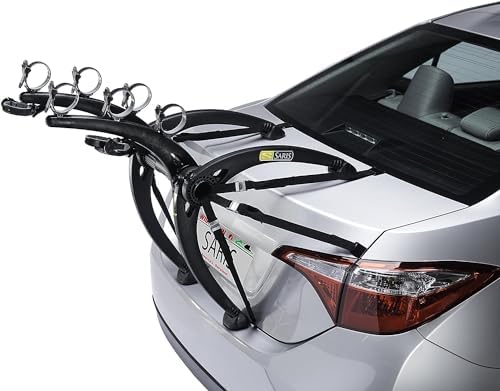
Saris' long-running flagship trunk rack needs no hitch at all, using arced arms that stagger bike heights and reduce handlebar interference, and it is one of the most widely covered racks in the category.
A steel 2-bike hitch rack that bundles a 46-inch ramp, a hitch tightener and keyed locks for both the hitch pin and the wheels, with tilt and fold for rear access, at a lighter 54 lbs than the heaviest e-bike racks here.
Our Best Affordable pick: CRINDAR's 2-bike platform pairs a tool-free tilting fold with a reinforced steel frame rated for fat tires up to 5 inches, at the lowest price in this comparison, backed by an above-average 2-year support warranty.
Short on time? These three cover most buyers: the Young Electric 2-Bike Hitch Rack with Ramp (Black/Silver) as our Best Overall pick, the Saris Bones EX as the best trunk rack for cars without a hitch, and the CRINDAR 2-Bike Rack as the most affordable option in the lineup.
Best Overall
Young Electric 2-Bike (B/S)
Young Electric 2-Bike Hitch Rack with Ramp (Black with Silver)
Bicycle Car Racks 101: Hitch, Trunk & Which One You Need
Understand the category before you buy - what the science actually says, and which specs matter.
Every rack promises to carry your bikes, but how it attaches to your car and how much weight it can truly hold will shape your whole experience. Here is how the main types work, why the mount decision comes first, and the specs actually worth comparing.
What does a bicycle car rack actually do?
A bike rack holds one or more bikes on the outside of your vehicle so you can drive to a ride without taking wheels off or filling your cabin. Depending on the design, it does this by:
Strapping to your trunk or hatch and cradling the bikes by their top tube
Sliding into a receiver hitch and either cradling the frames or supporting each bike by its wheels on a platform
Folding or tilting out of the way so you can still open the back of the car
The racks in this lineup split into two camps: trunk-strap carriers like the Saris Bones and Saris Bones EX, and hitch-mounted platforms like the Young Electric, Rockland RokRack, and CRINDAR models.
Start with the mount type, because it decides everything else
The single biggest choice is not brand or bike count. It is how the rack attaches to your car, and each option gives something up.
A hitch rack is the sturdiest of the bunch. It slides into a receiver hitch, carries the most bikes, and loads at roughly waist height so you are not hoisting anything overhead. The platform hitch racks here, like the Young Electric 2-bike and the Rockland RokRack, hold bikes by the wheels and barely sway. The catch is that your car needs a receiver hitch, and every hitch model here calls for a 2-inch receiver.
A trunk-strap rack is the budget-friendly, go-anywhere option. The Saris Bones models weigh about 12 pounds, fold flat for storage, and fit most vehicles with no hitch at all. The tradeoff is that the bikes sit against the back of the car, so the rack blocks your trunk and, if a strap loosens or a pad slips, can rub the paint.
A roof rack, the third common style, frees up the back of your car and keeps your plate and lights clear. The downside is height: it adds several feet to your vehicle, which fights low garages and drive-throughs, and lifting a bike overhead is a real chore. No roof models made this lineup, but the tradeoff is worth knowing as you shop.
Which specs actually matter?
Once you have picked a mount type, a few numbers decide which rack fits your bikes and your car:
Weight capacity per bike: This is the spec that matters most after mount type. Per-bike ratings here run from 35 pounds on the Saris trunk racks up to 100 pounds on the Young Electric hitch platforms. A heavy e-bike can easily exceed a standard rack's limit, so confirm the per-bike number, not just the total.
Total load capacity: Racks in this lineup carry from 105 pounds total up to 200 pounds. Add your bikes' real weights and stay under this ceiling, since the per-bike and total limits are both hard caps.
E-bike compatibility: If you ride electric, look for a rack built and rated for it. The Young Electric and Rockland platforms are made for e-bikes, several include a loading ramp, and they handle fat tires up to 5 inches wide.
Number of bikes: These racks carry from 2 bikes up to 4. Buy for the most bikes you will realistically haul at once.
Foldable or tilt for access: A rack that folds flat or tilts down lets you reach the trunk without unloading. Most hitch models here tilt for hatch access, and the Saris racks fold flat for storage.
Anti-sway and stability: Anti-sway straps, like those on the Saris Bones, and anti-rattle hitch hardware keep bikes from swinging into each other or the car on rough roads.
How we grade products
Graded Picks rankings are aggregated from several independent signals: verified buyer ratings and the size of the review base for credibility, recent monthly purchase volume for relevance, assessments from trusted cycling and auto publications, and how each product places in leading category lineups. For bicycle car racks we weigh:
Mount type and fit across common vehicles
Weight capacity, per bike and total
E-bike and fat-tire compatibility
Ease of loading and trunk access
Stability and anti-sway hardware
Build quality and warranty
Overall value for the price
Safety and loading note: Position the bikes and rack so they never block your license plate or brake and turn lights, since a covered plate or lights can get you pulled over and is unsafe in traffic. On any strap or hitch rack, pull over after the first few miles to re-check that every strap, cradle, and pin is still tight, then check again on long drives.
In-Depth Reviews
Everything we learned from buyer reviews and expert testing, product by product.
Young Electric 2-Bike (B/S)
Best Overall6% OFF + 10% COUPON
1. Young Electric 2-Bike Hitch Rack with Ramp (Black with Silver)
5.0
Our Best Overall pick in this comparison. This Young Electric hitch rack pairs a 200-lb-rated, 2-bike capacity with an integrated roll-up ramp and the same frame-free tire-clamp system that lets fat tires, step-thru frames and fenders load without frame contact or scratch risk. It mounts to a 2-inch receiver hitch, and reviewers of Young Electric's ramp-equipped lineup describe the loaded rack as stable with minimal wobble in transit. At 56 lbs it's noticeably lighter than some other ramp-equipped racks in this comparison, which makes it easier to lift onto and off the hitch solo. This particular listing carries a vehicle-specific fit rating rather than a universal one, so it's worth confirming hitch compatibility before ordering, but the combination of proven Young Electric ramp hardware, e-bike-ready capacity and strong buyer sentiment gives it the top spot in this comparison.
Bike capacity2 e-bikes
Load capacity200 lbs total (100 lbs per bike)
Mounting typeHitch mount, 2-inch receiver
FoldableYes
Item dimensions (packaged)51.18" x 20.47" x 6.3"
Item weight56 lbs
Warranty1 year
Pros
Ramp-equipped design lets heavy e-bikes roll aboard instead of being lifted
Frame-free tire-clamp system avoids scratch risk on fenders, fat tires and carbon frames
Lighter than several other ramp-equipped racks here at 56 lbs, easier to lift solo
Fits fat tires and e-bikes on a 2-inch hitch receiver
Cons
Vehicle-specific fit rating rather than a universal fit - confirm hitch compatibility with your vehicle before ordering
Ramp could be wider and deeper, echoing feedback across the Young Electric ramp lineup - a tire can walk off the edge if misaligned
Independent review coverage is thinner than some longstanding names in this category
Who is it for?
Buyers who want Young Electric's proven ramp-equipped hardware and e-bike capacity in a Black with Silver finish, and are comfortable confirming hitch fit for their specific vehicle.
Who is it not for?
Buyers who need the broadest possible vehicle-fit guarantee without checking compatibility first.
The 2-Bike Rack with Ramp is Young Electric's most complete answer to the problem every e-bike owner eventually hits: lifting 60-plus pounds onto a hitch tray. Its patent-pending tire-clamp system needs zero contact with the bike frame, so fenders, step-thru frames, fat tires up to 5 inches and carbon fiber bikes all load without scratch risk, and the integrated ramp lets you roll the bike up rather than hoist it. Reviewers covering Young Electric's hitch lineup describe the loaded rack as solid and stable with no wobble in transit, and the 90-degree fold clears trunk or tailgate access without removing the bikes. The most consistent critique is that the ramp itself could be a bit wider and deeper - it's possible for a tire to walk off the edge if you're not careful lining it up - and a handful of buyers found the included instructions harder to follow than the assembly itself warrants.
Bike capacity2 e-bikes
Load capacity200 lbs total (100 lbs per bike)
Mounting typeHitch mount, 2-inch receiver
FoldableYes, 90-degree fold for trunk/tailgate access
Item dimensions (assembled)69.1" x 40.3" x 41.5"
Item weight66.1 lbs
Warranty1 year
Pros
Frame-free tire-clamp system means zero scratch risk on fenders, fat tires or carbon frames
Integrated ramp lets you roll heavy e-bikes aboard instead of lifting them
Reviewers describe the loaded rack as stable with no wobble in transit
90-degree fold clears trunk or tailgate access without unloading
Fits fat tires up to 5 inches wide
Cons
Ramp could be wider and deeper - a tire can walk off the edge if misaligned
Assembly instructions have been described as less clear than the build itself
Heaviest rack in this comparison at 66.1 lbs, which matters for solo installation
Who is it for?
E-bike owners who want to roll heavy bikes aboard rather than lift them, and who need a frame-free clamp system that won't scratch fenders or fat tires.
Who is it not for?
Buyers who need to solo-install and remove a lighter rack frequently, or who only carry one e-bike.
The RokRack One is Rockland's 2-e-bike hitch rack, built from alloy steel and aluminum with soft padding and rubber covers at every contact point to keep bikes scratch-free. Like the Young Electric racks in this lineup, it includes a loading ramp, and coverage of the RokRack line describes it as effortless for loading heavy e-bikes rather than dead-lifting them onto a tray. It folds for storage, fits fat tires up to 5 inches and wheelbases up to 50 inches, and carries an anti-rust coating aimed at long-term outdoor storage. Rockland is a newer, less-reviewed name than Young Electric or Saris in this comparison, so its case rests more on the spec sheet and brand reputation for durable basics than on a long history of independent testing.
Bike capacity2 e-bikes
Load capacity200 lbs total (100 lbs per bike)
Mounting typeHitch mount, 2-inch receiver
FoldableYes
Item dimensions (assembled)71.5" x 40" x 40"
Item weight66.15 lbs
Warranty1 year
Pros
Included ramp makes loading heavy e-bikes easier, reviewers call it effortless
Alloy steel and aluminum build with no-scratch padding at every contact point
Anti-rust coating for long-term outdoor storage
Fits fat tires up to 5 inches and wheelbases up to 50 inches
Cons
Newer, less-reviewed line than the established Young Electric or Saris names
Among the heaviest racks here at 66.15 lbs
Shorter 1-year warranty than some rivals in this lineup
Who is it for?
Buyers who want ramp-assisted e-bike loading and a durable steel-and-aluminum build at a competitive price.
Who is it not for?
Buyers who weigh a long independent review history heavily - this line has less track record than this lineup's established brands.
This platform-style rack is the no-ramp counterpart to Young Electric's ramp-equipped 2-bike racks elsewhere in this lineup, aimed at buyers who don't need roll-up loading for lighter e-bikes or standard bikes. It carries the same 200-lb total, 100-lb-per-bike rating and 2-inch hitch mount, and its smart-tilting design drops the loaded rack away from the vehicle for hatch or trunk access with a quick-release lever, no tools required. Owners describe the mounted rack as solid with no wobble or clanking on the road, and it handles heavier e-bikes without complaint once installed correctly, all while carrying a universal fit rating and a lower price than the ramp-equipped models. The main complaints in owner feedback echo across Young Electric's lineup: assembly instructions with small, unclear text, and a handful of reports of cosmetic issues out of the box like light rust in crevices or foam padding that shows wear after a few loading cycles. Even with those caveats, the combination of proven Young Electric hardware, a universal hitch fit and a lower price than the ramp-equipped models makes it one of the strongest values in this comparison.
Bike capacity2 bikes
Load capacity200 lbs total (100 lbs per bike)
Mounting typeHitch mount, 2-inch receiver
FoldableYes, smart tilting fold for hatch/trunk access
Item dimensions (assembled)39.37" x 51.45" x 40.31"
Item weight41.6 lbs
Warranty1 year
Pros
Mounts solidly with no wobble or clanking reported once properly tightened
Same 100-lb-per-bike capacity as the ramp-equipped Young Electric flagship, at a simpler build and lower price
Smart-tilting quick-release drops the rack for hatch access with no tools
Handles heavier e-bikes as well as standard bikes
Universal fit rating across a wide range of vehicles
Cons
No roll-up ramp - heavier e-bikes must be lifted onto the platform
Assembly instructions have been described as unclear with small text
Some buyers report cosmetic issues out of the box, like light rust in crevices or foam wear over time
Who is it for?
Most buyers who want Young Electric's proven hitch-rack hardware and per-bike capacity at a lower price than the ramp-equipped flagship, without needing roll-up loading.
Who is it not for?
Owners of especially heavy e-bikes who'd benefit from the roll-up ramp on Young Electric's other 2-bike model elsewhere in this lineup.
The Bones EX earns Best for Cars Without a Hitch in this comparison because it fits the widest range of vehicles here without needing a receiver hitch at all. It carries the same core design as its sibling - arced arms that stagger bike heights, strap-on mounting, and a fold-flat build - but with extended reach engineered to fit roughly 20% more vehicle shapes, a real advantage for hatchbacks and SUVs with contours a standard trunk rack can't always match. It's reviewed alongside Saris' other trunk racks by cycling outlets, carrying the same 3-bike, 35-lb-per-bike rating. The compromises are the ones long-term Bones owners report across the line: mostly plastic hardware that has drawn some durability complaints, and no built-in lock. If your vehicle's shape is a tight fit for a standard trunk rack, the EX's extended reach is the difference between a rack that fits and one that doesn't.
Bike capacity3 bikes
Load capacity105 lbs total (35 lbs per bike)
Mounting typeTrunk mount with straps, no hitch required
FoldableYes, folds flat for storage
Item dimensions (assembled)22" x 9" x 20"
Item weight12.2 lbs
WarrantyLimited lifetime
Pros
Extended arms fit roughly 20% more vehicles than the standard Bones rack
Arced arms stagger bike heights to reduce handlebar and saddle interference
Reviewed by cycling outlets alongside the standard Bones
Folds flat and light at 12.2 lbs for easy storage
Limited lifetime warranty
Cons
Costs more than the standard 3-bike Bones for the same capacity and per-bike rating
Plastic hardware has drawn some durability complaints in long-term use
No built-in locking mechanism to secure bikes or the rack itself
Who is it for?
Drivers without a hitch receiver whose vehicle shape doesn't fit a standard trunk rack and need the EX version's broader compatibility.
Who is it not for?
Buyers whose car already fits the standard Bones - it costs more for the same bike capacity.
The Saris Bones has been a mainstay of Saris' lineup for years, with deep independent coverage from cycling and family-gear publications and a design that works for a wide range of vehicles, with no hitch receiver required at all. Reviewers consistently praise its arced mounting arms, which stagger bike heights so handlebars and saddles do not collide. It straps to the trunk or hatch, folds flat for storage, and weighs just 12.2 lbs, among the lightest racks here. Reviewers do flag real limits: several found 2 bikes a more realistic full load than the rated 3, the mostly plastic hardware has drawn some durability complaints over years of use, and the strap contact points can scuff paint if you do not watch how they swing during setup. There is also no built-in lock, so bikes and rack are only as secure as a separate cable lock makes them. It is not built for heavy e-bikes, so riders carrying those should look to the hitch-mounted racks elsewhere in this lineup instead.
Bike capacity3 bikes
Load capacity105 lbs total (35 lbs per bike)
Mounting typeTrunk mount with straps, no hitch required
FoldableYes, folds flat for storage
Item dimensions (assembled)22" x 20" x 9"
Item weight12.2 lbs
WarrantyLimited lifetime
Pros
No hitch required - mounts to nearly any trunk or hatch with straps
Arced arms stagger bike heights to reduce handlebar and saddle interference
Extensively reviewed by cycling and family-gear publications with consistently strong marks
Folds flat and light at 12.2 lbs for easy storage
Limited lifetime warranty
Cons
Some testers found 2 bikes a more realistic full load than the rated 3
Contact points and swinging straps have been reported to scuff paint if not set up carefully
No built-in locking mechanism to secure bikes or the rack itself
Who is it for?
Buyers who want a well-reviewed, extensively covered trunk rack that needs no hitch receiver at all for up to 3 standard bikes.
Who is it not for?
Owners of modern mountain bikes or bikes with dropped top tubes, which trunk-style arms fit less securely.
7. STUDTREX TrailV2 Plus 2-Ebike Hitch Rack with Ramp
4.6
The TrailV2 Plus is STUDTREX's ramp-equipped 2-bike hitch rack, and its pitch is a lot of included hardware for the money: an extended 46-inch ramp that is 8 inches longer than the earlier TrailV2, a ramp and guide kit, a hitch tightener to take the play out of the receiver connection, and a keyed hitch pin lock plus wheel locks for theft protection. It takes fat tires up to 5 inches and wheelbases up to 50 inches, tilts down for rear-hatch access and folds up against the vehicle when empty. Owner feedback is generally positive on the ramp making heavy e-bikes easy to load and on the sturdy feel, though one buyer reported a bit of wobble on the road after a week, so snugging the tightener properly matters. The alloy steel frame weighs 54 lbs, lighter than the 66-lb Young Electric and Rockland ramp racks here, but its 170-lb total rating (85 lbs per bike) leaves less headroom for the heaviest e-bikes than the 200-lb models. It is a newer brand with little independent testing, so treat it as a feature-rich value pick rather than a proven long-term performer.
Bike capacity2 e-bikes
Load capacity170 lbs total (85 lbs per bike)
Mounting typeHitch mount, 2-inch receiver
FoldableYes, tilts and folds for rear access
Item dimensions (assembled)53.14" x 35.4" x 42.13"
Item weight54 lbs
Warranty1 year
Pros
Extended 46-inch ramp with a guide kit makes loading heavy e-bikes easier
Keyed hitch pin lock and wheel locks included for theft protection
Hitch tightener helps cut wobble at the receiver
Lighter than the 66-lb Young Electric and Rockland ramp racks
Fits fat tires up to 5 inches and wheelbases up to 50 inches
Cons
170-lb total rating (85 lbs per bike) leaves less headroom than the 200-lb racks here
One buyer reported some wobble after a week of use
Newer brand with little independent testing
Who is it for?
Buyers who want a ramp, locks and a tightener included in one steel hitch rack for two moderately heavy e-bikes.
Who is it not for?
Owners of very heavy e-bikes near 100 lbs each, who should step up to a 200-lb rated rack like the Young Electric models.
CRINDAR is our Best Affordable pick, undercutting every other rack in this comparison on price. It builds this 2-bike platform rack around a reinforced steel frame with a foot-free, tool-free tilt that drops the loaded rack away from the vehicle for hatch or trunk access, and manufacturer specs describe an anti-wobble hitch-tightening system aimed at eliminating rattle in the 2-inch receiver. It's rated for 160 lbs total across two positions and fits fat tires up to 5 inches, putting it in the same capacity class as several pricier e-bike-capable racks elsewhere in this lineup, and it ships with a 2-year support warranty - longer than most of the 1-year terms common in this category. As a newer entrant, it doesn't yet have coverage from cycling publications or independent testers the way the Saris and Young Electric racks in this comparison do, so its case rests on the spec sheet and manufacturer claims rather than a track record of hands-on reviews. At 39 lbs it's a moderate two-handed lift onto the hitch, lighter than the ramp-equipped e-bike racks here but heavier than the trunk-mount options.
Bike capacity2 bikes
Load capacity160 lbs total (80 lbs per bike)
Mounting typeHitch mount, 2-inch receiver
FoldableYes, tilts down for hatch/trunk access
Item dimensions (assembled)70.9" x 19.3" x 20"
Item weight39 lbs
Warranty2 years (professional support)
Pros
Lowest price of any rack in this comparison for a fat-tire-compatible hitch rack
Reinforced steel frame with a tool-free tilting fold for hatch or tailgate access
Fits fat tires up to 5 inches wide, matching the e-bike-capable racks elsewhere in this lineup
2-year manufacturer support, longer than most 1-year terms in this category
Anti-wobble hitch tightening system aimed at a secure, rattle-free fit per the manufacturer
Cons
New brand with no independent cycling-publication testing found yet
80 lbs per bike is less capacity than the heavier-duty e-bike racks elsewhere in this lineup
At 39 lbs it's still a two-handed lift onto the hitch for most people
Who is it for?
Budget-conscious buyers who want the lowest price in this comparison on a fat-tire-compatible hitch rack and are comfortable with a newer brand that has less independent test coverage.
Who is it not for?
Buyers who want a rack validated by cycling publications or who need more than 80 lbs of per-bike capacity.
The stars you see are the Graded Picks cumulative score, not a single retailer's average. It blends verified buyer reviews aggregated across major retailers, assessments from professional reviewers and expert testers, and how prominently the product features in leading category lineups.
Advertising Disclosure
Our rankings are compiled by aggregating several independent signals, including verified buyer feedback, how popular a product currently is with shoppers, and evaluations published by professional reviewers. Editorial opinions are our own.
Please note that we participate in affiliate marketing programs. When you purchase through links on our site, we may earn a commission. As an Amazon Associate we earn from qualifying purchases. This comes at no additional cost to you and helps support the resources required to provide valuable content.