Keeping an eye on your blood pressure at home is one of the simplest things you can do for your heart, as long as the numbers you're getting are actually trustworthy. We analyzed thousands of verified buyer reviews, recent sales data, and expert health-tech evaluations to find seven home blood pressure monitors that deliver readings you can rely on.
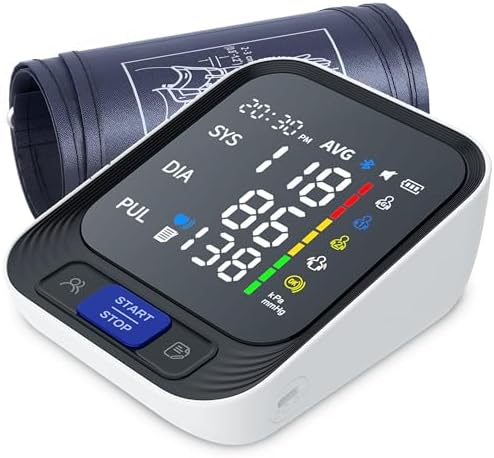
Our Best Overall pick: an oversized, high-contrast color display and a built-in voice announcement make every reading easy to see and hear, backed by a wide 22 to 42cm cuff and a lower price than most of the field.
Our Best Affordable pick: the single-user sibling of the UA-767F, with the same clinically validated wide-range cuff and one-button simplicity from a decades-old medical brand, at the lowest price of any A&D model in this lineup.
A clinically validated, no-frills monitor from a decades-old medical-device maker. Its wide-range cuff, four-user memory and body-movement error detection make it a dependable choice for households that just want an accurate reading.
13.8-16.5" large-arm cuff · Bluetooth app sync · 2 users
Built specifically for larger arms, with Bluetooth syncing to the RENPHO Health app and a color-coded backlit display that make daily tracking approachable for tech-comfortable buyers.
A genuinely different design that has you slide your arm into a cylindrical barrel instead of wrapping a cuff, removing the most common source of user error in home readings.
Short on time? These three cover most buyers: the Acenis AOJ-30F as our Best Overall pick, the A&D UA-651 as the best affordable option, and the RENPHO for larger arms.
Blood Pressure Monitors 101: What They Do & How to Choose
Understand the category before you buy - what the science actually says, and which specs matter.
A home blood pressure monitor takes about 40 seconds to use, but choosing the right one takes a little more thought. The wrong cuff or an unvalidated device can hand you numbers that are simply wrong, which defeats the whole purpose. Here's how these monitors work, the one accuracy distinction most shoppers miss, and the specs actually worth comparing.
What does a home blood pressure monitor actually do?
A home monitor wraps a cuff around your upper arm, inflates to briefly stop blood flow, then slowly releases while sensing the tiny pressure pulses in your artery. It reports two numbers, systolic (the pressure when your heart beats) over diastolic (the pressure when it rests), plus your pulse.
The point isn't a single dramatic reading. It's the trend. Checking at home lets you:
Catch high readings your doctor's once-a-year visit would miss
Rule out "white coat" spikes that only happen at the clinic
See whether a medication or lifestyle change is actually working
A monitor can't diagnose or treat anything; that's your doctor's job. But a good one gives both of you real data to work with instead of a single snapshot.
"Validated" vs. "FDA-cleared": the distinction that actually matters
This is the part almost nobody knows to check, and it's the most important thing on the page. "FDA-cleared" sounds reassuring, but it's a regulatory step, not proof that the monitor is accurate against a clinical standard. What you actually want is a clinically validated device, meaning one tested against a mercury reference in real patients under a recognized protocol like ESH, AAMI, or ISO 81060-2. Independent validation lists that track which home monitors have passed these protocols are worth searching out before you buy.
In this lineup, the A&D Medical UA-767F is validated to the ESH protocol. A&D is a brand clinical researchers have used for decades, which is why it earns a spot here despite a plainer design. A cheaper monitor can be perfectly precise at repeating a number and still be repeatedly wrong if it was never validated, so judge the credential, not the marketing.
Which specs actually matter?
Once you've confirmed a monitor is validated, a few features determine whether it's accurate and pleasant to live with:
Cuff size (the #1 cause of bad readings): A cuff that's too small reads falsely high, and one that's too large reads falsely low. This single mistake ruins more home readings than anything else, so measure your upper arm before buying. Most monitors here use a wide-range cuff that fits about 8.6 to 16.5 inches (22 to 42 cm). If your arm is larger, look at the large-arm or dual-cuff options in this lineup that stretch to 21 inches.
Reading averaging: Your pressure changes minute to minute, so one number means little. Better monitors take several readings and average them automatically. The RENPHO here does a 3-reading auto-average and the A&D models use snapshot averaging, which lines up with how clinicians say home readings should actually be taken.
Irregular heartbeat detection: Most monitors in this lineup flag an irregular rhythm during measurement. It isn't an AFib diagnosis, but a repeated flag is a genuine reason to call your doctor.
Cuff-fit and movement alerts: Several models, including the A&D UA-651 and CAVN, warn you on-screen when the cuff is too loose or you moved mid-reading. That's often the difference between a real number and a useless one.
Users and memory: If more than one person will use it, check the profiles. These range from single-user up to 4 users with hundreds of stored readings, and some add unlimited history through a phone app.
Power and display: Pick what you'll actually keep using, whether that's AA or AAA batteries, USB-C, or a rechargeable pack, plus a large backlit or color-coded screen if eyesight is a factor.
How we grade products
Graded Picks rankings are aggregated from several independent signals: verified buyer ratings and the size of the review base (credibility), recent monthly purchase volume (relevance), assessments from trusted health-tech publications and testers, and how each product places in leading category lineups. For blood pressure monitors we weigh:
Clinical validation and rated accuracy
Cuff fit and range
Reading consistency and averaging
Ease of use and display clarity
Memory, multi-user, and app features
Build quality and warranty
Overall value for the price
Health note: A home monitor supports your care, it doesn't replace it. For the most reliable numbers, the American Heart Association recommends a validated upper-arm cuff, sitting quietly for five minutes with your back supported and feet flat, and taking two or more readings a minute apart at the same times each day. Bring your log to your doctor, and never start, stop, or change a medication based on home readings alone.
In-Depth Reviews
Everything we learned from buyer reviews and expert testing, product by product.
Our Best Overall pick. The AOJ-30F comes from Shenzhen AOJ Medical, a manufacturer with its own line of arm and wrist monitors, and it takes the top spot on everyday usability as much as accuracy: a large color LCD displays systolic, diastolic and pulse in oversized digits, and a built-in speaker reads the results aloud, a genuine help in dim bedrooms or for anyone with limited vision. The cuff covers a wide 22 to 42cm (8.7 to 16.5 inch) range matching the category's more established brands, one-button operation completes a reading in about 40 seconds, and two user profiles store 199 readings apiece plus a guest mode for occasional visitors. It can run on AAA batteries or plug in via USB-C, more flexible than the AA-battery-only monitors nearby in this lineup, all at a price well under the barrel-style and dual-cuff models ranked behind it. It is a newer brand without the decades of clinical literature behind A&D, so buyers who specifically need a long-validated clinical reference should look to the UA-651 or UA-767F below, but as an everyday monitor it combines legibility, cuff fit and price better than anything else we compared.
Cuff / arm fit8.7" - 16.5" (22-42cm) large adjustable cuff
Users & memory2 users, 199 readings each + guest mode
Power sourceAAA batteries or USB-C cable
DisplayLarge color LCD with voice announcement
Accuracy featuresOne-touch reading in about 40 seconds, irregular heartbeat detection
Dimensions5" x 2.87" x 3.66" (device body)
Warranty2-year limited
Pros
Large color display with oversized, easy-to-read digits
Built-in voice announcement of results
Wide 22-42cm cuff fits most adult arms
USB-C or AAA battery power, whichever is more convenient
2 users with 199 stored readings each, plus a guest mode
Cons
Newer brand without the long clinical-validation history of A&D
No Bluetooth or app connectivity
Voice announcements can't be permanently disabled on some units per buyer feedback
Who is it for?
Most buyers: anyone who wants a genuinely easy-to-read display, audible results and a wide-fitting cuff at a fair price, without needing an app.
Who is it not for?
Buyers who specifically want a clinically validated, decades-proven brand or app-based data logging.
2. A&D Medical UA-651 Blood Pressure Monitor (Wide-Range Cuff)
4.9
The UA-651 is our Best Affordable pick: it has been independently validated against the European Society of Hypertension protocol, with published results showing it stays within a few mmHg of a clinical reference on both systolic and diastolic readings, at the lowest price of any A&D model here. It uses the same 8.6-16.5 inch wide-range cuff as its four-user sibling, plus Snapshot Averaging that automatically calculates a baseline from consecutive readings and an irregular-heartbeat indicator. Where it trims cost is memory (60 stored readings for a single user, versus four separate profiles) and it drops the higher-end body-movement sensor. A&D backs it with the same 5-year limited warranty, excluding the battery and cuff - unusually long coverage for a device in this price range.
Cuff / arm fit8.6" - 16.5" (22-42cm) wide-range cuff
Users & memorySingle user, 60-reading recall with Snapshot Averaging
Power source4 AA batteries (AC adapter port available)
3. A&D Medical UA-767F Upper Arm Blood Pressure Monitor (Wide-Range Cuff)
4.9
The UA-767F earns its reputation the old-fashioned way: independent testing and a long track record rather than app gimmicks. Consumer Reports has evaluated the model directly, and CNET has named it one of the best blood pressure monitors for home use, both citing the wide-range cuff (8.6 to 16.5 inches) and the simple one-button operation that reduces user error. A body-movement and cuff-fit sensor flags a bad reading before you trust it, and an irregular-heartbeat indicator adds another layer of awareness during daily checks. Four separate user profiles with 60 stored readings each suit multi-person households, and A&D backs the monitor with a 5-year limited warranty, far beyond the 1 to 2 years typical of this category. It skips Bluetooth and app syncing entirely, which some buyers will miss, but the readings and construction quality are what earned this pick its reputation.
Cuff / arm fit8.6" - 16.5" (22-42cm) wide-range cuff
Users & memory4 users, 60 readings each (240 total)
RENPHO's large-cuff monitor targets a gap many competitors leave open: buyers whose arms exceed a standard cuff's range. Its cuff is built for 13.8-16.5 inch (35-42cm) circumferences, and testers and buyers alike consistently praise the large, color-coded display that makes systolic, diastolic and pulse readings easy to read at a glance, plus the automatic averaging of three consecutive readings for a more stable result. The RENPHO Health app adds unlimited cloud storage on top of the device's own 240-reading, two-user memory, which is useful for sharing trends with a doctor. The honest caveat, echoed in a portion of user feedback, is that a minority of units have shown readings that diverge from clinic equipment, so anyone managing a diagnosed condition should periodically cross-check against a doctor's monitor rather than relying on any single home device in isolation.
Cuff / arm fit13.8" - 16.5" (35-42cm) large-arm cuff
The BP-205 keeps pace with the least expensive monitors in this comparison while still covering the fundamentals buyers actually use. Its 8.6-16.5 inch wide-range cuff fits most adults, a cuff-fit sensor warns on-screen before a bad reading is recorded rather than after, and an irregular-heartbeat symbol flags rhythm concerns automatically. The 4.2 inch display is angled 30 degrees with soft backlighting, which reviewers note is noticeably easier on the eyes than the flat, small screens common at this price. Two users each get 99 stored readings, it ships with a carrying bag, and it's FSA/HSA eligible for buyers who want to use pretax health dollars. The trade-off for the low price is a component list that leans on generic sensors rather than a clinically published validation study, so treat it as a solid everyday monitor rather than a medical-grade reference.
The SEMKAP is built around a shared import hardware platform (the same core design appears from several budget brands), which keeps the price low while packing in features that usually cost more: a large LED display, an audible voice readout of results, and two included cuffs (9-17 inches and 13-21 inches) that cover a wider combined range than any single-cuff monitor in this lineup. One-button operation and a two-user, 198-reading memory cover the basics buyers expect. Because it's a newer, less widely known brand without independent professional testing behind it yet, this is best treated as a budget-friendly option for straightforward home tracking rather than a monitor with an established reputation - buyers who want maximum confidence in accuracy should look toward the more established, clinically referenced names in this comparison.
Cuff / arm fitDual cuffs, 9"-17" and 13"-21"
Users & memory2 users, 2x99 readings
Power sourceBattery powered, AC adapter included
DisplayLarge LED screen with voice broadcast
Accuracy featuresOne-button operation, memory averaging function
Dimensions6" x 3" x 4" (1 lb)
Warranty1-year (365-day) limited
Pros
Ships with two cuffs covering a wider combined arm range
Voice broadcast of results alongside the large LED display
Simple one-button operation
2-user memory with 198 total stored readings
Cons
No independent professional testing or clinical validation found
Newer, less established brand than most of this lineup
No Bluetooth or app connectivity
Who is it for?
Budget shoppers who want the flexibility of two cuff sizes in one box for a household with different arm sizes.
Who is it not for?
Buyers who prioritize an established brand with a longer independent-review track record.
CAVN's barrel-type monitor replaces the traditional wrap-around cuff with a rigid cylinder that auto-fits arms from 7.1 to 16.5 inches: you insert your arm, and the guided positioning does the rest, which sidesteps the too-tight, too-loose and crooked-cuff mistakes that skew a meaningful share of home readings. The company states an FDA-cleared accuracy rating of plus or minus 3 mmHg, and a three-color backlit ring (green, yellow, red) gives an instant at-a-glance read on where a result falls. It's rechargeable rather than disposable-battery powered, with a built-in cell rated for around 150 measurements per charge, and stores 2x99 readings for two users. As a recent product launch, it doesn't yet have the years of buyer feedback or professional test data that older brands like A&D have accumulated, so treat reliability over the long run as still being proven.
Cuff / arm fitNo-wrap barrel, auto-fits arms 7.1" - 16.5"
Users & memory2 users, 2x99 readings
Power sourceBuilt-in rechargeable battery (~150 measurements/charge)
Auto-fits a wide 7.1-16.5 inch arm range with guided positioning
Three-color backlit result indicator for instant reading
Rechargeable built-in battery, no disposable batteries needed
FDA-cleared accuracy rating
Cons
New to market with limited long-term reliability data
Bulkier device footprint than a traditional cuff-and-box monitor
Built-in battery can't be swapped when it eventually degrades
Who is it for?
Buyers who've had trouble getting a consistent fit with a standard wrap cuff, or anyone who wants the simplest possible measurement routine this no-wrap design offers.
Who is it not for?
Buyers who prioritize a long buyer track record, since this design is still building its reputation.
The stars you see are the Graded Picks cumulative score, not a single retailer's average. It blends verified buyer reviews aggregated across major retailers, assessments from professional reviewers and expert testers, and how prominently the product features in leading category lineups.
Advertising Disclosure
Our rankings are compiled by aggregating several independent signals, including verified buyer feedback, how popular a product currently is with shoppers, and evaluations published by professional reviewers. Editorial opinions are our own.
Please note that we participate in affiliate marketing programs. When you purchase through links on our site, we may earn a commission. As an Amazon Associate we earn from qualifying purchases. This comes at no additional cost to you and helps support the resources required to provide valuable content.