CoQ10 is one of those supplements almost everyone has heard of and almost no one shops well. It supports energy production inside your cells and works as an antioxidant, and many people start taking it after a doctor mentions their heart or their statin. But the front of the bottle rarely tells you the two things that decide whether the capsule does anything: the form of CoQ10 and how well your body absorbs it. We analyzed thousands of verified buyer reviews, recent sales data, and expert evaluations to find seven CoQ10 supplements that put the milligrams where they count.
Our Best Overall pick: a 400mg daily CoQ10 serving delivered in oil-suspended liquid softgels rather than a powder-filled capsule, with every batch independently lab tested for potency and purity.
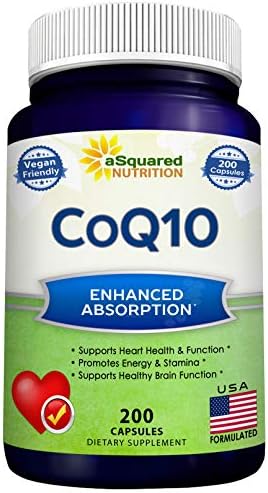
aSquared Nutrition CoQ10 400mg Max Strength (200 Capsules)
4.9
400mg CoQ10 · Vegan capsule · 200-day supply
The strongest single-capsule dose in this comparison: 400 mg of ubiquinone per vegan capsule, third-party tested in an ISO 17025-certified facility and backed by the longest bottle supply of any product here.
Our pick for absorption: USP-grade ubiquinone suspended in coconut MCT oil and paired with BioPerine black pepper extract, in a vegan-certified, non-GMO veggie softgel.
Our Best Affordable pick: 200 mg of ubiquinone per vegan capsule in a 200-count bottle, the lowest cost per daily dose in this comparison and a dose right in the middle of the typical research range.
An eight-ingredient heart-health stack that layers 200 mg of CoQ10 onto red yeast rice, omega-3, a magnesium complex, zinc and vitamins K2, D3 and B3 in a single two-capsule daily serving.
A combination formula that pairs 400 mg of ubiquinone with added omega-3 fatty acids in the same two-capsule daily serving, for buyers who want both nutrients in one bottle.
A dual-purpose formula that pairs 1200 mg of red yeast rice with 100 mg of CoQ10 per serving, for buyers who want cholesterol support alongside the CoQ10 replenishment that red yeast rice can otherwise deplete.
Short on time? These three cover most buyers: our Best Overall pick, an oil-suspended 400mg liquid softgel with batch-level independent lab testing, the best affordable pick with the lowest cost per daily dose, and the best pick for absorption built with coconut oil and BioPerine.
CoQ10 Supplements 101: What They Do & How to Choose
Understand the category before you buy - what the science actually says, and which specs matter.
Every CoQ10 label shouts a big milligram number, but that dose means very little if your body cannot take it in. Here is how the supplement works, the one form-and-delivery distinction that quietly separates the good bottles from the filler, and the specs worth comparing before you buy.
What does a CoQ10 supplement actually do?
Coenzyme Q10 is a compound your body already makes and stores mostly in your hardest-working tissues, like the heart. It plays two roles:
It helps your cells turn food into usable energy inside the mitochondria.
It acts as a fat-soluble antioxidant that helps protect cells from oxidative stress.
Your natural CoQ10 levels tend to decline as you age, and certain medications can lower them further, which is why many people supplement. A capsule or softgel simply tops up what your body has, so the amount that actually reaches your bloodstream matters far more than the number on the label.
The form and the delivery matter more than the milligrams
Here is the part most shoppers miss. CoQ10 comes in two forms. Ubiquinone is the cheaper, oxidized form, and your body has to convert it into the active form before it can use it. Ubiquinol is the already-reduced, active form, and it tends to absorb better, a gap that can widen as you get older and convert less efficiently. Every supplement in this lineup uses ubiquinone, so within this group the real dividing line is delivery.
CoQ10 is fat-soluble, which means it dissolves in oil, not water. An oil-based softgel carries it in a fat your body can absorb, so far more of the dose gets in, while a dry capsule packed with rice powder taken on an empty stomach absorbs poorly by comparison. You can see the split in the lineup. The Qunol Ultra uses a patented water and fat soluble form, Sports Research suspends its 100 mg in coconut MCT oil and adds BioPerine black pepper extract, and the Luma Nutrition 400 mg is an oil-suspended liquid softgel. Both aSquared Nutrition products, by contrast, are vegan capsules with rice powder filler and no added absorption help. A 400 mg dry capsule can easily deliver less usable CoQ10 than a well-formulated 100 mg oil softgel, so read the form and the carrier, not just the number.
Which specs actually matter?
CoQ10 form: Every option here is ubiquinone. If you are older or want the most absorbable active form, ubiquinol is worth seeking out, though it usually costs more.
Dose per serving: Servings here range from 100 mg to 400 mg. More is not automatically better when absorption is poor, so weigh the dose against the delivery.
Delivery format: An oil-based softgel, like the coconut MCT versions from Sports Research and Micro Ingredients or the Luma liquid softgel, absorbs far better than a dry capsule.
Absorption boosters: Sports Research includes BioPerine black pepper extract, and Qunol uses a patented solubilization technology instead of an added enhancer.
Added ingredients: Read blends carefully. The Natures Craft option pairs CoQ10 with red yeast rice in the same serving, making it a different product with different considerations than the single-ingredient options here.
Servings and supply: Bottle supply runs from a 30-day supply on the Luma 60-count up to a 200-day supply on the aSquared 200-count, which affects real cost over time.
Testing and diet fit: Look for third-party testing, offered here in forms like USP dissolution verification and ISO 17025 lab testing. The Sports Research and aSquared options are also vegan.
How we grade products
Graded Picks rankings are aggregated from several independent signals: verified buyer ratings and the size of the review base for credibility, recent monthly purchase volume for relevance, assessments from trusted health and supplement publications, and how each product places in leading category lineups. For CoQ10 supplements we weigh:
CoQ10 form and delivery format
Effective dose per serving
Absorption technology and carriers
Third-party testing and sourcing quality
Added ingredients and blend transparency
Supply size and cost over time
Diet fit, including vegan and Non-GMO options
Health and safety note: CoQ10 is generally well tolerated, but it can interact with blood thinners like warfarin and with blood-pressure medication, so talk to your healthcare provider before starting, especially if you take those. People on statins often take CoQ10 because statins can lower the body's own levels, and that pairing is best done under a provider's guidance. Combination formulas that pair CoQ10 with another active ingredient, like red yeast rice, deserve a closer label read since you are weighing two ingredients' worth of dosing and interactions at once. Treat any supplement as a complement to medical advice, not a replacement for it.
In-Depth Reviews
Everything we learned from buyer reviews and expert testing, product by product.
Luma Nutrition is our Best Overall pick. It delivers its 400 mg CoQ10 dose across two 200mg liquid softgels rather than a single high-strength capsule, a format the brand markets as better absorbed than a powder-filled pill because the CoQ10 is already suspended in oil. Every batch is tested by an independent lab for potency and to screen out heavy metals and other contaminants, and the product is made in FDA-registered, GMP-certified US facilities. The company backs purchases with a 90-day satisfaction guarantee, among the longest windows in this comparison. The tradeoffs are real: needing two softgels per serving is less convenient than a single-capsule dose at the same total strength, the 60-count bottle is only a one-month supply versus the multi-month bottles elsewhere in this comparison, and independent brand-review coverage of Luma Nutrition is still thinner than for bigger, longer-established supplement companies. Buyers who'd rather take one capsule a day and get a six-month bottle should look at the 400mg vegan capsule option elsewhere in this comparison instead.
CoQ10 formUbiquinone (liquid softgel)
CoQ10 per serving400 mg
Serving size2 softgels
Absorption technologyOil-suspended liquid softgel
Bottle count / supply60 softgels (30-day supply)
Third-party testingIndependent lab tested, every batch
Guarantee90-day satisfaction guarantee
Pros
Our Best Overall pick: strong across dose, testing rigor and guarantee length
400mg CoQ10 per serving in an oil-suspended liquid softgel
Every batch independently lab tested for potency and contaminants
Made in FDA-registered, GMP-certified US facilities
90-day satisfaction guarantee, among the longest in this comparison
Cons
Two softgels needed per serving instead of one
60-count bottle is only a one-month supply
Less independent brand-transparency coverage than larger, longer-established competitors
Who is it for?
Our Best Overall pick for buyers who want a well-tested, oil-suspended liquid softgel with a long return window.
Who is it not for?
Anyone who wants a one-pill daily routine or the longest possible bottle supply.
2. aSquared Nutrition CoQ10 400mg Max Strength (200 Capsules)
4.9
aSquared Nutrition's Max Strength formula delivers 400 mg of ubiquinone in a single vegan capsule, more than triple the typical 100mg-per-softgel strength found elsewhere in this lineup, so one capsule a day covers the higher end of the 100-400mg range cited in heart-health research. The capsule is manufactured in an ISO 17025-certified facility with third-party purity testing, and the 200-count bottle stretches into more than six months of use at one capsule daily, the longest supply-per-bottle of any product in this comparison. It uses rice powder as a capsule filler rather than an oil carrier or BioPerine, which keeps the formula simple but means it lacks the absorption-boosting extras some competitors add - buyers who specifically want an absorption-engineered formula should look to our Best for Absorption pick instead. It's the higher-dose sibling to aSquared's 200mg capsule, our Best Affordable pick, elsewhere in this comparison, for buyers who'd rather take one strong capsule than two moderate ones.
Third-party testingThird-party tested (ISO 17025-certified lab)
Guarantee30-day money-back guarantee
Pros
400mg of ubiquinone in a single capsule, the highest one-capsule dose here
Third-party tested in an ISO 17025-certified facility
200-count bottle lasts more than six months at one capsule daily, the longest supply in this comparison
Vegan capsule with a short, simple ingredient list
30-day money-back guarantee
Cons
No BioPerine or oil carrier to aid absorption
Capsule contains rice powder filler rather than being filler-free as marketed
400mg exceeds what most heart-health research protocols actually used
Who is it for?
Buyers who want a high 400mg ubiquinone dose in one capsule instead of splitting servings across two pills.
Who is it not for?
Anyone who wants an absorption-enhanced formula (coconut oil or BioPerine) - see our Best for Absorption pick - or a more moderate, research-typical dose - see our Best Affordable pick.
3. Sports Research CoQ10 100mg with BioPerine (120 Veggie Softgels)
4.8
Sports Research pairs 100 mg of USP-grade ubiquinone with coconut MCT oil as a fat carrier and BioPerine black pepper extract, a combination aimed squarely at the fat-soluble absorption problem plain CoQ10 powder runs into. The softgels are third-party tested, Non-GMO Verified and Vegan Certified, and manufactured in a cGMP-compliant facility - a testing and certification stack that shows up consistently across independent ingredient reviews of the brand. Buyers taking it consistently describe steadier energy and better focus after a few weeks of use, and the small veggie-softgel size is repeatedly called out as easy to swallow relative to competing softgels. A 90-day return window backs the purchase. The main tradeoff is that BioPerine can interact with certain prescription medications, so anyone on blood thinners or blood pressure medication should check with a doctor first.
CoQ10 formUbiquinone (USP grade)
CoQ10 per serving100 mg
Serving size1 veggie softgel
Absorption technologyCoconut MCT oil + BioPerine black pepper extract
This is our Best Affordable pick. aSquared Nutrition's 200mg formula comes in a 200-count bottle that lasts more than six months at one capsule a day, which works out to the lowest cost per serving of any available CoQ10 here. The 200 mg dose sits inside the 100 to 300 mg range NIH cites as typical supplemental intake, so you are not paying for milligrams beyond what most protocols have studied. It is a simple vegan capsule with a short ingredient list, third-party purity testing in an ISO 17025-certified facility, and it is the moderate-dose sibling of aSquared's 400mg Max Strength capsule elsewhere in this comparison. It skips BioPerine or an oil carrier, so absorption is left to your own body, and taking it with a fat-containing meal helps. If you want an absorption-engineered formula, step up to our Best for Absorption pick.
5. Clean Nutraceuticals CardioGuard CoQ10 200mg with Red Yeast Rice & Omega-3 (60 Capsules)
4.7
Clean Nutraceuticals' CardioGuard formula takes the red-yeast-rice-plus-CoQ10 pairing found elsewhere in this comparison and builds it out further, layering in omega-3, a 500 mg magnesium complex, zinc, a 5,000 IU dose of vitamin D3, vitamin K2 and vitamin B3 into the same two-capsule daily serving. The pitch is consolidation: instead of managing several separate heart-health bottles, one 60-capsule bottle covers a full month of dosing. It is manufactured in a GMP-compliant, FDA-registered US facility, and the brand backs purchases with a 180-day money-back guarantee, well beyond the 30-to-90-day windows common elsewhere in this lineup, though some buyers report the guarantee is slower to act on than advertised once customer support gets involved. Because red yeast rice's monacolin K works like a natural statin, the same interaction caution that applies to this comparison's other red yeast rice option applies here too. For buyers who specifically want a broad, all-in-one heart-support stack rather than a focused CoQ10 capsule, it consolidates more into a single serving than any other product in this comparison.
CoQ10 formUbiquinone + red yeast rice, omega-3 and multivitamin blend
CoQ10 per serving200 mg (plus red yeast rice, omega-3, magnesium and vitamins)
Third-party testingGMP-compliant, FDA-registered US facility
Guarantee180-day money-back guarantee
Pros
Combines CoQ10 with red yeast rice, omega-3, magnesium, zinc, vitamin K2, D3 and B3 in one two-capsule serving
Made in a GMP-compliant, FDA-registered US facility
Backed by a 180-day money-back guarantee, longer than most single-ingredient options here
Straightforward twice-daily two-capsule dose covers a full month per bottle
From a broader supplement brand with an established, mostly positive customer base
Cons
Eight active ingredients bundled into one capsule makes it harder to adjust or track any single ingredient's dose
Red yeast rice's monacolin K acts like a statin and carries the same cholesterol-medication interaction risk as this comparison's other red yeast rice option
Some buyers report slow customer-service response when trying to use the money-back guarantee
Who is it for?
Buyers who want CoQ10 folded into a broader red yeast rice, omega-3 and multivitamin heart-health stack instead of a single-ingredient capsule.
Who is it not for?
Anyone who wants to dose CoQ10 on its own, or who is already on statin or cholesterol medication without clearing red yeast rice with a doctor first.
6. NatureBell CoQ10 400mg with Omega-3 (240 Capsules)
4.7
NatureBell's formula bundles 400 mg of CoQ10 with omega-3 fatty acids into a single two-capsule daily serving, aimed at buyers who would otherwise manage two separate supplements. The capsules are third-party tested and manufactured to be stable and easily absorbed, and the 240-count bottle covers about four months at the labeled serving. Because it splits its formulation between two active ingredients rather than concentrating on CoQ10 alone, independent professional-review coverage of this specific combination product is thinner than for the single-ingredient CoQ10 capsules in this comparison, and buyers who already take a separate omega-3 supplement may find the combined format redundant.
7. Natures Craft Red Yeast Rice with CoQ10 (1200mg, 120 Capsules)
4.6
Natures Craft's formula addresses a specific interaction: red yeast rice contains monacolins that work like a natural statin to help lower LDL cholesterol, but the same pathway that lowers cholesterol also depletes the body's CoQ10, the same depletion statins are known to cause, so this formula pairs 1200mg of red yeast rice with 100mg of CoQ10 in the same two-capsule daily serving to address both sides of that tradeoff. A dedicated write-up at RedYeastRiceReview.com and a Suppie.app supplement analysis both evaluate this exact formula, alongside buyer accounts that consistently describe improved cholesterol test results after several months of consistent use. Natures Craft sources the red yeast rice as citrinin-free (citrinin being a contaminant sometimes found in red yeast rice fermentation) and backs the capsules with third-party testing and a 60-day satisfaction guarantee, and the 120-count bottle covers a full two-month supply at the labeled serving. Because red yeast rice's monacolin K compound works pharmacologically like a statin, it carries a real interaction risk with cholesterol medication and warrants a conversation with a doctor before starting, a caution independent supplement trackers flag more prominently here than for the plain CoQ10-only capsules elsewhere in this comparison.
CoQ10 formUbiquinone + red yeast rice (monacolin K) blend
CoQ10 per serving100 mg (plus 1200mg red yeast rice)
Pairs 1200mg red yeast rice with 100mg CoQ10 to help offset the CoQ10 depletion red yeast rice can cause
Citrinin-free sourcing addresses a known red yeast rice contamination risk
Third-party tested formula backed by a 60-day satisfaction guarantee
Dedicated independent coverage from RedYeastRiceReview.com and a Suppie.app supplement analysis
120-capsule bottle covers a full two-month supply
Cons
Red yeast rice's monacolin K acts like a statin and can interact with cholesterol medication, so a doctor consult is genuinely necessary here
Independent supplement trackers rate the formula as middling rather than top-tier next to dedicated single-ingredient CoQ10 capsules
Two capsules needed per serving rather than one
Who is it for?
Buyers who specifically want a red yeast rice cholesterol-support formula that also replenishes the CoQ10 that ingredient depletes, in a single bottle.
Who is it not for?
Anyone who wants a plain, single-ingredient CoQ10 capsule, or who is already on statin or cholesterol medication without clearing red yeast rice with a doctor first.
The stars you see are the Graded Picks cumulative score, not a single retailer's average. It blends verified buyer reviews aggregated across major retailers, assessments from professional reviewers and expert testers, and how prominently the product features in leading category lineups.
Advertising Disclosure
Our rankings are compiled by aggregating several independent signals, including verified buyer feedback, how popular a product currently is with shoppers, and evaluations published by professional reviewers. Editorial opinions are our own.
Please note that we participate in affiliate marketing programs. When you purchase through links on our site, we may earn a commission. As an Amazon Associate we earn from qualifying purchases. This comes at no additional cost to you and helps support the resources required to provide valuable content.