A cranberry pill is the easy way to get the benefit of the fruit without drinking sugary juice by the glass. It promises to support your urinary tract and bladder in one small daily capsule. But the milligrams printed in big type on the front of the bottle can be almost meaningless, because they rarely tell you how much of the active compound you are actually getting. We analyzed thousands of verified buyer reviews, recent sales data, and expert evaluations to find eight cranberry pills that put the right compound in the bottle, not just a big cranberry number.
Our Best Overall pick: a women-focused combination formula pairing 400mg of cranberry extract with 1000mg of D-mannose and vitamin C in a two-capsule daily serving, rather than relying on cranberry alone.
Our Best for Maximum Potency pick: the highest-potency single-ingredient cranberry capsule in this lineup, delivering 72mg of PACs per capsule from a 50:1 extract, exactly double the daily PAC amount a 2024 meta-analysis tied to reduced UTI risk.
Our Best Affordable pick: a USDA Certified Organic 25:1 cranberry extract in a single daily capsule, at the lowest price per capsule in this lineup with a 3+ month supply.
1000mg D-mannose · 500mg cranberry fruit · 2 caps/day
A D-mannose-forward formula: 1000mg of D-mannose paired with cranberry fruit and PACs in a two-capsule daily serving, for buyers who want D-mannose as the lead ingredient rather than a cranberry extract.
A simple formula delivering 36mg of PAC from cranberry juice extract, the exact daily dose a 2024 meta-analysis tied to an 18% reduction in UTI risk, plus 1000mg of D-mannose.
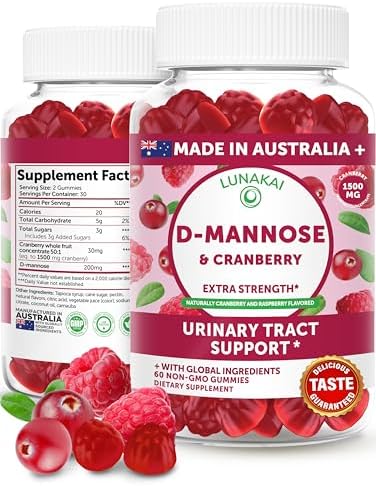
A women's cranberry gummy from Lunakai: 1500mg of 50:1 cranberry extract plus 200mg of D-mannose per serving, made in Australia in a GMP-certified facility.
The broadest ingredient blend in this lineup: a 10-part formula pairing 450mg of cranberry with 600mg of D-mannose, uva ursi, marshmallow root and more from LifeSeasons, an established herbal-supplement brand with its own GMP-certified manufacturing.
A women's-health-focused combination formula from O Positiv pairing 500mg of Pacran whole cranberry with 500mg of D-mannose and vitamin C in a two-capsule daily serving, using the same clinically studied Pacran dose as Garden of Life's probiotic formula in this lineup but without the added probiotics.
Short on time? These three cover most buyers: our Best Overall combination formula, the best pick for maximum PAC potency, and the best affordable organic cranberry extract.
Understand the category before you buy - what the science actually says, and which specs matter.
Every cranberry supplement leads with a large number, whether that is 500mg of extract or 1,500mg in a gummy, but that headline figure is not the thing doing the work. Here is how these pills actually help, the one compound that decides whether a bottle is worth buying, and the features worth comparing before you pick.
What does a cranberry pill actually do?
A cranberry pill delivers concentrated cranberry, and sometimes companion ingredients, in a form you take once or twice a day. The goal is urinary tract and bladder support without the sugar load of juice. Depending on the formula, one of these pills gives you:
Cranberry as a juice extract, a whole-fruit powder, or a concentrated extract at a ratio like 25:1 or 50:1
Companion ingredients such as D-mannose, a simple sugar several formulas here dose at 1000mg per serving
Extras like vitamin C, probiotics, or botanical blends, depending on the brand
The idea is that cranberry makes it harder for certain bacteria to take hold in the urinary tract, so a daily dose is used as ongoing support rather than a treatment for an active infection.
The number that matters is PACs, not milligrams of cranberry
Here is the part most shoppers never hear. The compounds that do the real work in cranberry are proanthocyanidins, usually shortened to PACs. PACs are what make it harder for bacteria to stick to the wall of the urinary tract, and if they cannot stick, they have a harder time settling in. This is why the milligrams of cranberry on the front label tell you very little on their own. A bottle can advertise 500mg or even 1,500mg of cranberry and still deliver almost no PACs, because the PAC content depends on how the cranberry was processed, not how much fruit went in.
Research on urinary support points to roughly 36mg of PACs per day as a meaningful target. Notice how few products actually put that number on the label. In this lineup, CranEaze states 36mg of PAC per serving, hitting that mark directly, and Zazzee Cranberry PACs states 72mg of PACs per capsule from a 50:1 extract. Everyone else lists cranberry in milligrams of extract or whole fruit without disclosing PACs at all, from Garden of Life's 500mg of Pacran to VitaUp's 400mg of extract.
That is also where the concentrate ratio comes in. A high ratio like 50:1 or 25:1 means a lot of cranberry has been condensed into a small capsule, which is genuinely useful for keeping the pill swallowable. But a ratio only tells you how concentrated the fruit is, not how many PACs survived. A 50:1 extract still only earns your trust when the brand also states the PAC amount, the way Zazzee does. If a label brags about a big ratio or a huge milligram count but stays silent on PACs, treat that silence as the answer.
Which specs actually matter?
Once you know to look for PACs, a few more features decide which bottle fits you:
PAC content: This is the accuracy lever. Look for a stated PAC figure near the 36mg-per-day research target. CranEaze lists 36mg of PAC and Zazzee Cranberry PACs lists 72mg per capsule; most others do not disclose it.
Concentrate ratio: A ratio like 25:1 or 50:1 packs more cranberry into a smaller pill, which helps if you dislike large capsules, but it only matters alongside a PAC number.
Added ingredients: Several formulas pair cranberry with 1000mg of D-mannose, and others add vitamin C, a 50 billion CFU probiotic blend, or botanical blends. Decide whether you want plain cranberry or a combination.
Serving size and count: Servings run from 1 to 2 capsules daily, and containers range from 60 to 120 pieces, so a 120-capsule bottle taken one a day can last about four months while a 60-count taken twice daily lasts one.
Form: Most here are vegan or vegetarian capsules, so factor in serving count if you specifically want a chewable format instead.
Third-party testing: Look for independent lab testing and certifications such as GMP, USDA Organic, Non-GMO, or NSF-registered facilities, all of which appear across this lineup.
How we grade products
Graded Picks rankings are aggregated from several independent signals: verified buyer ratings and the size of the review base for credibility, recent monthly purchase volume for relevance, assessments from trusted health and wellness publications, and how each product places in leading category lineups. For cranberry pills we weigh:
Disclosed PAC content and how it compares to the research target
Concentrate ratio and pill size
Quality and usefulness of added ingredients
Servings per container and cost per day
Form and ease of taking
Third-party testing and manufacturing standards
Overall value for the price
Health note: This is general information, not medical advice. Cranberry supplements are meant for ongoing urinary tract support, not for treating an active infection, so if you have burning, pain, fever, or symptoms that keep coming back, see a healthcare provider rather than relying on a pill. Cranberry can interact with the blood thinner warfarin, so talk to your provider before starting any cranberry supplement if you take it, and check with them about any product if you are pregnant, nursing, or managing a health condition.
In-Depth Reviews
Everything we learned from buyer reviews and expert testing, product by product.
VitaUp Cranberry
Best Overall40% COUPON
1. VitaUp Cranberry, D-Mannose & Vitamin C for Women
5.0
Our Best Overall pick. VitaUp's formula layers three urinary-tract-support mechanisms into one product: cranberry extract for PACs, a substantial 1000mg dose of D-mannose, and vitamin C, taken as a two-capsule daily serving. A dedicated review from Shop Reviewer calls it a convenient daily formula for urinary tract support, and the brand backs it with third-party lab testing, GMP certification and manufacturing in an FDA-registered US facility. Where it differs from the Zazzee capsules elsewhere in this lineup is disclosure: VitaUp markets the cranberry component as a straight 400mg extract dose rather than a ratio-labeled concentrate, so its cranberry potency is harder to benchmark directly against the 36mg PAC research threshold the way a PAC-labeled product can be.
FormVegan capsule
Cranberry dose per serving400mg cranberry extract
Serving size2 capsules daily
Added ingredients1000mg D-mannose, 30mg vitamin C
Count per container90 capsules (about 45 days)
Third-party testing / certificationsThird-party lab tested, GMP-certified, made in an FDA-registered US facility
Equivalent fresh cranberrySold as a 400mg extract dose; brand does not market a fresh-fruit ratio
Pros
Combines cranberry extract, 1000mg D-mannose and vitamin C in one formula
Two-capsule daily serving is easy to build into a routine
Third-party lab tested and GMP-certified
Made in an FDA-registered US facility
Formulated specifically for women's urinary tract needs
Cons
Doesn't publish a PAC content or extract ratio, making cranberry potency harder to benchmark
Requires 2 capsules per serving rather than 1
Thinner independent review coverage than the more established Zazzee or Garden of Life brands here
Who is it for?
Buyers who want a combination formula - cranberry, D-mannose and vitamin C together - rather than a single-ingredient cranberry pill.
Who is it not for?
Anyone who wants a precisely PAC-dosed, research-benchmarked cranberry extract - the Zazzee or CranEaze options below disclose that number.
Where research ties a 36mg daily PAC intake to a measurable drop in UTI risk, this Zazzee formula delivers 72mg in a single daily capsule - exactly double that threshold - from a 50:1 extract equivalent to about 18,200mg of fresh cranberry. Buyer feedback on retailer sites describes it working well for recurrent bladder-infection concerns, and Zazzee backs it with independent lab testing, GMP certification and US manufacturing. It's a single-ingredient formula by design, with nothing added beyond the vegan capsule shell, and a 120-count bottle covers about four months at one capsule a day. We found no dedicated professional review of this exact formula, only retailer buyer feedback, which is the honest gap next to the more heavily covered options in this lineup.
FormVegan capsule
Cranberry dose per serving72mg PACs (proanthocyanidins), 50:1 extract
Serving size1 capsule daily
Added ingredientsNone beyond the vegan capsule shell
Count per container120 capsules (4-month supply)
Third-party testing / certificationsIndependently lab tested, GMP Certified, Made in the USA
Equivalent fresh cranberryAbout 18,200mg of fresh cranberry per capsule
Pros
72mg PAC dose is double the 36mg threshold research ties to reduced UTI risk
Simple one-capsule daily dose
50:1 extract standardization makes potency easy to verify
GMP Certified and independently lab tested
4-month supply per bottle
Cons
No dedicated professional review found for this exact formula, only retailer buyer feedback
Single-ingredient formula with no added D-mannose or vitamins
Costs more per bottle than the milder 25:1 Zazzee option below
Who is it for?
Buyers who specifically want to hit or exceed the 36mg PAC research threshold in a single daily capsule.
Who is it not for?
Anyone who wants an all-in-one formula with D-mannose or vitamin C added - the VitaUp or CranEaze options add those.
This Zazzee formula leads with organic purity and price rather than maximum PAC potency: a 500mg, 25:1 cranberry extract - equivalent to about 12,500mg of fresh cranberry - in a single daily vegan capsule, USDA Certified Organic and Certified Kosher. A dedicated review at BestViewsReviews and consistently positive buyer feedback both point to it as a trusted, straightforward option, and at the lowest price per capsule in this comparison with a 3+ month supply per bottle, it's the easy value pick next to its higher-potency 72mg PAC sibling above. The tradeoff for that price and organic certification is disclosure: like the 72mg PAC formula, it's a single-ingredient extract, but it doesn't publish a specific PAC milligram figure, so it can't be benchmarked against the 36mg research threshold as precisely as a PAC-labeled product.
FormVegan capsule
Cranberry dose per serving500mg extract, 25:1 ratio
Serving size1 capsule daily
Added ingredientsNone beyond the vegan capsule shell
This formula flips the usual emphasis of this category: D-mannose, a naturally occurring sugar that binds directly to the bacteria that cause UTIs, is the headline ingredient at 1000mg per two-capsule serving, with cranberry fruit and its PACs included as a supporting ingredient rather than the lead. A dedicated write-up on Ahssafoods.com specifically tested this style of D-mannose-with-cranberry formula and reported reduced urgency and frequency within about a week of daily use. It's Non-GMO and free of gluten, dairy, soy and wheat, and a 120-count bottle at 2 capsules daily covers roughly two months. What it doesn't do is publish a cranberry extract ratio or PAC milligram figure, which makes its cranberry component harder to size up against the 36mg research threshold than the Zazzee or CranEaze formulas in this lineup.
FormCapsule
Cranberry dose per serving500mg cranberry (Vaccinium macrocarpon) fruit with PACs
Serving size2 capsules daily
Added ingredients1000mg D-mannose per serving
Count per container120 capsules (about a 2-month supply)
Third-party testing / certificationsNon-GMO, gluten-free, free of dairy, soy and wheat
Equivalent fresh cranberryLabel leads with the D-mannose dose; cranberry is a supporting fruit-powder ingredient rather than a ratio-labeled concentrate
Pros
Leads with a substantial 1000mg D-mannose dose per serving
Includes cranberry fruit with PACs alongside it
Non-GMO and free of major allergens (gluten, dairy, soy, wheat)
About a 2-month supply per bottle
Independently reviewed in a dedicated write-up
Cons
Doesn't disclose a cranberry extract ratio or PAC-per-serving number
Requires 2 capsules per serving
Less established brand recognition than Zazzee, CranEaze or Garden of Life
Who is it for?
Buyers who specifically want D-mannose as the primary ingredient, with cranberry as a secondary support.
Who is it not for?
Anyone who wants a precisely PAC-dosed cranberry extract as the lead ingredient - the Zazzee or CranEaze options above disclose that number directly.
5. CranEaze Cranberry Juice Extract Plus D-Mannose, 36mg PAC
4.7
CranEaze's dose lines up precisely with the research: a 2024 meta-analysis found that a daily PAC intake of at least 36mg was associated with an 18% reduction in UTI risk, and this two-capsule serving delivers exactly that amount from a cranberry juice extract rather than a whole-fruit powder. That distinction matters, since published research shows PAC from juice extract can be meaningfully more bioavailable than the same amount from whole cranberry or pomace. It adds 1000mg of D-mannose alongside the cranberry, and the ingredient list stays remarkably short: cranberry juice extract, D-mannose, and a hypromellose capsule with rice fiber, with no unnecessary fillers. One buyer account specifically noted a urology clinic nurse practitioner recommended this exact product, a real-world credibility signal beyond the formula sheet. The tradeoff for the research-matched dose is supply: a 60-capsule bottle at 2 capsules daily covers only about a month.
FormCapsule (hypromellose shell with rice fiber)
Cranberry dose per serving36mg PAC (100% soluble) from cranberry juice extract
Serving size2 capsules daily
Added ingredients1000mg D-mannose per serving
Count per container60 capsules (about a 1-month supply)
Third-party testing / certificationsSimple 3-ingredient formula; no artificial fillers, colors or sweeteners
Equivalent fresh cranberry36mg PAC from juice extract - research shows juice-derived PAC is more bioavailable than the same amount from whole-fruit powder
Pros
36mg PAC dose lines up precisely with the research-backed daily threshold for reduced UTI risk
Juice-extract PACs are more bioavailable than the same amount from whole-fruit powder per published research
Adds 1000mg of D-mannose alongside the cranberry
Simple 3-ingredient formula with no unnecessary fillers
Recommended by a urology nurse practitioner in one buyer account
Cons
Requires 2 capsules daily rather than 1
60-capsule bottle is only about a month's supply at that dose
Costs more per dose than the plain 25:1 Zazzee option above
Who is it for?
Buyers who want a cranberry dose that matches the specific PAC threshold published research ties to reduced UTI risk, plus D-mannose in the same capsule.
Who is it not for?
Anyone who wants the lowest cost per dose or a single-capsule daily routine - the Zazzee options above are simpler and cheaper per serving.
6. Lunakai Cranberry Gummies with D-Mannose (1500mg, 60ct)
4.6
Lunakai's gummy delivers 1500mg of a 50:1 cranberry whole-fruit concentrate alongside 200mg of D-mannose per serving, one of the higher raw cranberry-extract figures in this comparison, though - like the other combination formulas here - the brand doesn't publish a specific PAC milligram number, so its potency can't be benchmarked against the 36mg research threshold as directly as the Zazzee or CranEaze capsules can. It's manufactured in a GMP-certified facility from globally sourced ingredients, is Non-GMO, gluten-free and soy-free, and ships from Australia rather than the US-based brands elsewhere in this lineup. The ingredient list adds tapioca syrup, cane sugar and natural flavors typical of a gummy format, along with coconut oil and carnauba wax as gummy-shell components. As a newer, smaller-volume listing, it carries the thinnest track record in this comparison, with no dedicated professional review found during our research.
FormVegan gummy
Cranberry dose per serving1,500mg cranberry whole-fruit concentrate, 50:1
LifeSeasons' Urinari-X takes the widest-spectrum approach of any product in this comparison, layering 450mg of whole cranberry fruit and 600mg of D-mannose with eight further botanicals - uva ursi, marshmallow root, oregano leaf, olive leaf, grapefruit seed extract, red raspberry leaf, bilberry leaf and coconut-derived caprylic acid - in a three-capsule daily serving. Dedicated write-ups from SupplementPolice and ConsumerHealthDigest both cover the formula favorably, and buyer feedback across Amazon, Walmart and iHerb skews heavily positive, with reviewers commonly describing eased discomfort and reduced frequency within the first day or two of consistent use. LifeSeasons manufactures in a GMP-certified US facility and gluten-tests every batch to under 10ppm, tighter than the FDA's standard threshold. The tradeoff for the wide formula: like the other multi-ingredient blends in this lineup, LifeSeasons doesn't publish a cranberry extract ratio or PAC milligram figure, so its cranberry component specifically can't be benchmarked against the 36mg research threshold the way the Zazzee or CranEaze options can.
FormVegan capsule
Cranberry dose per serving450mg cranberry (Vaccinium macrocarpon) whole fruit
Serving size3 capsules daily
Added ingredients600mg D-mannose plus a 10-part blend (uva ursi, marshmallow root, oregano, olive leaf, grapefruit seed extract, red raspberry, bilberry, blueberry, coconut-derived caprylic acid)
Count per container90 capsules (about a 1-month supply)
Third-party testing / certificationsGMP-certified US facility, gluten tested under 10ppm, vegan
Equivalent fresh cranberryBrand publishes a 450mg whole-fruit dose rather than a concentrate ratio or PAC milligram figure
Pros
Broadest ingredient blend in this comparison - 10 actives including uva ursi, marshmallow root and oregano alongside cranberry and D-mannose
Substantial 600mg D-mannose dose alongside 450mg of whole cranberry fruit
GMP-certified US manufacturing with gluten testing under 10ppm
Consistently positive dedicated coverage from SupplementPolice and ConsumerHealthDigest
Vegan capsules with no unnecessary fillers
Cons
Doesn't disclose a PAC milligram figure or extract ratio, so cranberry potency alone can't be benchmarked against the research threshold
Three-capsule daily serving is more pills per day than the single-capsule options in this lineup
90-capsule bottle is only about a month's supply at the labeled dose
Who is it for?
Buyers who want the widest possible botanical blend - uva ursi, marshmallow root, oregano and more - layered around cranberry and D-mannose rather than a single-ingredient extract.
Who is it not for?
Anyone who wants the highest verified cranberry PAC dose alone or the simplest one-capsule routine - the Zazzee or CranEaze options above are more precisely dosed and lower effort.
O Positiv built its name on women's hormonal and vaginal health products, and URO extends that focus to the urinary tract with a straightforward three-ingredient formula: 500mg of Pacran whole cranberry, the same clinically studied Pacran amount Garden of Life uses in its own Urinary Tract+ probiotic blend, paired with 500mg of D-mannose and 100mg of vitamin C. A dedicated write-up at Pill Clarity walks through the formula and its intended use case, and buyer feedback collected across retailers describes real relief after weeks of consistent daily use, alongside at least one account of symptoms appearing rather than resolving, a reminder that no supplement works identically for everyone. O Positiv states the capsules are third-party tested, vegan, gluten-free and non-GMO, and the brand recommends an eight-week trial period to judge the full effect rather than expecting results after a few days. A 60-capsule bottle at two capsules daily covers exactly the 30-day supply printed on the label, shorter than several other options in this comparison, and a discount at the time of our scan improved the value against its full list price.
FormVegan capsule
Cranberry dose per serving500mg Pacran whole cranberry
Equivalent fresh cranberry500mg of Pacran whole cranberry - the same clinically studied Pacran dose used in Garden of Life's own probiotic formula; brand does not publish a separate PAC milligram figure
Pros
500mg Pacran dose matches the clinically studied amount used in Garden of Life's own probiotic formula
Combines cranberry, D-mannose and vitamin C in one simple formula
Third-party tested, vegan, gluten-free and non-GMO
Dedicated write-up available at Pill Clarity walking through the formula
Two-capsule daily serving is easy to build into a routine
Cons
60-capsule bottle is only a 30-day supply at the labeled dose, shorter than several options above
Doesn't publish a PAC milligram figure, so cranberry potency alone can't be benchmarked against the research threshold
Thinner independent review footprint in this specific category than Zazzee or Garden of Life
Who is it for?
Buyers who want O Positiv's women's-health-focused cranberry, D-mannose and vitamin C combination without the added probiotics in Garden of Life's formula.
Who is it not for?
Anyone who wants an added probiotic blend bundled in with their cranberry, or a longer supply than this 30-day bottle provides.
The stars you see are the Graded Picks cumulative score, not a single retailer's average. It blends verified buyer reviews aggregated across major retailers, assessments from professional reviewers and expert testers, and how prominently the product features in leading category lineups.
Advertising Disclosure
Our rankings are compiled by aggregating several independent signals, including verified buyer feedback, how popular a product currently is with shoppers, and evaluations published by professional reviewers. Editorial opinions are our own.
Please note that we participate in affiliate marketing programs. When you purchase through links on our site, we may earn a commission. As an Amazon Associate we earn from qualifying purchases. This comes at no additional cost to you and helps support the resources required to provide valuable content.