The 8 Best Creatine Monohydrate Supplements of 2026
Creatine is one of the few supplements with decades of research behind it, and it can genuinely help you build strength, add lean muscle, and recover better between workouts. The catch is that the shelf is crowded with fancy-sounding forms and clever marketing, most of which cost more without doing anything the basic version does not. We analyzed thousands of verified buyer reviews, recent sales data, and expert evaluations to find eight creatine monohydrate supplements that give you the proven form at an honest dose.
5g per serving · 100 servings · Creapure micronized
Our Best Overall pick: a straightforward 5-gram dose of micronized, Creapure-sourced creatine monohydrate, third-party tested, single-ingredient and unflavored.
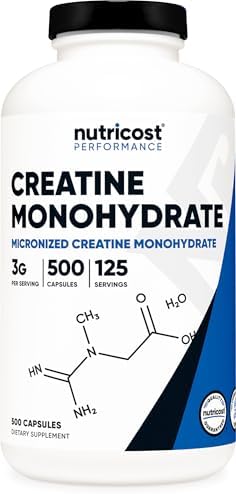
The pill-format version of Nutricost's budget creatine: 750mg micronized creatine per capsule, for buyers who want to skip mixing powder into water entirely.
Sports Research Creatine Monohydrate (Creapure, NSF Certified)
4.8
5g Creapure per serving · NSF Certified for Sport · Informed Sport tested
Our pick for drug-tested athletes: a single-ingredient, Creapure-sourced creatine monohydrate that pairs a widely praised formulation with NSF Certified for Sport and Informed Sport banned-substance testing, credible enough for drug-tested athletes and simple enough for anyone else.
A women's-focused creatine blend built around glute and lower-body training, combining the standard 5-gram creatine dose with Verisol collagen peptides and an amino acid blend.
NAKED Pure Micronized Creatine Monohydrate (NSF Certified)
4.7
5g per serving · 100 servings · NSF Certified pure
Our Best Clean Formula pick: a zero-additive creatine monohydrate whose entire ingredient list is creatine, NSF Certified for purity with testing confirming no detectable heavy metals or pesticides.
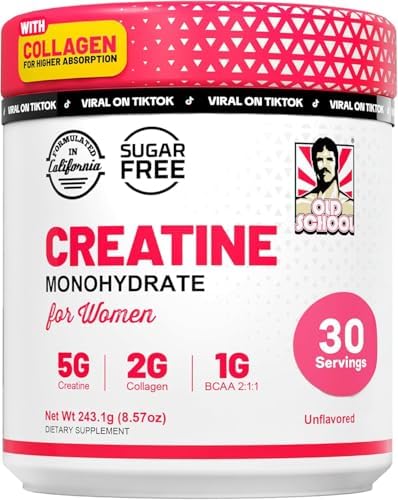
A women's-marketed creatine blend that pairs the standard 5-gram clinical dose with hydrolyzed collagen and a BCAA blend, aimed at buyers who want recovery and skin-and-joint support in the same scoop.
5g per 4-gummy serving · L-taurine + B12 · Blue Raspberry
A chewable creatine format in Blue Raspberry flavor: 5 grams of creatine monohydrate across four gummies per serving, paired with L-taurine, magnesium, potassium and vitamin B12, at a steeply discounted price in this comparison.
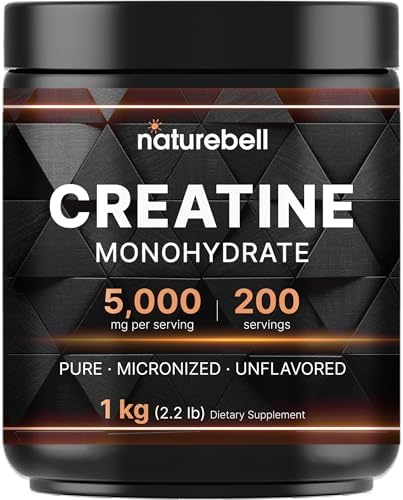
A bulk, single-ingredient micronized creatine monohydrate powder with no fillers or additives, third-party tested for purity, and priced to compete with the category's established value picks.
Short on time? These three cover most buyers: our Best Overall Nutricost with a clean 5-gram Creapure dose, Sports Research as the pick for drug-tested athletes, and NAKED Pure as the cleanest zero-additive formula.
Creatine Monohydrate 101: What It Does & How to Choose
Understand the category before you buy - what the science actually says, and which specs matter.
Every tub promises more strength and bigger muscles, but the differences that matter come down to the form of creatine, how it is dosed, and how clean it is. Here is how creatine works, why the plain monohydrate you already know is still the smart pick, and the specs actually worth comparing.
What does a creatine supplement actually do?
Creatine is a compound your body already makes and stores mostly in your muscles, where it helps regenerate the quick bursts of energy you use for lifting, sprinting, and other short, hard efforts. Supplementing raises those stores above what diet alone provides, so you can push a little harder and recover a little faster.
It helps your muscles produce energy during short, intense sets.
Fuller creatine stores can mean more reps and heavier lifts over time.
It draws a bit of water into muscle cells, which supports growth.
The benefits build up as your stores saturate, not from a single dose.
Creatine monohydrate is the specific form that nearly all of that research studied, and every product in this lineup is built on it, whether as powder or capsules.
Why plain monohydrate beats the fancy forms
Here is the thing most shoppers do not know: creatine monohydrate is the most studied and most effective form there is, and the pricier alternatives you will see, like creatine HCl or "buffered" creatine, have not been shown to work any better. They cost more and lean on marketing, not evidence. Sticking with monohydrate is the confident, well-supported choice, and it is exactly what this whole lineup, from the Nutricost powder to the Sports Research tub, is made of.
Two related myths are worth clearing up. The first is dosing. The standard maintenance dose is roughly 3 to 5 grams per day, and most powders here deliver that in one scoop of 5,000 mg. A "loading phase," where you take a larger amount for the first week, is optional. It saturates your muscles a few days faster but is not required to reach the same end result, so you can skip it and simply take your daily dose.
The second myth is "micronized." Micronized creatine, which describes most of this lineup, is just monohydrate ground into finer particles so it mixes into water more smoothly and feels less gritty. It is a convenience, not a stronger or more potent form. What you should actually look for on the label is a purity signal: the Creapure mark, which certifies a specific high-purity source, or independent third-party testing.
Which specs actually matter?
Once you know monohydrate is the form to buy, a few features decide which one fits you:
Dose per serving: Aim for the researched 3 to 5 gram range. The powders here hit 5,000 mg per scoop, while the capsule option delivers 3,000 mg across four capsules.
Purity and testing: Look for Creapure, as in the Nutricost 500g powder and Sports Research, or third-party certification. Several picks carry NSF Certified for Sport, Informed Sport, or Informed Choice, which also screen for banned substances if you compete.
Form factor: Powder is the cheapest and most flexible, while capsules like the Nutricost 500-count travel without a scoop for anyone who would rather skip mixing.
Servings per container: Value varies widely, from 30 servings in the smaller blended-powder tubs up to 200 in the bulk options, so compare cost per serving rather than sticker price.
Additives: Many picks are single-ingredient creatine with no fillers. A few add something extra, like the Bold Buns powder with collagen and BCAAs.
Flavor: Nearly every option in this lineup is unflavored, so it blends into water, juice, or a shake without changing the taste.
How we grade products
Graded Picks rankings are aggregated from several independent signals: verified buyer ratings and the size of the review base for credibility, recent monthly purchase volume for relevance, assessments from trusted health and fitness publications, and how each product places in leading category lineups. For creatine monohydrate we weigh:
Purity and third-party testing or certification
Dose accuracy against the researched range
Form and mixability
Ingredient simplicity and absence of fillers
Servings and value per serving
Overall value for the price
Safety and usage note: Creatine monohydrate is well tolerated by most healthy adults, though some people notice mild water retention or stomach upset, which taking it with food and plenty of water usually eases. If you are pregnant, nursing, or managing a kidney condition, or if you take medications, check with a healthcare provider before starting, and treat any supplement as an addition to a solid diet rather than a replacement for one.
In-Depth Reviews
Everything we learned from buyer reviews and expert testing, product by product.
Our Best Overall pick. Nutricost's creatine monohydrate does the one thing creatine needs to do and does it cleanly: 5 grams of micronized, Creapure-sourced creatine per serving, the exact dose the research calls for, with no fillers, sweeteners or additives. Expert testers consistently name it a top choice for delivering that clinical dose without paying a premium, and reviewers note it mixes easily and dissolves faster than several competitors, with no noticeable grit or aftertaste despite being unflavored. It is third-party tested and produced in a GMP-compliant US facility, and Nutricost uses the same formulation across both this powder and its capsule counterpart in this lineup. There is nothing flashy here, and for buyers whose goal is simply raising muscle creatine stores with a proven, well-made single-ingredient powder, that simplicity is the point.
This is Nutricost's creatine monohydrate reformulated into capsules rather than powder - 750mg of the same micronized creatine per capsule, with a full 3-gram serving requiring four capsules taken with water. It's third-party tested and produced in the same GMP-compliant, FDA-registered facility as the brand's powder, so the underlying material is identical; what changes is convenience. Capsules travel better, avoid the mixing-and-cleanup step entirely, and sidestep the taste and texture complaints some buyers have with any creatine powder, flavored or not. The trade-off is dosing precision and cost per gram of actual creatine: swallowing four capsules to hit a full serving is less convenient than a single scoop, and gram-for-gram it costs more than the same brand's powder.
3. Sports Research Creatine Monohydrate (Creapure, NSF Certified)
4.8
Sports Research delivers a clinically studied 5-gram dose of pure, micronized creatine monohydrate and backs it with strong verification. It uses German-made Creapure, widely regarded as the purity benchmark for creatine, and carries NSF Certified for Sport plus Informed Sport testing, meaning every batch is screened for banned substances, the standard drug-tested athletes and dietitians look for first. Independent formulation reviews from strength-training publications rate it highly for containing exactly the ISSN-recommended 3 to 5 gram daily dose with zero fillers, artificial sweeteners or additives. It also mixes cleanly and is genuinely unflavored, a common complaint testers have with rival powders. The main limitation is that it is a single-purpose product: buyers wanting collagen, BCAAs or added flavor in the same scoop will need a different formula.
Creatine per serving5,000 mg (5g)
Servings per container~100
FormMicronized powder (Creapure, German-sourced)
FlavorUnflavored
Third-party testing / certificationNSF Certified for Sport + Informed Sport tested for banned substances
AdditivesNone - single-ingredient creatine
Container size500g (17.64 oz / 1.1 lb)
Pros
Our pick for drug-tested athletes: NSF Certified for Sport and Informed Sport tested for banned substances
Made with German Creapure, the purity benchmark for creatine monohydrate
Delivers the ISSN-recommended 3-5 gram dose with zero additives
Mixes cleanly and stays genuinely unflavored
Praised in independent formulation reviews for its simplicity and value
Cons
Single-ingredient formula - no collagen, BCAAs or flavor options
No loading-phase guidance included on the label for new users
Tub size runs through faster for anyone stacking with other supplements
Who is it for?
Athletes and anyone else who wants a thoroughly certified, no-frills creatine monohydrate with banned-substance verification.
Who is it not for?
Buyers who specifically want an added collagen, BCAA or flavored formula bundled into their creatine dose - this is single-ingredient only.
Bold Buns takes the same 5-gram creatine monohydrate foundation as its competitors and layers in 2,500mg of Verisol bioactive collagen peptides plus a 2,000mg BCAA-and-L-glutamine blend, marketed specifically toward glute-focused strength training and recovery. The brand positions the collagen for skin and connective-tissue support alongside the muscle-building case for creatine itself, though - as with any multi-ingredient blend - the combined formula hasn't been studied as a unit the way creatine monohydrate alone has across decades of research. It's a newer entrant without much independent professional coverage yet, so buyers are relying primarily on the ingredient list and the brand's own claims rather than third-party test results or expert reviews. At 30 servings for a 292.5-gram container, portioning is generous relative to some rivals in the women's-blend category.
5. NAKED Pure Micronized Creatine Monohydrate (NSF Certified)
4.7
Our Best Clean Formula pick. NAKED Pure's entire pitch is what it leaves out: no artificial sweeteners, flavors, colors or fillers of any kind, just micronized creatine monohydrate. That simplicity is independently verified rather than marketing copy, as the product is NSF Certified, meaning outside testing has confirmed both label accuracy and the absence of harmful contaminant levels, including heavy metals and pesticides. Reviewers highlight the clean-label appeal that drives its inclusion in independent vegan and budget-creatine guides, and buyers consistently describe it dissolving well despite the lack of any dissolution-aiding additives. At 100 servings per tub it sits in value territory while adding a stronger purity certification than most single-ingredient rivals here, which is why it stands out for buyers who put an independently verified, zero-additive ingredient list first.
Creatine per serving5,000 mg (5g)
Servings per container100
FormMicronized powder
FlavorUnflavored
Third-party testing / certificationNSF Certified for purity (heavy metals, pesticides)
AdditivesNone - zero additives, single ingredient
Container size500g (1.1 lb)
Pros
NSF Certified for purity - independently tested for heavy metals and pesticides
Genuinely zero additives: creatine monohydrate is the only ingredient
Featured in independent vegan and budget-creatine buying guides
Strong per-serving value at 100 servings per tub
Dissolves well despite having no added mixing aids
Cons
No sport-specific banned-substance testing like Informed Sport
Unflavored-only - no flavored version in this lineup
Packaging is simple and lacks a built-in scoop guide on some batches
Who is it for?
Buyers who prioritize an independently verified, zero-additive ingredient list above all else, including vegan and clean-label shoppers.
Who is it not for?
Drug-tested athletes needing Informed Sport certification, and anyone who wants added collagen or amino acids in the same scoop.
6. Old School Labs Creatine for Women (Collagen & BCAA)
4.6
Old School Labs builds its women's creatine around the same 5-gram dose the science supports, then adds 2,000mg of hydrolyzed bovine collagen and a 2:1:1 BCAA blend on top - positioning it as a combined strength, recovery and connective-tissue supplement rather than a pure creatine product. Collagen's amino acids support connective tissue while BCAAs contribute to muscle protein synthesis, though buyers should note the added ingredients haven't been studied together as a combined formula the way creatine monohydrate alone has. It's third-party lab tested and made in a GMP-certified US facility. The catch is servings: at 30 scoops per container, it lasts half as long as this brand's own BioFit probiotic formula while costing less per bottle, so buyers are paying a per-serving premium for the collagen and BCAA add-ins rather than for the creatine itself.
Dralot's gummy delivers a full 5-gram creatine dose across four Blue Raspberry gummies, formulated with natural pectin rather than gelatin, and layers in L-taurine, magnesium, potassium and vitamin B12 alongside the base creatine. The brand markets it as a zero-sugar, low-calorie recipe with no artificial sweeteners, following the shift the broader creatine-gummy category has made away from the sucrose-heavy early formulas some competitors still use. Independent industry coverage of that category has flagged a real formulation risk worth knowing about: creatine monohydrate degrades toward creatinine, an inactive byproduct, when exposed to the heat, acid and moisture a pectin gummy matrix requires during manufacturing and storage, and outside lab testing of several gummy brands has found some falling well short of their labeled dose months after production. We found no dedicated professional review or independent lab test of this specific Dralot formula confirming it holds its full 5-gram claim over time, so that category-wide caution applies here as much as anywhere else on the gummy shelf. At the time of our scan it carried a steep discount that pushed its per-serving cost below most other gummies in this comparison, though as with most promotional listings, the price moves often.
Creatine per serving5,000 mg per 4-gummy serving
Servings per container30 (120 gummies)
FormChewable gummy (pectin-based, not gelatin)
FlavorBlue Raspberry
Third-party testing / certificationNo third-party certification or independent lab test identified for this formula
Full 5g creatine dose across four Blue Raspberry gummies, no mixing or capsules needed
Made with natural pectin instead of gelatin, keeping the formula vegan
Zero-sugar, low-calorie recipe with no artificial sweeteners
Adds L-taurine, magnesium, potassium and vitamin B12 to the base creatine dose
Steep discount at the time of our scan lowers the per-serving cost
Cons
No independent professional review or lab test found confirming this specific formula holds its full 5g creatine claim over time
Creatine-gummy formats are documented to degrade toward creatinine under the heat and moisture pectin gummies require, a category-wide risk this listing hasn't published testing to rule out
Four gummies per serving is more chewing than a single powder scoop, and it's the newest, smallest-volume listing in this comparison
Who is it for?
Buyers who specifically want a chewable, pectin-based creatine gummy in Blue Raspberry flavor at a steep promotional price.
Who is it not for?
Anyone who wants an independently verified potency claim or the lowest cost per gram of creatine over time - the powder options above cost less and carry more independent testing.
NatureBell's creatine monohydrate keeps the formula deliberately simple: 5 grams of finely micronized creatine per serving and nothing else - no sweeteners, flavors or fillers. The fine micronization is designed to dissolve completely in water or juice without the grittiness some coarser creatine powders leave behind, a point reviewers and buyers consistently mention. It's third-party lab tested to confirm purity and potency, and the 1,000-gram tub delivers 200 servings, undercutting several smaller-format rivals in this lineup on a per-serving basis once its ongoing discount is applied. Independent coverage of this specific product comes mostly from consumer-focused review sites rather than major sports-nutrition publications, so buyers are relying more on the ingredient list and manufacturer testing claims than on dedicated expert lab comparisons.
Creatine per serving5,000 mg (5g)
Servings per container200
FormMicronized powder
FlavorUnflavored
Third-party testing / certificationThird-party lab tested for purity and potency
The stars you see are the Graded Picks cumulative score, not a single retailer's average. It blends verified buyer reviews aggregated across major retailers, assessments from professional reviewers and expert testers, and how prominently the product features in leading category lineups.
Advertising Disclosure
Our rankings are compiled by aggregating several independent signals, including verified buyer feedback, how popular a product currently is with shoppers, and evaluations published by professional reviewers. Editorial opinions are our own.
Please note that we participate in affiliate marketing programs. When you purchase through links on our site, we may earn a commission. As an Amazon Associate we earn from qualifying purchases. This comes at no additional cost to you and helps support the resources required to provide valuable content.