A dehumidifier pulls damp out of the air, but the part almost nobody thinks about until it's too late is where all that collected water actually goes. The cheap ones make you carry a sloshing tank to the sink two or three times a day, and in a basement that is exactly the chore you will start skipping. We analyzed thousands of verified buyer reviews, recent sales data, and expert evaluations to find six dehumidifiers whose built-in pump moves the water for you and keeps the unit running on its own.
Every product we compared, in ranked order. Tap through to Amazon to check today's price, or jump to the full review below.
1
Gasbye DryPrime
Best Overall
Gasbye DryPrime 75-Pint Dehumidifier with Replaceable Pump (4,500 Sq. Ft.)
5.0
75 pints/day · 4,500 sq ft rating · replaceable pump
Our Best Overall pick: a different take on the pump problem, with the pump sitting inside the tank for easy cleaning and a standalone replacement pump so a failure never means scrapping the whole unit.
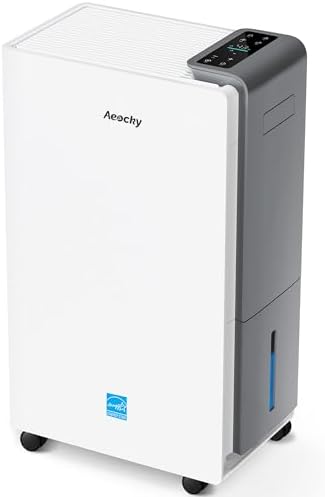
AEOCKY 80-Pint Energy Star Dehumidifier (4,500 Sq. Ft., Gravity Drain)
4.9
80 pints/day · 4,500 sq ft rating · gravity drain only
A well-reviewed, Energy Star Most Efficient 2025 compressor dehumidifier - worth flagging that this specific listing has no built-in pump and drains by gravity hose only.
AEOCKY LEO 80-Pint Dehumidifier with Pump (4,500 Sq. Ft.)
4.9
80 pints/day · 4,500 sq ft rating · built-in pump
Our Best Value pick: 360-degree auto-drainage that pushes water upward through an included hose, at the lowest price of any genuine pump-equipped model in this comparison.
34 pints/day · 2,500 sq ft rating · gravity drain only
A no-frills gravity-drain unit that remains the lowest price in this comparison - worth considering only if a floor drain is already within reach, since this specific listing has no built-in pump.
50 pints/day · 3,500 sq ft rating · gravity drain only
A quiet, independently lab-tested AEOCKY at a compact 3,500 sq ft size - worth flagging up front that this listing has no built-in pump and drains by gravity hose or removable tank only.
Waykar 125-Pint Crawl Space Dehumidifier with Pump (6,500 Sq. Ft.)
4.6
125 pints/day (max) · 6,500 sq ft rating · 16.4 ft pump lift
Our Best for Large Basements pick: a commercial-grade 125-pint unit with both a true pump and a gravity hose included, a wide 10-98% humidistat range and a 5-year compressor warranty for spaces no other model here can keep up with.
Short on time? These three cover most buyers: our top-graded overall pick, the best value among this lineup's genuine pump-equipped units, and the best choice for a large basement with no floor drain nearby.
Best Overall
Gasbye DryPrime Pump Dehumidifier
Gasbye DryPrime 75-Pint Dehumidifier with Replaceable Pump (4,500 Sq. Ft.)
Dehumidifiers with Pump 101: What They Do & How to Choose
Understand the category before you buy - what the science actually says, and which specs matter.
Every model here promises to dry out a room, but the pump is the feature that changes how you live with it, and after that it comes down to matching capacity and coverage to your space. Here is how the pump works, why it matters more than the headline pint number, and the specs actually worth comparing.
What does a dehumidifier with a pump actually do?
A dehumidifier draws humid air across a cold coil, condenses the moisture into water, and collects it. A standard unit holds that water in a tank until you empty it or drains it by gravity through a hose. A pump model adds one thing on top of all that: a small pump that pushes the collected water out for you.
In plain terms it does three jobs:
Removes moisture from the air, rated here from 34 pints a day up to 100 pints a day at peak conditions.
Collects the water in a tank or routes it straight to a hose.
Actively pumps that water up and away so you never have to lift and dump it.
Why the built-in pump is the whole reason to buy this type
This is the part worth understanding before you compare anything else. A normal dehumidifier drains by gravity, which only works if you have a floor drain sitting lower than the unit. Water does not run uphill, so if your only drain is a utility sink, a window well, or a spot across the room, gravity drainage is useless and you are back to hauling the tank.
A built-in pump solves exactly that. Instead of relying on a downhill slope, it actively pushes the water UP and out through a hose, into a sink, out a window, or across the floor to wherever your drain actually is. The models here that spell out their reach, led by the 5,000 sq ft DECIUU, which lists a 16.4 ft lift, plus the Gasbye's replaceable pump reaching roughly 16 ft, are enough to clear a basement wall and reach a sink or standpipe on the level above.
That is the difference between a dehumidifier you empty by hand every few hours and one you set up once and forget. The lineup does include a couple of gravity-drain options that ship without a pump at all, namely the AEOCKY 80-Pint and the VEAGASO 34-Pint, and they are fine if you happen to have a low floor drain right beside them. If you don't, the pump is the entire point.
Which specs actually matter?
Once the pump is settled, a handful of numbers decide which unit fits your space:
Pump vs gravity drain: Confirm the model has a real built-in pump, not just an included gravity hose. The 5,000 sq ft DECIUU unit pairs a pump with a gravity-hose or manual-tank backup so you can pick whichever method suits your space, while the Gasbye and AEOCKY LEO rely on their pump as the primary drainage method.
Pump lift height: This is how high the pump can push water. A 16.4 ft lift, as on the 5,000 sq ft DECIUU unit, clears most basement setups; the Gasbye's replaceable pump reaches close to that at roughly 16 ft. A shorter lift may not reach an upstairs sink.
Capacity in pints per day: The daily removal number, from 50 pints up to 100 pints (max) here, tells you how fast it dries a space. Match a bigger number to a damper room, not just a bigger one.
Coverage in square feet: Advertised coverage runs from 3,500 sq ft up to 7,500 sq ft. Size it to your room so the unit isn't straining or wildly oversized.
Built-in humidistat: A humidistat lets you set a target humidity and holds it, cycling off when the air is dry enough. The 40-80% adjustable range on the AEOCKY units here is a good example of the control that keeps a unit from running forever.
Tank size: Tanks here span 0.8 gallons up to 1.6 gallons. It matters less when you drain continuously, but a larger tank means fewer trips on the days you skip the hose.
Auto shutoff and restart: Auto shutoff stops the unit safely if a tank fills, and auto restart brings it back after a power blip so a tripped basement outlet doesn't leave you damp for a week.
How we grade products
Graded Picks rankings are aggregated from several independent signals: verified buyer ratings and the size of the review base for credibility, recent monthly purchase volume for relevance, assessments from trusted home and appliance publications, and how each product places in leading category lineups. For dehumidifiers with a pump we weigh:
Pump reliability and rated lift height
Daily moisture removal versus advertised coverage
Humidistat accuracy and control range
Continuous drainage setup and hose quality
Auto shutoff, restart, and defrost handling
Noise and everyday operation
Warranty and overall value
Setup and maintenance note: A pump only helps if the drain hose runs cleanly to its destination without kinks or dips that let water pool and freeze or clog. Route it to a sink, window, or drain before you rely on continuous mode, keep the intake filter clean so airflow stays strong, and in an unheated space watch that temperatures stay high enough for the coil to work, since very cold air holds little moisture and can ice the unit.
In-Depth Reviews
Everything we learned from buyer reviews and expert testing, product by product.
The Gasbye DryPrime is our Best Overall pick because it solves the single most common complaint about pump dehumidifiers: the pump wearing out before the rest of the machine does. It places the pump inside the water tank, where it's easy to access and clean, and sells a standalone replacement pump so a failed pump doesn't mean buying an entirely new dehumidifier - a more direct answer to the category's biggest long-term reliability risk than any other model in this comparison. It's rated for 44 dB quiet operation, removes up to 75 pints per day across a 4,500 sq ft rating, and supports roughly 16 feet of vertical drainage through the included 16.5-foot hose. Four modes (normal, continuous, auto, sleep) plus auto shutoff and restart round out the feature set, and a 10% discount at the time of our scan sweetens an already well-rounded package. As a newer brand, independent professional-review coverage beyond the manufacturer's own materials is still thin, but the combination of a genuine engineering fix for pump failure and a complete, well-rounded feature set is why it tops this lineup.
Coverage area (advertised)4,500 sq ft
Daily removal capacity75 pints
Tank volume1.45 gallons
DrainageReplaceable built-in pump (~16 ft lift), 16.5 ft hose included
Dimensions (D x W x H)10" x 15" x 24"
Modes & controls4 modes (normal, continuous, auto, sleep), auto shutoff/restart
Warranty2 years
Pros
Pairs genuine pump drainage with a real fix for the category's most common failure point
Pump can be replaced on its own instead of requiring a whole new unit
Pump sits inside the tank for easy access and cleaning
Quiet 44 dB operation
Four operating modes with auto shutoff and restart, plus a 16.5 ft drain hose included
Cons
Little independent professional-review coverage beyond the manufacturer's own site
Newer brand without a long track record
Costs more than the AEOCKY LEO pump model, with only a modest discount at the time of our scan
Who is it for?
Most buyers: anyone who wants genuine pump drainage without gambling on the pump being the point of failure a few years in - our Best Overall pick for exactly that reason.
Who is it not for?
Shoppers on the tightest budget - the VEAGASO costs meaningfully less if a floor drain is already within reach - or anyone who wants a long-established brand with extensive independent testing behind it.
2. AEOCKY 80-Pint Energy Star Dehumidifier (4,500 Sq. Ft., Gravity Drain)
4.9
This AEOCKY carries an Energy Star Most Efficient 2025 certification, quiet operation in the mid-40s dB range, and five operating modes plus a child lock and timer, and it's broadly well regarded for real-world moisture removal. The important caveat for this comparison: it ships without a pump. The included hose relies entirely on gravity, so it only works if the unit sits above a floor drain - it cannot push water up to a sink or window the way the pump models on this page do. For a basement or room without a floor drain, the Gasbye or Waykar pump models in this comparison are the direct upgrade path.
Energy Star Most Efficient 2025 certification for lower running costs
Quiet operation in the mid-40s dB range
Five operating modes plus child lock and timer
Extended supplemental warranty tiers available
Strong reputation for real-world moisture removal
Cons
No built-in pump - gravity drain hose only, needs a floor drain below the unit
1.45-gallon tank fills quickly without hose drainage
4,500 sq ft coverage claim is optimistic for a genuinely damp basement
Who is it for?
Buyers who already have a floor drain and want AEOCKY's efficiency and quiet operation without paying for a pump they won't use.
Who is it not for?
Anyone without a floor drain - despite appearing in this comparison, this model cannot pump water upward; the Gasbye or Waykar pump models above are the ones to get instead.
3. AEOCKY LEO 80-Pint Dehumidifier with Pump (4,500 Sq. Ft.)
4.9
Our Best Value pick. AEOCKY's LEO pump model keeps the brand's 80-pint capacity and 4,500 sq ft rating, then adds an electromagnetic pump the brand has put through extensive reliability cycling, with a dual-sensor system designed to prevent the pump from running dry and aging prematurely. It actively pushes water upward for what AEOCKY calls true 360-degree auto-drainage, ending manual tank emptying, and the roughly 16-foot hose ships in the box. Operation stays in the mid-40s dB range typical of the brand's lineup, and it's app-connected for remote control. Among this comparison's genuine pump-equipped models it is the least expensive, a trade its price reflects: a shorter independent track record in exchange for the lowest-cost way into pump drainage here.
Coverage area (advertised)4,500 sq ft
Daily removal capacity80 pints (max)
Tank volume1.45 gallons
DrainageBuilt-in pump, 360-degree auto-drainage, ~16 ft hose included
Dimensions (D x W x H)14.4" x 8.6" x 23.3"
Modes & controlsAutomatic mode, app-connected control
Warranty3 years (5-year compressor)
Pros
Lowest price among this comparison's genuine pump-equipped models - our Best Value pick
Genuine built-in pump with 360-degree auto-drainage - no floor drain needed
Quiet mid-40s dB operation typical of the AEOCKY line
Dual-sensor system guards against running the pump dry
App-connected remote control
Cons
Shorter independent track record than the category's most established brands
Smaller 1.45-gallon tank than some rivals
4,500 sq ft coverage claim is optimistic for a consistently damp space
Who is it for?
Buyers who need genuine upward pump drainage without paying the most for it.
Who is it not for?
Buyers who prioritize a long independent testing history over price - this AEOCKY LEO is a newer listing without that track record yet.
The VEAGASO 34-Pint is the most affordable listing in this comparison, covering a rated 2,500 sq ft with three operating modes (dehumidify, dry and continuous), an intelligent humidistat, and quiet sub-40 dB operation on its low setting that reviewers single out as suited to bedrooms and home offices. It's a straightforward, set-and-forget unit: automatic shutoff and restart, a digital display, and a continuous-drain hose that empties the tank without manual dumping. The important caveat for this comparison: it has no built-in pump, so it only works installed above a floor drain and can't push water up to a sink or window the way the Gasbye, AEOCKY LEO and Waykar pump models here can. Buyer sentiment is generally positive on quiet operation and ease of setup, though a portion of owners feel actual moisture removal falls short of the 34-pint rating in consistently high-humidity conditions - a common gap between rated and real-world capacity in this category. Its low price is the main reason to consider it if a floor drain is already within reach; buyers who need the pump this category page is built around should look to the Gasbye, AEOCKY LEO or Waykar picks instead.
Coverage area (advertised)2,500 sq ft
Daily removal capacity34 pints
Tank volume2 liters (0.53 gallons)
DrainageGravity drain hose or removable tank (no pump)
Dimensions (D x W x H)19" x 10" x 12.5"
Modes & controls3 modes (dehumidify, dry, continuous), digital display, timer
Warranty2 years
Pros
Lowest price of any model in this comparison
Quiet sub-40 dB operation well suited to bedrooms and offices
Three operating modes plus automatic shutoff and restart
Continuous-drain hose avoids manual tank emptying above a floor drain
Cons
No built-in pump - only works with a floor drain below the unit; buyers who need pump drainage should choose the Gasbye, AEOCKY LEO or Waykar instead
A portion of owners feel real-world moisture removal trails the 34-pint rating in very humid conditions
Thinner tank volume than the pump-equipped units in this lineup
Who is it for?
Buyers who already have a floor drain nearby and want the lowest price in this comparison.
Who is it not for?
Anyone without a floor drain who specifically needs a pump - this listing can't push water upward; the Gasbye, AEOCKY LEO or Waykar pump models in this comparison are built for that.
Independent lab testing by HouseFresh found this AEOCKY pulled relative humidity from 91.1% down to 61.8% in 30 minutes at full speed, extracting about 0.4 liters of water in three hours - real-world performance the reviewer compares to smaller 20-35 pint units rather than the full 50-pint figure on the box. The same test measured sound at 48.1 dB on the low setting and 52.7 dB at top speed, quiet enough that the reviewer recommends leaving it running continuously rather than cycling it on and off, and clocked power draw at a modest 266 watts. Brand-wide coverage from Featurelens and BestDehumidifierChoice highlights the same strengths found here: an efficient compressor, a child lock and adjustable 40-80% humidistat, and a 3-year warranty that beats the 1-year norm for dehumidifiers under $200. The important caveat for this comparison: like the AEOCKY 80-Pint gravity-drain listing above, this unit ships without a built-in pump, so the included hose only works installed above a floor drain and can't push water up to a sink or window the way the pump-equipped models on this page can. Its price undercuts every genuine pump model here, but that reflects the missing pump as much as anything else, and it's still priced above the VEAGASO, the single cheapest listing in this comparison.
Coverage area (advertised)3,500 sq ft
Daily removal capacity50 pints
Tank volume0.8 gallons
DrainageGravity drain hose or removable tank (no pump)
Dimensions (D x W x H)13.19" x 17.99" x 8.66"
Modes & controlsHumidistat 40-80%, child lock, fan speed control, timer
Warranty3 years
Pros
Real-world extraction and noise performance backed by independent lab testing (HouseFresh)
Very quiet operation, from 48.1 dB on low to 52.7 dB at top speed
Adjustable 40-80% humidistat with a child lock
3-year warranty beats the 1-year norm for budget dehumidifiers
Priced below every genuine pump-equipped model in this comparison
Cons
No built-in pump - gravity drain hose or tank only, needs a floor drain below the unit
Independent testing found real-world moisture removal closer to a 20-35 pint unit than the advertised 50-pint rating
Small 0.8-gallon tank fills quickly without hose drainage
Who is it for?
Buyers who already have a floor drain nearby and want a quiet, independently tested AEOCKY at a lower price than every pump-equipped option in this comparison, without paying for a pump they won't use.
Who is it not for?
Anyone without a floor drain - despite appearing in this comparison, this listing cannot pump water upward; the Gasbye, AEOCKY LEO or Waykar pump models in this comparison are the ones to get instead.
6. Waykar 125-Pint Crawl Space Dehumidifier with Pump (6,500 Sq. Ft.)
4.6
The Waykar 125-pint is our Best for Large Basements pick: the highest rated capacity and widest coverage of any genuine pump-equipped model in this comparison. It is rated to pull up to 125 pints per day at 95°F/90% RH across a claimed 6,500 sq ft, backed by a 300 CFM blower and a 10-98% humidistat range that goes lower than most residential units. Drainage is continuous by design: a 16.4-foot pump hose handles vertical lift to a sink or window, and a 6.6-foot gravity hose covers straightforward downhill runs, so there is no standalone bucket to empty. Buyers report meaningful real-world results, with one owner recording crawl-space humidity dropping from 84% to 58% in about 12 hours, and Waykar backs the compressor for 5 years with a 30-day money-back guarantee and lifetime technical support. It is built with crawl spaces, construction sites and commercial areas in mind, so it is more industrial than a living-room appliance, and it has little independent professional coverage yet, but nothing else in this lineup is rated to move this much water across this much floor.
Coverage area (advertised)6,500 sq ft
Daily removal capacity125 pints (max, at 95°F/90% RH)
Tank volumeNo standalone tank - built-in pump + continuous gravity drain only
DrainageBuilt-in pump (16.4 ft lift) + 6.6 ft gravity hose, both included
Dimensions (D x W x H)19.29" x 12.6" x 13.58"
Modes & controlsDigital display, humidistat (10-98% RH), timer, auto shutoff/restart, auto defrost
Warranty5 years (compressor); 1-year standard + 2-year extended coverage
Pros
Highest capacity and largest coverage of any pump-equipped model in this comparison - our Best for Large Basements pick
Both a 16.4 ft pump hose and a 6.6 ft gravity hose included for flexible installation
Unusually wide 10-98% humidistat range for extreme damp environments
5-year compressor warranty plus a 30-day money-back guarantee
Built with a corrosion-resistant metal casing for crawl spaces and job sites
Cons
Newer, specialty listing with less independent professional coverage than established basement dehumidifiers in this category
No standalone water tank - it depends entirely on the included hoses for drainage
Sized and priced for serious crawl-space/commercial jobs, overkill for an average bedroom or bathroom
Who is it for?
Owners of large, damp basements or crawl spaces with no nearby floor drain who want the most capacity and the widest humidistat range in this comparison - our Best for Large Basements pick.
Who is it not for?
Anyone dehumidifying a normal bedroom or bathroom, where the smaller units in this lineup are sized and priced more sensibly.
The stars you see are the Graded Picks cumulative score, not a single retailer's average. It blends verified buyer reviews aggregated across major retailers, assessments from professional reviewers and expert testers, and how prominently the product features in leading category lineups.
Advertising Disclosure
Our rankings are compiled by aggregating several independent signals, including verified buyer feedback, how popular a product currently is with shoppers, and evaluations published by professional reviewers. Editorial opinions are our own.
Please note that we participate in affiliate marketing programs. When you purchase through links on our site, we may earn a commission. As an Amazon Associate we earn from qualifying purchases. This comes at no additional cost to you and helps support the resources required to provide valuable content.