Fish oil is one of the most-bought supplements in the world, and for good reason: the omega-3 fats EPA and DHA support your heart, brain, and joints in ways most of us do not get enough of from food. But the big number on the front of the bottle is often the most misleading thing about it, and a cheap softgel can deliver a fraction of what you think you are taking. We analyzed thousands of verified buyer reviews, recent sales data, and expert evaluations to find eight fish oil supplements that give you a real, well-tested dose of the fats that actually matter.
Every product we compared, in ranked order. Tap through to Amazon to check today's price, or jump to the full review below.
1
Sports Research Omega-3 1250
Best Overall30% COUPON
Sports Research Omega-3 Fish Oil 1250 (Wild Alaska Pollock)
5.0
1,055mg Omega-3 per softgel · Natural triglyceride form · MSC certified
Our Best Overall pick: a one-a-day, IFOS 5-Star certified formula sourced from MSC-certified wild Alaska pollock, with broad, consistently positive coverage from independent supplement reviewers.
Our pick for daily wellness support: a broader omega-3 blend combining Antarctic krill, wild sockeye salmon and Alaska pollock oils with astaxanthin, phospholipids and wax esters for absorption.
560mg Omega-3 per softgel · 360mg EPA + 240mg DHA · 240 servings
Nutricost's entry-level fish oil: a single-softgel, 560mg-omega-3 daily dose sized for buyers who want a straightforward maintenance supplement rather than a high-potency concentrate.
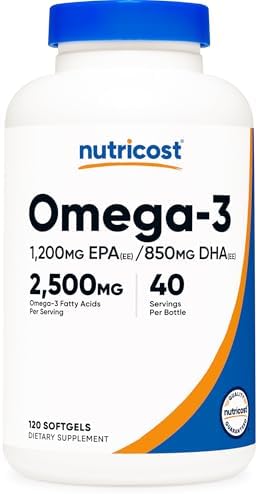
2,500mg per serving · 1,200mg EPA + 850mg DHA · 40 servings
Our Best Affordable pick: a high-potency, wild-caught formula delivering 1,200mg EPA and 850mg DHA per three-softgel serving at one of the lowest prices in this comparison.
A high-potency, burpless lemon-flavored formula delivering 1,300mg EPA and 860mg DHA per three-softgel serving, refined through molecular distillation to strip out contaminants.
A deep-sea Norwegian fish oil concentrate with enteric-coated, burpless softgels and one of the largest bottle counts in this comparison at 240 softgels.
A wild-caught, burpless, lemon-flavored fish oil delivering the same 2,100mg combined EPA+DHA potency as pricier concentrates in this comparison, in one of the largest bottle counts here.
Short on time? These three cover most buyers: our top-graded choice, the best value for money, and a wellness-focused blend for joint and heart support.
Best Overall
Sports Research Omega-3 1250
Sports Research Omega-3 Fish Oil 1250 (Wild Alaska Pollock)
Fish Oil Supplements 101: What They Do & How to Choose
Understand the category before you buy - what the science actually says, and which specs matter.
Every fish oil bottle shouts a milligram number, but that number usually describes the oil, not the omega-3s inside it, and the two can be very different. Here is how fish oil works, why the EPA and DHA dose is the figure to read, and the features worth comparing before you buy.
What does a fish oil supplement actually do?
Fish oil delivers two long-chain omega-3 fatty acids, EPA and DHA, that your body uses but cannot make efficiently on its own. Once absorbed, they do a few well-studied things:
Support healthy triglyceride levels and overall heart health
Contribute to normal brain and eye function
Help calm the everyday inflammation tied to joint comfort
Your body pulls these fats from oily fish like salmon, pollock, and cod. A supplement is simply a concentrated, convenient way to hit a meaningful daily amount without eating fish every day.
The headline milligrams are not the dose that matters
This is the single most useful thing to understand before you buy. A label that reads "1000mg fish oil" is telling you the weight of the oil, not the amount of active EPA and DHA in it, and those omega-3s are only a slice of the total. In this lineup, the Nutricost Fish Oil 1000mg softgel contains 360 mg of EPA and 240 mg of DHA, just 600 mg of omega-3s combined. So the meaningful dose is a little over half the headline number. Compare that to the MAV Nutrition Triple Strength 3600 mg softgels, which pack 2,160 mg of combined EPA and DHA per serving, with 1,300 mg EPA and 860 mg DHA. Always flip to the supplement facts and add up the EPA plus DHA per serving, then check how many softgels a serving takes. The Nutricost 2500MG option, for instance, reaches 1,200 mg EPA and 850 mg DHA, but only across three softgels.
Form matters too. Fish oil comes as either a natural triglyceride (TG or re-esterified rTG) or an ethyl ester (EE), and studies generally find the triglyceride form absorbs better. Several picks here, including the natural-triglyceride Sports Research Omega-3 1250 and the triglyceride-phospholipid blend in the Sports Research Total Omega-3, use the triglyceride form, while the Nutricost options and the Triple Strength DHA 3600 mg use ethyl ester. That does not make ethyl ester bad, but at the same label dose you may absorb somewhat less of it.
Which specs actually matter?
Once you are reading past the headline, a handful of details decide which bottle fits you:
EPA plus DHA per serving: This is the real dose. Add the two together. Servings here range from 600 mg on the Nutricost 1000mg up to about 2,160 mg on the Triple Strength DHA 3600 mg.
Oil form: Triglyceride (TG or re-esterified rTG) tends to absorb better than ethyl ester (EE). Check the "form" line if absorption is a priority.
Serving size: A high dose spread across three softgels, like the Nutricost 2500MG or the Triple Strength DHA 3600 mg, is a bigger daily swallow than a one-softgel serving such as the Sports Research 1250.
Third-party testing and purity: Fish can carry mercury, PCBs, and other contaminants, so look for outside verification. The Sports Research 1250 is IFOS 5-Star certified, the Sports Research Total Omega-3 is third-party tested for heavy metals and PCBs, and the Triple Strength DHA 3600 mg is molecularly distilled and tested below detectable limits for mercury and heavy metals.
EPA versus DHA balance: Some formulas lean EPA-heavy, others push DHA. The Triple Strength DHA 3600 mg, for example, is built around 860 mg DHA, useful if brain and eye support is your goal.
Sourcing and extras: Options range from wild Alaska pollock and MSC-certified sustainable sourcing to blends like the Sports Research Total Omega-3 with krill and salmon, or the 4-in-1 formula that adds vitamins D3, K2, and CoQ10.
How we grade products
Graded Picks rankings are aggregated from several independent signals: verified buyer ratings and the size of the review base for credibility, recent monthly purchase volume for relevance, assessments from trusted health and nutrition publications, and how each product places in leading category lineups. For fish oil supplements we weigh:
Actual EPA plus DHA dose per serving
Oil form and expected absorption
Third-party testing for potency and purity
Freshness and steps taken against oxidation
Sourcing quality and sustainability
Serving size and daily convenience
Overall value for the omega-3 you get
Health and safety note: Fish oil can have a mild blood-thinning effect, so if you take anticoagulant or antiplatelet medication, are pregnant, or have a surgery scheduled, talk to a healthcare provider before starting. Because omega-3 oils oxidize over time, buy fresh, store the bottle cool and sealed, and stop taking any supplement that smells strongly rancid. These products are not intended to diagnose, treat, or cure any condition.
In-Depth Reviews
Everything we learned from buyer reviews and expert testing, product by product.
Sports Research Omega-3 1250
Best Overall30% COUPON
1. Sports Research Omega-3 Fish Oil 1250 (Wild Alaska Pollock)
5.0
Sports Research's Omega-3 1250 stands out for combining broad, consistently positive expert coverage with a genuinely simple regimen: one softgel delivers 1,055 mg of total omega-3s (690 mg EPA, 310 mg DHA) in the natural triglyceride form, which published research shows absorbs meaningfully better than the ethyl ester form used in many concentrates. It's the only fish oil in this lineup certified by the Marine Stewardship Council for sustainable sourcing, on top of an IFOS 5-Star certification (the program's top potency-and-purity tier) that screens for mercury, PCBs and other contaminants below global purity standards. Reviewers across multiple independent supplement sites single out the lack of fishy aftertaste and the manageable softgel size as reasons it has become a category mainstay, though a few note the price runs higher than bare-bones competitors.
2. Sports Research Total Omega-3 2200mg (Krill & Salmon Blend)
4.9
This formula takes a different approach than a single-source fish oil: two softgels provide 2,200 mg of a krill, wild sockeye salmon and Alaska pollock oil blend delivering 960 mg of combined EPA and DHA, plus naturally occurring astaxanthin and phospholipids that the brand markets as improving omega-3 uptake compared with triglyceride oil alone. It's non-GMO verified and third-party tested for heavy metals and PCBs, and buyers consistently describe noticeable joint-comfort and overall wellness benefits with regular use. The tradeoff for the multi-source blend is a lower per-softgel EPA/DHA concentration than the brand's flagship Omega-3 1250, and the added krill component means it isn't the cheapest way to reach a given omega-3 dose.
This is the mild-strength sibling to Nutricost's 2500mg formula: one softgel provides 1,000 mg of fish oil delivering 560 mg of combined omega-3s (360 mg EPA, 240 mg DHA) in the ethyl ester form, at a lower per-softgel dose than every concentrate in this comparison. The 240-count bottle stretches into an eight-month supply at one softgel a day, which buyers frequently cite as the reason to choose it over pricier, higher-potency options when the goal is basic daily maintenance rather than a therapeutic dose. It's manufactured in the same GMP-compliant, FDA-registered facility as Nutricost's other supplements and carries the same non-GMO, gluten-free profile.
4. Nutricost Omega-3 Fish Oil 2500mg (120 Softgels)
4.7
Nutricost's 2500mg Omega-3 packs 1,200 mg of EPA and 850 mg of DHA into a three-softgel daily serving, sourced from wild-caught fish and manufactured in a GMP-compliant, FDA-registered facility. It's non-GMO and gluten-free, and buyers consistently call out the value proposition - a comparable combined EPA/DHA dose from more heavily marketed brands typically costs noticeably more. Reviewers report the softgels are easy to swallow with no strong fishy taste, and several long-term users note improved cholesterol readings after a few months of consistent use. The ethyl ester (EE) processing used to reach this concentration is less naturally absorbed than triglyceride form, and the three-softgel serving is the largest daily pill count in this lineup.
MAV Nutrition's Triple Strength concentrates 2,160 mg of combined EPA and DHA (1,300 mg EPA, 860 mg DHA) into a three-softgel, 3,600mg daily serving, using molecular distillation to filter out mercury, heavy metals and PCBs to below detectable levels. The concentration level needed to hit that EPA/DHA total puts it in ethyl ester territory rather than natural triglyceride form, a common tradeoff at this potency. Buyers consistently praise the burpless, lemon-flavored softgels for having no fishy aftertaste, and many report joint-comfort and mental-clarity benefits with regular use, though a handful mention an occasional fishy burp despite the flavoring. This is the highest total EPA/DHA dose of any single-fish-oil product in this comparison.
Omega-3 per serving2,160 mg combined EPA+DHA (3,600mg fish oil)
EPA / DHA per serving1,300 mg EPA + 860 mg DHA
FormConcentrated fish oil (ethyl ester)
Serving size3 softgels
Servings per container40
SourcingWild-caught fish
Certifications & testingMolecularly distilled; tested below detectable limits for mercury, heavy metals and PCBs
Pros
Highest combined EPA+DHA dose of any fish-oil-only product here (2,160mg)
Molecularly distilled to remove mercury, heavy metals and PCBs
Burpless, lemon-flavored softgels with minimal fishy aftertaste
Buyers report joint-comfort and focus benefits
Mid-range price for the potency delivered
Cons
Ethyl ester form rather than natural triglyceride
Three softgels needed to reach the full dose
A minority of reviewers still notice occasional fishy burps
Who is it for?
Buyers who want the single highest EPA/DHA dose in this lineup and don't mind the ethyl ester tradeoff.
Who is it not for?
Anyone who specifically wants triglyceride-form absorption or a smaller daily pill count.
Micro Ingredients' Triple Strength packs 2,100 mg of combined EPA and DHA (1,200 mg EPA, 900 mg DHA) into a three-softgel, 4,200mg daily serving sourced from wild-caught, deep-sea Norwegian fish. The softgels use an enteric-coated, burpless design specifically aimed at minimizing the fishy aftertaste and repeat burping that concentrated fish oils are prone to, and the product is third-party lab tested and free of soy, dairy and gluten. Buyers consistently highlight how small and easy to swallow the softgels are relative to the potency delivered, alongside reported improvements in cholesterol markers, mood and skin. At 240 softgels per bottle, it ties for the largest bottle size in this comparison, lasting about 80 days at the full three-softgel dose.
Omega-3 per serving2,100 mg combined EPA+DHA (4,200mg fish oil)
EPA / DHA per serving1,200 mg EPA + 900 mg DHA
FormConcentrated fish oil (ethyl ester)
Serving size3 softgels
Servings per container80
SourcingWild-caught, deep-sea Norwegian fish
Certifications & testingThird-party lab tested; non-GMO, soy- and gluten-free
Pros
2,100mg combined EPA+DHA per serving from deep-sea Norwegian fish
Enteric-coated, burpless softgel technology
Third-party lab tested, soy- and dairy-free
240-softgel bottle lasts about 80 days at full dose
Buyers report noticeably easier swallowing for the potency delivered
Cons
Ethyl ester concentrate rather than natural triglyceride form
Three-softgel serving is a larger daily pill count
Lemon flavoring doesn't eliminate fishy burps for every user
Who is it for?
Buyers who want a high-potency, easy-to-swallow concentrate with a long-lasting bottle count.
Who is it not for?
Anyone who wants the natural triglyceride form or a one-softgel daily dose instead of a three-softgel serving.
7. DEAL SUPPLEMENT Omega-3 Fish Oil 3,000mg (Burpless, Lemon Flavor)
4.6
DEAL SUPPLEMENT's fish oil packs a three-softgel, 3,000mg daily serving that breaks down to 1,200mg EPA and 900mg DHA - 2,100mg of combined omega-3s, matching the core potency of costlier concentrates elsewhere in this comparison. The softgels are wild-caught, mercury-free and non-GMO, and use a burpless format with natural lemon flavoring aimed at cutting the fishy aftertaste and repeat burping that concentrated fish oils are prone to. At 240 softgels per bottle, it covers an 80-day supply at full dose, one of the longest runways in this lineup. Buyers consistently describe the lemon flavoring as effective at masking any fishy taste, and the brand does not publish independent lab-testing certifications the way some higher-priced competitors here do, so buyers who specifically want IFOS or Labdoor verification should weigh that against the price.
Omega-3 per serving2,100 mg combined EPA+DHA (3,000mg fish oil)
EPA / DHA per serving1,200 mg EPA + 900 mg DHA
FormFish oil softgel
Serving size3 softgels
Servings per container80
SourcingWild-caught, mercury-free
Certifications & testingNon-GMO; no published third-party lab certification
Pros
2,100mg combined EPA+DHA per serving - matches pricier concentrates in this comparison
Burpless softgels with natural lemon flavor to cut fishy aftertaste
Wild-caught and mercury-free
240-softgel bottle lasts about 80 days at full dose
Cons
No published third-party lab certification, unlike the IFOS/Labdoor-verified picks here
Three-softgel serving is a larger daily pill count
Less established brand than the more widely reviewed names in this comparison
Who is it for?
Buyers who want a high-potency, burpless, lemon-flavored fish oil with a long-lasting bottle count at a reasonable price.
Who is it not for?
Anyone who specifically wants a brand with published third-party lab certification, or the natural triglyceride form.
8. 4-in-1 Omega-3 Fish Oil with Vitamin D3, K2 & CoQ10
4.5
Rather than a straight EPA/DHA concentrate, this formula bundles a 2,100 mg fish oil blend with vitamin D3, vitamin K2 and CoQ10 into the same two-softgel serving, aimed at buyers who'd otherwise take three separate bottles. It's positioned as a convenience-focused, dairy- and gluten-free option in a lemon flavor meant to mask the fishy taste common to concentrated oils. Because it combines several ingredients rather than maximizing any single one, its combined EPA/DHA density runs lower than the dedicated fish-oil concentrates in this comparison, and the brand publishes less independent testing documentation than the more established names here.
Omega-3 per serving2,100 mg fish oil blend
EPA / DHA per servingCombined within the 2,100mg blend, plus added CoQ10
FormStandard fish oil blend
Serving size2 softgels
Servings per container60
SourcingFish oil blend, lemon flavored
Certifications & testingNon-GMO, dairy-free, gluten-free formula
Pros
Combines fish oil with vitamin D3, K2 and CoQ10 in one product
Lemon flavoring to offset fishy aftertaste
Dairy-free and gluten-free formula
Convenient for buyers who want fewer bottles to manage
Softgels are a manageable size for daily use
Cons
Less independent testing documentation than the dedicated fish-oil brands here
Combined-ingredient approach means a lower single-nutrient EPA/DHA dose
Smaller manufacturer with less of a track record than category leaders
Who is it for?
Buyers who specifically want fish oil, D3, K2 and CoQ10 combined into one supplement for convenience.
Who is it not for?
Anyone who wants the highest possible EPA/DHA concentration or the most independently verified testing - choose a dedicated fish oil concentrate instead.
The stars you see are the Graded Picks cumulative score, not a single retailer's average. It blends verified buyer reviews aggregated across major retailers, assessments from professional reviewers and expert testers, and how prominently the product features in leading category lineups.
Advertising Disclosure
Our rankings are compiled by aggregating several independent signals, including verified buyer feedback, how popular a product currently is with shoppers, and evaluations published by professional reviewers. Editorial opinions are our own.
Please note that we participate in affiliate marketing programs. When you purchase through links on our site, we may earn a commission. As an Amazon Associate we earn from qualifying purchases. This comes at no additional cost to you and helps support the resources required to provide valuable content.