A gaming headset is the difference between hearing footsteps behind you and getting caught off guard, and a good one keeps your voice clear while you call it out. But the marketing loves to wave big driver sizes and surround-sound logos in your face, and those rarely decide whether a headset sounds good. We analyzed thousands of verified buyer reviews, recent sales data, and expert evaluations to find eight gaming headsets that connect cleanly, sound honest, and hold up through long sessions.
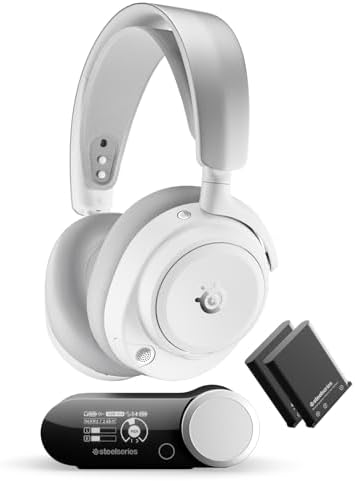
Our Best Overall pick: SteelSeries' newest flagship, reviewed by multiple major outlets as an end-game wireless headset with Hi-Res 96kHz/24-bit audio, active noise cancellation and simultaneous multi-platform connectivity, here in white.
SteelSeries Arctis Nova 7X Wireless Gen 2 (Xbox, Black)
4.9
2.4GHz + Bluetooth 5.3 · 36 ohm · Up to 54-hour battery
Our Best for All-Day Wireless pick: a refined mid-premium wireless headset that PC Gamer, Trusted Reviews and SoundGuys praise for its wide soundstage, strong companion app and the longest 2.4GHz battery life in this comparison, with simultaneous 2.4GHz and Bluetooth audio.
The midnight blue colorway of the Arctis Nova Pro Omni: the same Hi-Res 96kHz/24-bit audio, active noise cancellation and four-source OmniPlay connectivity that reviewers praise, in a darker finish.
A wired USB headset built around FIFINE's strongest category, microphones, with 11 RGB lighting modes, a 50mm driver and an inline controller for quick game/chat balance adjustments.
USB or 3.5mm wired · 50mm drivers · Detachable mic
Our Best Affordable pick: the cheapest headset here at under $35, with both USB and 3.5mm connections so it works on Xbox and Switch as well as PC and PlayStation, plus a well-regarded detachable microphone.
A budget-friendly 2.4GHz wireless headset built around ultra-low latency and a straightforward 40-hour battery, with 50mm drivers and a detachable noise-canceling mic for PS5, PC and Switch.
A budget tri-mode headset with 2.4GHz wireless, Bluetooth 5.4 and a 3.5mm wired option, 50mm drivers, a self-adjusting suspension headband and a detachable noise-reducing mic.
2.4GHz + Bluetooth 5.4 · 32 ohm · Up to 100-hour battery
A budget tri-connectivity headset (2.4GHz dongle, Bluetooth 5.4 or wired 3.5mm) that independent reviewers praise for long battery life and broad multi-platform range, though its wireless modes don't support Xbox Series consoles.
Short on time? These three cover most setups: our top-graded flagship, the best budget pick that works across consoles and PC, and the long-battery wireless choice for marathon sessions.
Understand the category before you buy - what the science actually says, and which specs matter.
Every headset here promises immersive audio and a clear mic, but the way it connects to your console or PC matters more than almost any number on the box. Here is how they work, why connection type is the spec to fixate on, and the features actually worth comparing.
What does a gaming headset actually do?
A gaming headset combines headphones with a built-in microphone so you can hear the game and talk to teammates at once. The drivers turn the game's audio into sound, the mic picks up your voice, and everything routes through one connection to your PC, console, or phone. Most add a few things a normal pair lacks:
A boom or retractable mic tuned for voice, often with noise canceling so your fan and keyboard stay out of the chat.
Surround-sound processing, like the 7.1 modes on the Gvyugke and FIFINE models, to help you place sounds around you.
Game and chat balance controls so you can turn teammates up without drowning out the game.
Why the connection matters more than the driver size
This is the part most shoppers skip, and it shapes your experience. How a headset connects decides its latency, the delay between something happening in the game and you hearing it, and for fast games that delay matters.
There are three ways these headsets connect, and they are not equal. A 2.4GHz wireless dongle, used by the SteelSeries Arctis Nova 7X Gen 2 and the Acer tri-mode and zero-latency headsets, plugs into a USB port and holds a low-latency link that feels effectively instant. Bluetooth, which many of the same headsets also offer, adds noticeable lag, so it suits music and chat more than competitive play. Wired, like the Arctis Nova Pro X, the FIFINE H9, and the HyperX Cloud III, carries zero latency and never needs charging. Several models let you pick all three, though a few require wired mode for Xbox.
Now the myth. A bigger driver does not mean better sound. The lineup ranges from 50mm drivers up to 53mm angled drivers, and that small difference tells you almost nothing. What decides sound quality is tuning, how the maker voices the drivers, and mic quality, how clearly teammates hear you. A well-tuned 50mm headset can out-perform a 53mm one, which is why the ClearCast Gen2.X and Arctis Nova Pro X mics get singled out while some mid-range mics are called serviceable rather than exceptional.
Which specs actually matter?
Once you understand the connection, a few features decide the fit:
Connection type: The single most important spec. Choose a 2.4GHz dongle for wireless gaming, wired for zero latency, and treat Bluetooth as a bonus for phones, not your main gaming link.
Platform compatibility: Check your system first. The Arctis Nova Pro X here is built for Xbox, the FIFINE H13BP is USB only with no Xbox support, and a couple of wireless models need a cable for Xbox.
Microphone: Because teammates hear you far more than you hear yourself, mic quality carries real weight. Look for detachable or retractable noise-canceling boom mics, like the ClearCast Gen2.X.
Battery life: For wireless models this ranges widely, from around 45 hours on the shortest-lived sets up to 100 hours on Bluetooth for the Valorise UG-08S. Wired sets need no charging.
Impedance: These run from 30 ohms up to 38 ohms in this lineup, with the SteelSeries models at the top of that narrow range - every headset here is easy to drive from a phone, console or PC without a separate amp.
Frequency response: Most cover 20 Hz to 20,000 Hz, while the Arctis Nova Pro X reaches 20 Hz to 40,000 Hz. That wider figure sits beyond human hearing, so treat it as a headline, not a deciding factor.
Warranty: Coverage runs from 1 year up to 2 years here, a signal of how long a maker expects the headset to last.
How we grade products
Graded Picks rankings are aggregated from several independent signals: verified buyer ratings and the size of the review base for credibility, recent monthly purchase volume for relevance, assessments from trusted gaming and audio publications, and how each product places in leading category lineups. For gaming headsets we weigh:
Connection type and latency for the way you play
Microphone clarity and noise handling
Sound tuning and comfort over long sessions
Platform compatibility with your console or PC
Wireless battery life and charging
Build quality and warranty
Overall value for the price
Comfort and hearing note: A gaming headset sits on your head for hours, so a poor fit or too much volume causes more real trouble than any spec sheet. Take breaks on long sessions, keep the volume where you could still hold a conversation, and adjust the headband and ear cups so the weight rests evenly rather than clamping on one spot.
In-Depth Reviews
Everything we learned from buyer reviews and expert testing, product by product.
SteelSeries Nova Pro Omni White
Best Overall10% OFF
1. SteelSeries Arctis Nova Pro Omni (White)
5.0
RTINGS, Notebookcheck, Stuff and SoundGuys all reviewed the Arctis Nova Pro Omni and reach a similar verdict: it is one of the best all-around gaming headsets available, capable of connecting to up to four sources simultaneously, including Bluetooth, without giving up sound quality. It carries Hi-Res Audio Wireless certification with 96kHz/24-bit processing, active noise cancellation, and one of the most tunable EQ systems around, with a fully customizable parabolic EQ plus more than 300 game-tailored sound profiles through the SteelSeries mobile app. The omnidirectional ClearCast Pro microphone adds AI noise rejection, a step up from the mic on the brand's Nova 7X Gen 2. Two swappable batteries rated for up to 30 hours each mean the headset never truly runs out mid-session. This white colorway is hardware-identical to the midnight blue version, and it is the one we rank first. The consistent knocks: sub-bass is weak for bass-forward listeners, and the mic is tuned more for chat than for music.
Connectivity2.4GHz + Bluetooth, up to 4 simultaneous sources (OmniPlay)
2. SteelSeries Arctis Nova 7X Wireless Gen 2 (Xbox, Black)
4.9
The Gen 2 refresh of SteelSeries' long-running Nova 7 keeps the formula reviewers liked and fixes the weak spot, which is why it earns our Best for All-Day Wireless pick. Battery life jumps to up to 54 hours over 2.4GHz and 42 hours over Bluetooth, the longest 2.4GHz runtime of any headset in this comparison, and testers at Trusted Reviews and PC Gamer confirmed roughly 50 hours in real use, with a 15-minute quick charge delivering about 6 hours. Reviewers praise the wide soundstage for pinpointing footsteps, a detailed mid-range, and the ability to play game audio over 2.4GHz while a phone streams over Bluetooth at the same time. It adds multimedia controls on the earcup for changing volume on the fly, and the retractable ClearCast Gen 2 mic is judged clean and decently full but not class-leading. Compared with our Best Overall Nova Pro Omni it drops active noise cancellation and the swappable-battery system. The knocks: earcup clamp can be tiring for glasses wearers, and the plastic build feels light for the money.
Connectivity2.4GHz + Bluetooth 5.3, can play both at once
Driver type40mm neodymium magnetic dynamic driver
Frequency response20 Hz - 22,000 Hz
Impedance36 ohms
MicrophoneClearCast Gen 2 retractable boom mic, bidirectional noise cancelling
Battery lifeUp to 54 hours (2.4GHz) or 42 hours (Bluetooth); 15-min charge = 6 hours
Warranty1 year
Pros
Wide soundstage that reviewers say helps pinpoint footsteps and gunshots
Battery life lifted to a real-world 50-plus hours
Plays 2.4GHz game audio and Bluetooth phone audio at the same time
Strong companion app and on-earcup multimedia controls
Retractable mic keeps clean, decently full chat audio
Cons
No active noise cancellation, unlike the Nova Pro Omni
Earcup pressure can wear on glasses wearers over long sessions
Plastic build feels light for the price
Who is it for?
Buyers who want strong, long-lasting battery life, plus a polished, well-reviewed SteelSeries wireless headset, without paying flagship Nova Pro Omni money.
Who is it not for?
Anyone who wants active noise cancellation, who should look at the Nova Pro Omni above instead.
3. SteelSeries Arctis Nova Pro Omni (Midnight Blue)
4.8
This is the same Arctis Nova Pro Omni that RTINGS, Notebookcheck, Stuff and SoundGuys reviewed favorably, in midnight blue rather than white. Every functional detail carries over: Hi-Res Audio Wireless certification at 96kHz/24-bit, active noise cancellation, OmniPlay connectivity across up to four simultaneous sources including Bluetooth, the omnidirectional ClearCast Pro microphone with AI noise rejection, and dual swappable batteries rated for up to 30 hours each. Reviewers' praise and criticisms apply equally: it is an end-game wireless headset let down only by light sub-bass and a mic tuned more for chat than music. Our top-ranked listing is the white version of this headset, so choose midnight blue if you prefer a darker finish that hides desk grime better.
Connectivity2.4GHz + Bluetooth, up to 4 simultaneous sources (OmniPlay)
FIFINE has built its reputation on microphones, and the H13BP's detachable boom mic reflects that: testers describe voice pickup as crisp enough that teammates stop asking for repeats, with clarity comparable to a dedicated boom-arm microphone rather than typical bundled gaming-headset hardware. The 50mm dynamic driver delivers clear audio across highs, mids and lows with 7.1 virtual surround, and 11 selectable RGB lighting modes plus a transparent-shell design target streamers who want a distinctive look on camera. An inline controller handles volume, surround toggling and game/chat balance without needing software. As a USB-only wired headset it skips Xbox compatibility entirely, since Xbox consoles don't support third-party USB audio, and independent review coverage of this specific model beyond FIFINE's own materials remains limited.
ConnectivityWired USB only (no Xbox support)
Driver type50mm dynamic driver
Frequency response20 Hz - 20,000 Hz
Impedance32 ohms
MicrophoneDetachable noise-canceling boom mic
Battery lifeWired, no battery required; USB-powered 11-mode RGB lighting
Warranty1 year
Pros
Detachable boom mic rated close to a dedicated boom-arm microphone
11 RGB lighting modes and a transparent shell suit streaming setups
Inline controller for instant volume, surround and game/chat balance
50mm driver with 7.1 virtual surround for a budget wired headset
Cons
USB-only connection means no Xbox compatibility
Limited independent review coverage beyond the manufacturer's own materials
Wired-only design ties you to your PC, PS5 or laptop
Who is it for?
PC and PlayStation streamers who want a standout microphone and customizable RGB without going wireless.
Who is it not for?
Xbox owners, since the USB-only connection isn't compatible with Xbox consoles.
As the lowest-priced headset in this comparison, it earns our Best Affordable pick. Where the H13BP is USB-only, the H9W adds a 3.5mm connection alongside USB specifically so it works with Xbox, Switch and mobile devices in addition to PC and PlayStation, the more broadly compatible of FIFINE's two headsets here. Multiple independent budget-tech reviewers have tested this H9 platform and consistently single out the detachable boom mic as the standout feature, delivering a warm, natural voice that cuts down on keyboard, mouse and fan noise picked up by cheaper competitors. The 50mm driver produces a warm sound signature that some reviewers found a little light on bass, and 7.1 virtual surround is included via the USB control box. Build quality is reported as sturdier than typical at this price, and it's held up well for reviewers over extended use.
ConnectivityUSB or 3.5mm wired (Xbox, Switch, PC, PlayStation compatible)
Driver type50mm dynamic driver
Frequency response20 Hz - 20,000 Hz
Impedance32 ohms
MicrophoneDetachable noise-reducing boom mic
Battery lifeWired, no battery required
Warranty1 year
Pros
Works across Xbox, Switch, PC and PlayStation via dual USB/3.5mm connectivity
Detachable mic independently praised for warm, clear voice pickup
Sturdier build quality than typical at this price point
7.1 virtual surround via the included USB control box
Volume and mute controls built into the inline unit
Cons
Bass response is on the lighter side per multiple reviewers
Wired-only, no wireless freedom of movement
USB control box adds another cable to manage versus a simple 3.5mm plug
Who is it for?
Multi-platform gamers who need one wired headset that works across Xbox, Switch, PC and PlayStation.
Who is it not for?
Anyone who wants wireless freedom or bass-forward sound, who should look at the wireless SteelSeries options ranked above.
Acer's Zero-Latency headset keeps things simple: a single 2.4GHz USB dongle connection rated at 20 milliseconds or less, paired with 50mm drivers and a detachable noise-canceling microphone for PS5, PC and Switch. Battery life runs up to 40 hours per charge with a roughly 2.5-hour recharge, and soft memory-foam ear cushions with an adjustable headband keep it comfortable for extended sessions. Unlike the tri-mode Acer headset ranked above, this model skips Bluetooth and a wired fallback entirely in favor of one dependable low-latency connection, trading flexibility for simplicity. Independent coverage of this specific listing is thin, with most available information coming from the product listing and smaller deal-aggregator write-ups rather than in-depth lab testing, so buyers are relying more on Acer's brand reputation and the spec sheet than extensive third-party benchmarking.
Connectivity2.4GHz wireless only (USB dongle)
Driver type50mm dynamic driver
Frequency response20 Hz - 20,000 Hz
Impedance32 ohms (standard for this driver class)
MicrophoneDetachable noise-canceling microphone
Battery lifeUp to 40 hours (2.5-hour charge time)
Warranty1 year
Pros
Simple, dependable 2.4GHz connection rated at 20ms or less latency
Up to 40 hours of battery life per charge
50mm drivers and a detachable noise-canceling mic cover the gaming-headset basics well
Soft memory-foam ear cushions and adjustable headband for extended sessions
Cons
No Bluetooth or wired fallback, unlike Acer's tri-mode model ranked above
Independent review coverage for this specific listing is thin
Fewer features than the pricier SteelSeries and HyperX options in this comparison
Who is it for?
Buyers who want one dependable low-latency wireless connection for PS5, PC or Switch without paying for extra connectivity modes.
Who is it not for?
Buyers who want Bluetooth, a wired backup, or the deeper independent testing record of the SteelSeries and HyperX options above.
Acer's tri-mode headset is a multi-device utility pick: one unit that covers a PS5, PC, Switch, Mac or phone through 2.4GHz wireless with USB-A and USB-C dongles, Bluetooth 5.4, or a 3.5mm wired cable when the battery runs low. Independent review sites describe strong stereo immersion, good bass presence and solid positional cues from the 50mm drivers, though they stop short of calling it an audiophile product. The self-adjusting suspension headband spreads weight across the head, and at roughly 220 grams it is on the lighter side for a wireless headset. The detachable omnidirectional ENC microphone is rated well enough for game chat, calls and meetings. Battery life of 40-plus hours is solid, but shorter than the SteelSeries Nova 7X Gen 2 ranked above it, and review coverage comes mostly from smaller enthusiast sites rather than major outlets.
Connectivity2.4GHz wireless (USB-A and USB-C dongles), Bluetooth 5.4, 3.5mm wired
Driver type50mm dynamic driver
Frequency response20 Hz - 20,000 Hz
Impedance32 ohms
MicrophoneDetachable omnidirectional ENC boom mic
Battery life40+ hours
Warranty1 year
Pros
Three connection modes cover consoles, PC, Mac and phones
Self-adjusting suspension headband and light build for long sessions
Detachable noise-reducing mic with 270-degree adjustment
Wired 3.5mm fallback if the battery dies
Priced well below the SteelSeries wireless options
Cons
Review coverage comes mostly from smaller enthusiast sites, not major outlets
Sound is solid everyday gaming audio rather than audiophile-grade
Battery life trails the Nova 7X Gen 2 ranked above it
Who is it for?
Budget-minded gamers who want one wireless headset that works across PS5, PC, Switch and mobile.
Who is it not for?
Buyers who want major-outlet-tested sound, noise cancellation or a software-tuned EQ, who should look at the SteelSeries options.
The UG-08S is a budget tri-connectivity headset that independent reviewers including Posh Seven Magazine, Kofire and Life in Speed have tested and consistently praise for battery life: up to 100 hours in Bluetooth mode with lights and mic off, the longest runtime of any headset in this comparison, or around 45 hours over the 2.4GHz dongle with RGB and mic active. A long press of the M key toggles 7.1 virtual surround, which reviewers say delivers footstep and gunfire cues with pin-drop clarity, and rotating, adjustable memory-foam ear cups keep it comfortable across long sessions. Its 3-year warranty is longer than most headsets in this comparison. The tradeoff is platform support: the wireless dongle and Bluetooth do not connect to Xbox Series consoles at all, so Xbox owners are limited to the wired 3.5mm mode, and PS5 only works over the 2.4GHz dongle rather than Bluetooth.
Connectivity2.4GHz wireless, Bluetooth 5.4, or wired 3.5mm (Xbox requires wired mode)
Driver typeDynamic driver
Frequency response20 Hz - 20,000 Hz
Impedance32 ohms
MicrophoneRetractable noise-cancelling microphone
Battery lifeUp to 100 hours (Bluetooth) or 45 hours (2.4GHz with RGB)
Warranty3 years
Pros
Longest battery life in this comparison: up to 100 hours over Bluetooth
Three connection modes, 2.4GHz dongle, Bluetooth 5.4, or wired 3.5mm, cover most non-Xbox setups
Reviewers praise directional footstep and gunfire clarity through the 7.1 virtual surround toggle
Rotating, adjustable memory-foam ear cups rated comfortable for extended sessions
3-year warranty is longer than most headsets in this comparison
Cons
Wireless modes are not compatible with Xbox Series consoles, wired 3.5mm only
PS5 only works over the 2.4GHz dongle, not Bluetooth
Independent coverage comes mainly from smaller reviewers rather than major testing outlets
Who is it for?
PC, PlayStation, Switch and mobile gamers who want long battery life and flexible connectivity at a low price.
Who is it not for?
Xbox Series players who want true wireless play, since only the wired 3.5mm mode works on Xbox.
The stars you see are the Graded Picks cumulative score, not a single retailer's average. It blends verified buyer reviews aggregated across major retailers, assessments from professional reviewers and expert testers, and how prominently the product features in leading category lineups.
Advertising Disclosure
Our rankings are compiled by aggregating several independent signals, including verified buyer feedback, how popular a product currently is with shoppers, and evaluations published by professional reviewers. Editorial opinions are our own.
Please note that we participate in affiliate marketing programs. When you purchase through links on our site, we may earn a commission. As an Amazon Associate we earn from qualifying purchases. This comes at no additional cost to you and helps support the resources required to provide valuable content.