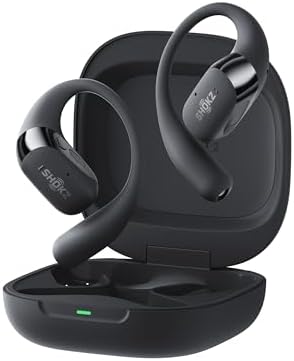
Open-ear headphones let you listen to music and take calls while your ears stay open to the world, so you hear the car coming, the coworker at your desk, or your running partner beside you. The trade-off is real: because nothing seals your ear canal, cheaper open-ear designs can leak sound and go light on bass. We analyzed thousands of verified buyer reviews, recent sales data, and expert evaluations to find eight open-ear headphones that stay put, sound good for the format, and keep you aware of your surroundings.
Every product we compared, in ranked order. Tap through to Amazon to check today's price, or jump to the full review below.
1
Shokz OpenRun Pro 2
Best Overall
Shokz OpenRun Pro 2 Bone Conduction Headphones
5.0
Bone conduction · DualPitch drivers · IP55
Our Best Overall pick: a refined bone-conduction design with dual drivers that vibrate sound through the cheekbones instead of using air-conduction speakers near the ear canal, leaving both ears completely uncovered. Built specifically for running and cycling, with reflective trim and a titanium headband.
The original Shokz OpenRun, a longtime staple of the bone-conduction category that keeps both ears open for safety on the road. It uses a simpler single-driver design than Shokz's higher-end OpenRun Pro 2, at a lower price, which makes it the pick most runners and cyclists should start with.
11mm dynamic driver · 55-hr total battery · IP67 waterproof
A clip-on design from accessory maker Baseus, built around a low-clamp titanium C-ring that reviewers rate as the most comfortable fit in this lineup. It pairs a top-tier waterproof rating with LDAC hi-res audio and the longest total battery life here, all at a price below most of the lineup.
A clip-on open-ear earbud built around Bose-tuned sound and a hybrid two-way driver, with a lightweight titanium clip testers say disappears during long wear, cycling and workouts. It pairs Dolby Audio and LDAC hi-res streaming with real value against pricier open-ear flagships.
Raycon's budget-friendly ear-hook design keeps both ears open for awareness while delivering up to 36 hours of total battery life. It skips a companion app and the higher water-resistance ratings of pricier rivals in favor of a simple, ultra-lightweight build.
One of the most refined air-conduction earbuds in Shokz's open-ear lineup, and the priciest here. Physical buttons, Dolby Audio tuning and a 48-hour wireless-charging case make it an easy all-rounder to live with day to day.
Our Best for Everyday Comfort pick: Anker's audio sub-brand Soundcore built the AeroClip around a lightweight open-ring shape that rests on the ear's outer cartilage, distinct from the ear-hook AeroFit 2. It targets all-day comfort and clear sound over workout durability.
The ear-hook sibling to the clip-on AeroClip above, with four adjustable hook positions, real-time translation and a workout-ready IP55 rating built for running and the gym rather than all-day comfort.
Short on time? These three cover most buyers: our top-graded bone-conduction pick built for running and cycling, the best affordable clip-on way to try open-ear listening, and the lightest, most comfortable all-day ring-style earbud.
Open-Ear Headphones 101: What They Do & How to Choose
Understand the category before you buy - what the science actually says, and which specs matter.
Every pair in this lineup keeps your ear canal open, but they get there two very different ways, and that single choice shapes fit, sound, and who each pair is really for. Here is how the technology works, the one distinction most shoppers miss, and the specs actually worth comparing.
What does an open-ear headphone actually do?
An open-ear headphone delivers audio without plugging or sealing your ear, so ambient sound reaches you at the same time. Instead of an ear tip pushed into the canal, it sits just outside or rests against your head and beams sound in.
It pairs to your phone over Bluetooth and plays music, podcasts, and calls like any wireless earbud.
It leaves your ear canal open, so traffic, voices, and alarms stay audible.
It holds position with an ear hook, a clip, or a wraparound band, since it cannot wedge into your ear for grip.
It uses onboard microphones for calls, with several models here fielding four-mic arrays for clearer voice pickup.
The one thing to understand: air conduction versus bone conduction
Here is the insight that sorts this whole category. "Open-ear" is really two different technologies wearing the same name, and knowing which one you want is the most important decision you will make.
Air-conduction earbuds hover just outside your ear canal and fire sound into it through the open air. Most of the lineup works this way, including the SHOKZ OpenFit 2+, the Soundcore AeroClip, the soundcore AeroFit 2, the EarFun OpenJump, and the Baseus Bowie MC2. They tend to sound fuller and carry more bass, and they clip on or hook over your ear.
Bone-conduction bands take the other path. Instead of using your ear at all, they rest on your cheekbone in front of your ear and vibrate sound straight through the bone to your inner ear. The SHOKZ OpenRun does this, using a single wraparound band rather than separate earbuds. That is why it weighs more as one piece, 26 g, while the air-conduction earbuds run 5.1 g to 10 g each.
Both approaches leave your ears open so you stay aware of your surroundings, and both accept the same compromise: more sound leakage and lighter bass than a sealed earbud. That is not a defect, it is the deliberate exchange for safety and all-day comfort. If bass and isolation top your list, a sealed earbud is the better tool. If awareness and comfort matter more, this is exactly the category you want. Bone conduction leans furthest toward awareness, since it keeps your ear canal completely unobstructed, which is why it is a favorite for road running and cycling.
Which specs actually matter?
Conduction type: The first fork in the road. Air conduction (most of this list) for fuller sound and a clip or hook fit; bone conduction (the OpenRun) for maximum awareness and a band that never touches your ear.
Water and sweat rating: This one matters most for runners. Ratings here span IPX4 on the Soundcore AeroClip up to IP67 on the SHOKZ OpenRun and Baseus Bowie MC2, and IPX7 on the EarFun OpenJump. IPX4 handles splashes and sweat, while IP67 and IPX7 survive full submersion, so heavy sweaters and rain runners should aim high.
Battery life: Per-charge earbud life ranges from 5 hours on the AeroClip to about 13 hours on the Baseus Bowie MC2 with bass boost off. Look at the total too: case playtime runs from 24 hours on the AeroClip up to 55 hours on the Baseus Bowie MC2.
Charging: The bone-conduction OpenRun has no charging case and uses a magnetic cable, while air-conduction pairs recharge in a case, some with Qi wireless charging on the OpenFit 2+ and AeroFit 2.
Bluetooth version: Newer is steadier. Versions here span 5.1 on the OpenRun to 6.1 on the Baseus Inspire XC1, with higher versions bringing more reliable connections and better power efficiency.
Weight and fit style: The bone-conduction OpenRun is a single 26 g piece; air-conduction earbuds are 5.1 g to 10 g each and clip or hook on. Try to picture which grip suits your ears and your workout.
Microphones: Several pairs use four-mic arrays for clearer calls in wind and noise, worth checking if you take calls on the move.
How we grade products
Graded Picks rankings are aggregated from several independent signals: verified buyer ratings and the size of the review base for credibility, recent monthly purchase volume for relevance, assessments from trusted audio publications, and how each product places in leading category lineups. For open-ear headphones we weigh:
Sound quality for the open-ear format
Fit security and all-day comfort
Water and sweat resistance
Battery life and charging convenience
Call quality and microphone performance
Bluetooth stability and connection features
Overall value for the price
Safety and awareness note: Open-ear headphones are built to keep you aware of your surroundings, so keep the volume low enough to actually hear traffic, cyclists, and voices when you run or ride. Because these designs leak more sound than sealed earbuds, drop the volume in quiet shared spaces like offices and transit. If you sweat heavily or train in the rain, match the water rating to your use, since an IPX4 pair is not meant for the same soaking an IP67 or IPX7 pair can take.
In-Depth Reviews
Everything we learned from buyer reviews and expert testing, product by product.
Shokz OpenRun Pro 2
Best Overall
1. Shokz OpenRun Pro 2 Bone Conduction Headphones
5.0
Our Best Overall pick. The OpenRun Pro 2 is a refined bone-conduction headset, and unlike the air-conduction earbuds elsewhere here, it does not go anywhere near the ear canal. Shokz's DualPitch technology pairs a bone-conduction transducer with a small air-conduction driver floating in front of the ear to add bass and treble that older single-driver bone-conduction designs, including Shokz's own standard OpenRun also in this comparison, can't produce. RTINGS and headphonecheck.com both measured meaningfully improved sound over the original OpenRun Pro, with less of the buzzy cheekbone vibration that bone conduction is known for. Battery testing found it comfortably lasts a full week of daily hour-long runs, and a 5-minute cable top-up adds about 2.5 hours of playtime, which matters since there is no charging case. The titanium headband carries an IP55 rating and a reflective strip for low-light visibility, and multiple cycling-focused reviewers highlighted that leaving both ears open lets you hear approaching traffic and cyclists, something no in-ear or even air-conduction design can fully match. The tradeoff, consistent across every review, is that bone conduction struggles in loud wind or traffic noise compared to sealed designs.
Battery life (earbuds)12 hours per charge
Case total playtimeNo charging case; 5-min cable fast-charge adds about 2.5 hours
Water resistanceIP55 (sweat and rain resistant)
Driver type & sizeDual-driver bone conduction (DualPitch technology)
Bluetooth version5.3
Weight30 g (single-band bone-conduction headset)
Warranty2 years
Pros
Bone conduction leaves ears completely open, maximizing awareness of traffic and surroundings
DualPitch dual-driver design meaningfully improves bass and treble over older bone-conduction models
Genuinely long-lasting battery, easily covering a week of daily runs
IP55-rated titanium headband with a reflective strip for outdoor visibility
Cons
Sound gets noticeably harder to hear in loud wind or heavy traffic
No charging case, only cable fast-charging
Bone conduction has a distinct vibrating sensation some listeners never fully adjust to
Who is it for?
Our Best Overall pick for runners and cyclists who specifically want the safety benefit of bone conduction and are comfortable trading some bass depth and case convenience for it.
Who is it not for?
Anyone who wants a conventional in-ear or near-ear listening feel should choose an air-conduction model like the OpenFit 2+ instead.
The OpenRun is Shokz's original mainstream bone-conduction headset and the direct predecessor to Shokz's higher-end OpenRun Pro 2, using a single bone-conduction driver instead of the Pro 2's dual-driver DualPitch setup. SoundGuys and RTINGS both found the sound clear and accurate through the mids, though bass is thin by design, a known tradeoff of bone conduction that testers across every review consistently flagged. Battery testing was generous: Shokz rates it at 8 hours, but RTINGS measured roughly 13 hours of continuous playback and Tom's Guide clocked similarly long real-world results, with a 10-minute quick charge adding about 1.5 hours when time is short. The IP67 rating means it survives full submersion in shallow water, not just sweat and rain, which multiple reviewers called a genuine advantage over splash-resistant rivals. Believe in the Run and Trusted Reviews both praised the snug, secure over-ear band for running, though several outlets noted the microphone struggles in wind or noisy gyms and that the design can crowd glasses or a face mask. It remains a dependable, lower-cost way into Shokz's bone-conduction lineup for buyers who do not need the Pro 2's extra driver and refinement.
Battery life (earbuds)8 hours per charge; 10-min quick charge adds about 1.5 hours
Case total playtimeNo charging case; magnetic cable charging only
Water resistanceIP67 (dust and full water submersion up to 1m/30 min)
Driver type & sizeSingle bone conduction driver
Bluetooth version5.1
Weight26 g (single-band bone-conduction headset)
Warranty2 years
Pros
IP67 rated for full submersion, not just splash and sweat resistance
Clear, accurate mids confirmed across multiple independent tests
Fast 10-minute quick charge adds real workout time in a pinch
Secure, comfortable over-ear band built specifically for running
Meaningfully cheaper than the dual-driver OpenRun Pro 2
Cons
Single-driver bone conduction means noticeably thinner bass than Shokz's dual-driver OpenRun Pro 2
Microphone quality drops in wind or noisy environments
Proprietary magnetic charger and a tighter fit with glasses or a mask
Who is it for?
Runners and cyclists who want Shokz's bone-conduction safety benefit at a lower price and do not need the OpenRun Pro 2's extra bass and refinement.
Who is it not for?
Anyone who wants the fullest possible bone-conduction sound should look at Shokz's higher-end OpenRun Pro 2, and bass-focused listeners should choose one of the air-conduction earbuds in this lineup instead.
The Bowie MC2 is Baseus's newest push into open-ear audio, and testers at Trusted Reviews, Cult of Mac, Gizmochina and Notebookcheck all singled out the fit first: a memory-titanium C-ring keeps clamping force low while each earbud weighs just 5.1 grams, the lightest clip-on design in this entire comparison and lighter than rival clip-ons from Shokz and Bose outside it. An 11mm tri-magnet driver adds LDAC hi-res support and Baseus's SuperBass 3.0 tuning, which reviewers found gave a warmer, more balanced low end once the companion app's bass boost is switched on, though bass still trails a sealed earbud by the nature of the open design. Battery testing lines up with Baseus's own claims: about 11.5 hours per charge with bass boost on (up to 13 hours with it off), and 55 hours total from the case, with a 10-minute quick charge adding roughly 3 more hours. Its IP67 rating ties the OpenRun for the highest water resistance in this comparison, standing up to full submersion rather than just the sweat and splash protection most of the other clip-on earbuds offer. Notebookcheck and Cult of Mac both praised reliable Bluetooth 6.0 multipoint switching between two devices, though several reviewers flagged that LDAC playback is Android-only and that phone calls in windy conditions can sound thin and metallic.
Battery life (earbuds)11.5 hours per charge (bass boost on); up to 13 hours with it off
Case total playtime55 hours (60 hours with bass boost off); 10-min fast charge adds about 3 hours
Water resistanceIP67 (dust and full water submersion resistant)
Driver type & size11mm tri-magnet dynamic driver
Bluetooth version6.0
Weight5.1 g per earbud
Warranty2 years
Pros
IP67 waterproof rating ties the OpenRun for the highest water resistance in this comparison
Titanium C-ring and 5.1-gram earbuds make it the lightest clip-on fit here, rated highly for comfort
LDAC hi-res audio and SuperBass 3.0 tuning give a warmer low end once the app's EQ is dialed in
55-hour total battery life plus fast charging (10 minutes for about 3 hours of playback)
Reliable Bluetooth 6.0 multipoint for switching between two paired devices
Cons
Call quality turns thin and metallic in windy conditions
LDAC hi-res playback is limited to Android; iPhone users lose that codec
Newer to premium open-ear audio than Shokz or Soundcore, so it lacks their multi-generation track record in this category
Who is it for?
Buyers who want the most comfortable, most water-resistant clip-on fit in this lineup, with hi-res audio and all-day battery life, at a price well below the established brands.
Who is it not for?
iPhone users who want LDAC hi-res playback, and anyone who takes frequent calls outdoors in windy conditions.
The Inspire XC1 is Baseus's push into premium open-ear audio, built around a hybrid two-way driver, a 10.6mm dynamic woofer paired with a 10mm balanced-armature tweeter, with sound tuned in partnership with Bose. Notebookcheck's testers found the fit impressively lightweight and secure enough to forget they were wearing anything, even through cycling and workout routines. Digital Trends called it one of the most compelling value plays in the open-ear category after nearly four weeks of testing it against Bose's own pricier Ultra Open Earbuds, and TechRadar agreed, praising the longer battery life and a deep equalizer in the companion app and concluding the Baseus undercuts both Bose's and Shokz's open-ear alternatives on price without giving up much performance. The Gadgeteer's testing confirmed the two-way driver excels at podcasts and audiobooks with clean mids, though, like every open-ear design in this lineup, it can't match a sealed earbud's bass depth. Four microphones with AI noise reduction handle calls, and the earbuds carry an IP66 rating for sweat, splashes and pressurized water jets, though the charging case itself is not waterproofed. At its discounted price it lands squarely between the more budget-friendly EarFun OpenJump and the pricier Shokz and Soundcore flagships in this comparison.
Battery life (earbuds)8 hours per charge; 10-min quick charge adds about 2.5 hours
Case total playtime40 hours total
Water resistanceIP66 (sweat, splash and water-jet resistant; case not rated)
IP66 rating and a full-day 40-hour total battery life with fast charging
Deep companion-app equalizer with multiple presets and custom profiles
Lightweight titanium clip that testers found disappears during long wear, cycling and workouts
Undercuts pricier open-ear flagships from Bose and Shokz on price
Cons
Bass still falls short of a sealed earbud, even with the hybrid driver and Bass Boost toggle
Limited to awareness-first listening, not built for gyms, flights or other noisy environments
LDAC hi-res streaming and some app features are Android-only
Who is it for?
Buyers who want a lightweight, secure clip-on fit, plus Bose-influenced sound quality and a full-day battery for walking, commuting and desk work, without paying Bose or premium Shokz prices.
Who is it not for?
Anyone chasing deep bass or noise isolation should look elsewhere in this lineup, and iPhone users should note LDAC hi-res streaming and some app features are Android-only.
The Essential Open Earbuds are Raycon's entry into the open-ear hook category, using a lightweight ear-hook that reviewers at AppleVis and My Tech Grid found comfortable for extended wear, even without the padded hooks of pricier rivals like the Shokz OpenFit 2+ elsewhere in this lineup. Reviewers consistently praise clear mids and vocal presence for podcasts and calls, but every review flags the tradeoff familiar to open-ear listening: bass falls flat without an ear seal, and TheReviewRewind and My Tech Grid both noted it's more noticeable here on bass-heavy or electronic tracks than on some rivals. Rated for 8 hours of playback per charge and up to 36 hours total with the charging case, it comfortably covers a full day of intermittent listening, and Raycon's IPX4 rating (confirmed via TurboVS and Raycon's own spec sheet) protects against sweat and light splashes during workouts, though it stops short of the IP55-to-IP67 ratings several other products in this comparison carry. Unlike the EarFun and Soundcore models here, the Essential has no companion app or custom EQ, relying entirely on your phone's built-in Bluetooth controls, which keeps setup simple but limits sound-shaping options. Bluetooth 6.0 with multipoint pairing is a modern touch for the price.
Battery life (earbuds)8 hours per charge
Case total playtime36 hours total; about 1 hour to recharge the case
Water resistanceIPX4 (sweat and splash resistant)
Driver type & sizeDynamic driver (air conduction)
Bluetooth version6.0
WeightAbout 13 g per earbud
Warranty1 year
Pros
Ultra-lightweight ear-hook design that reviewers found comfortable through long wear
Clear mids and vocal presence, well suited to podcasts and calls
36 hours of total battery life from the earbuds and case combined
Bluetooth 6.0 with multipoint pairing across two connected devices
Simple, no-app setup that works with any phone's standard Bluetooth controls
Cons
Bass falls flat without an ear seal, more noticeable than some open-ear rivals on bass-heavy tracks
No companion app or EQ, so there's no way to reshape the default sound signature
IPX4 rating trails the IP55-to-IP67 protection several rivals in this lineup offer
Who is it for?
Budget-conscious buyers who want a simple, comfortable open-ear earbud for podcasts, calls and light workouts without extra app features.
Who is it not for?
Bass lovers and anyone training in heavy rain or planning to submerge the earbuds should choose a higher IP-rated model elsewhere in this lineup instead.
The OpenFit 2+ is Shokz's flagship air-conduction earbud, sitting just outside the ear canal on a soft silicone hook rather than vibrating through the cheekbone like the brand's OpenRun line. Testers at SoundGuys and Android Central praised the switch to physical multifunction buttons, which fixed a longstanding complaint about the touch controls on the original OpenFit, and Treeline Review's trail testing found the fit stable enough to run and cycle in comfortably. Four AI-tuned microphones deliver what several reviewers called some of the best call clarity in the open-ear category, and Dolby Audio adds noticeably richer bass than typical air-conduction buds manage. Battery life runs about 11 hours per earbud with roughly 48 more hours from the wireless-charging case, and the whole unit carries an IP55 rating plus a 2-year warranty. Reviewers do note the earbuds lack a hard power-off switch and the microphones can stumble in strong wind, but the overall verdict across outlets was consistently positive.
Battery life (earbuds)11 hours per charge
Case total playtime48 hours; case supports Qi wireless charging
Water resistanceIP55 (dust and water resistant)
Driver type & sizeDynamic driver (air conduction)
Bluetooth version5.4
Weight9.4 g per earbud
Warranty2 years
Pros
Physical buttons replace the fiddly touch controls of earlier Shokz open-ear models
Dolby Audio tuning gives noticeably fuller bass for an air-conduction design
Four-mic AI call quality rated among the best in the open-ear category
48-hour wireless-charging case and a 2-year warranty
IP55-rated and comfortable enough for long runs and rides
Cons
No true power-off switch, so the earbuds keep draining phone battery outside the case
Microphone performance drops noticeably in strong wind
Costs more than every other earbud in this lineup
Who is it for?
Buyers who want a polished ear-hook air-conduction open-ear earbud with strong call quality and are willing to pay a premium for it.
Who is it not for?
Anyone who wants a genuinely different listening sensation should consider the bone-conduction OpenRun instead, and budget shoppers will find better value elsewhere in this comparison.
Our Best for Everyday Comfort pick. This is the clip-on ring design in the Soundcore open-ear pair, distinct from the ear-hook AeroFit 2 elsewhere in this lineup. Tom's Guide and TechRadar were both surprised by how clear and engaging the sound was for an open design, crediting the 12mm drivers and Soundcore's EQ presets, though both noted the sound turns tinny if you push the volume past comfortable listening levels. At just 5.9 grams per earbud, Root-Nation and Macworld found it stayed comfortable through multi-hour wear without pressure points. Battery life is rated at about 5 hours per charge with 24 more from the case, and the earbuds carry an IPX4 splash-resistance rating, protecting against sweat and light rain but not submersion. Reviewers positioned it as a strong everyday and light-workout choice rather than a hardcore running tool, especially compared to the sportier AeroFit 2.
Battery life (earbuds)5 hours per charge
Case total playtime24 hours
Water resistanceIPX4 (splash and sweat resistant)
Driver type & size12mm dynamic driver
Bluetooth version5.4
Weight5.9 g per earbud
Warranty18 months
Pros
Clear, engaging sound that reviewers rated above typical open-ear competitors
Very light open-ring design stays comfortable for hours
Soundcore app EQ presets let you tune the sound to taste
Sleek, minimalist look compared to hook-style designs
Cons
Sound turns tinny at higher volumes
Only IPX4 rated, less workout-durable than its AeroFit 2 sibling
Shorter per-charge battery life than most others in this lineup
Who is it for?
Buyers who prioritize comfort and clear everyday sound over hardcore sport durability.
Who is it not for?
Serious runners who want more water resistance and battery life should look at the AeroFit 2 or the bone-conduction OpenRun instead.
Where the AeroClip clips onto the ear's cartilage, the AeroFit 2 uses an adjustable ear hook with four different positions, which Android Central and SoundGuys both called a genuine comfort upgrade over the original AeroFit's one-size design. It bumps water resistance up to IP55, a step up from the AeroClip's IPX4, making it the more workout-durable of the two Soundcore siblings, and adds real-time translation on top of the usual calling and EQ features. Digital Trends found the bass surprisingly strong for an open-ear design in quiet indoor settings, though like every open-ear product it loses ground in loud gyms or subways where ambient noise competes with the exposed drivers. Battery life measures about 10 hours per charge with 42 more from the case over Bluetooth 5.4, and a discount at the time of our scan makes it one of the better values in this comparison.
Battery life (earbuds)10 hours per charge
Case total playtime42 hours
Water resistanceIP55 (dust and water resistant)
Driver type & sizeDynamic driver
Bluetooth version5.4
Weight10 g per earbud
Warranty18 months
Pros
Four-position adjustable ear hook fits a wider range of ear shapes than a fixed hook
IP55 rating is more workout-durable than the clip-on AeroClip
Surprisingly strong bass for an open-ear design in quiet settings
The stars you see are the Graded Picks cumulative score, not a single retailer's average. It blends verified buyer reviews aggregated across major retailers, assessments from professional reviewers and expert testers, and how prominently the product features in leading category lineups.
Advertising Disclosure
Our rankings are compiled by aggregating several independent signals, including verified buyer feedback, how popular a product currently is with shoppers, and evaluations published by professional reviewers. Editorial opinions are our own.
Please note that we participate in affiliate marketing programs. When you purchase through links on our site, we may earn a commission. As an Amazon Associate we earn from qualifying purchases. This comes at no additional cost to you and helps support the resources required to provide valuable content.