A portable power station is a big battery in a box that gives you real wall-outlet power wherever you are, from a campsite to a kitchen counter during a blackout. But the spec sheets throw two different numbers at you, and buying the wrong one means a battery that dies too fast or trips the moment you plug in a kettle. We analyzed thousands of verified buyer reviews, recent sales data, and expert evaluations to find seven portable power stations that match the right size to the right job.
Every product we compared, in ranked order. Tap through to Amazon to check today's price, or jump to the full review below.
1
Jackery 1000 v2 + Panel
Best Overall20% OFF
Jackery Explorer 1000 v2 Portable Power Station with 200W Solar Panel, 1070Wh
5.0
1070Wh · 1,500W / 3,000W surge · 200W solar panel included
Our Best Overall pick: the same 1070Wh LiFePO4 Explorer 1000 v2 that anchors this lineup, bundled with a 200W bifacial solar panel for genuine off-grid recharging - a 1-hour emergency AC recharge, 1,500W continuous output and a 5-year warranty.
EnginStar R300 Portable Power Station with 60W Solar Panel, 296Wh
4.9
296Wh · 300W pure sine wave · 60W solar panel included
A 296Wh lithium-ion station bundled with a 60W foldable solar panel, true pure sine wave AC output and a built-in digital display - a well-rounded kit for the price, though EnginStar's outside test coverage is thinner than the established brands elsewhere in this lineup.
Jackery Explorer 1000 v2 Portable Power Station, 1070Wh
4.9
1070Wh · 1,500W / 3,000W surge · 1-hour fast charge
1070Wh of LiFePO4 capacity that goes from empty to 80% in about an hour, backed by dual 100W USB-C ports and a 5-year warranty - the same flagship battery as the solar-bundled Explorer 1000 v2 above, at a lower price if you don't need the panel.
BLUETTI Elite 10 Mini Portable Power Station, 128Wh
4.7
128Wh · 200W AC · 10ms UPS backup
Our Best Affordable pick: a palm-sized, flight-approved 128Wh station with a 200W AC outlet and 10ms UPS switching, covered favorably by MacRumors, CleanTechnica and Trusted Reviews.
A lightweight 288Wh station with genuine sub-10ms UPS switching, praised across MacRumors, The Gadgeteer and several dedicated power-station sites as a standout blend of price, quality and coverage in this lineup.
Anker SOLIX C1000 Gen 2 Portable Power Station, 1024Wh
4.7
1024Wh · 2,000W / 3,000W surge · 49-min full charge
A newer 1024Wh Anker station built around recharge speed: 2,000W of continuous output and a 49-minute full AC recharge, reviewed favorably by MacRumors, The Gadgeteer and several dedicated power-station sites as a meaningful upgrade over the original C1000.
EF ECOFLOW DELTA 3 Max Portable Power Station, 2048Wh
4.6
2048Wh · Up to 3,400W X-Boost · 1.13-hr fast charge
Our Best for Home Backup pick: the biggest battery in this lineup at 2048Wh, built for whole-room home backup, with X-Boost output up to 3,400W and a sub-90-minute full AC recharge.
Portable Power Stations 101: What They Do & How to Choose
Understand the category before you buy - what the science actually says, and which specs matter.
Every power station lists a capacity number and an output number, and shoppers constantly mix them up even though they answer different questions. Here is how these units work, the two numbers you must read together, and the quieter spec that decides whether your station lasts three years or ten.
What does a portable power station actually do?
A portable power station stores electricity in an internal battery and hands it back through normal outlets and ports, no gas, no fumes, and quiet enough to run indoors. You charge it from a wall socket, a car, or solar, then draw from it away from the grid.
Store energy from a wall outlet, car, or solar panel
Power AC devices through standard household outlets
Charge phones, laptops, and cameras over USB-C and USB-A
The lineup ranges from small carry-anywhere units like the 128Wh BLUETTI Elite 10 Mini up to home-backup boxes like the 1070Wh Jackery Explorer 1000 v2 and the 2048Wh EcoFlow DELTA 3 Max.
The two numbers everyone confuses, and the one nobody checks
Capacity and output sound alike but measure different things, and you need both to match your use.
Capacity is measured in watt-hours (Wh) and tells you how much energy the station stores, in other words how long it can run something. Output is measured in watts (W) and tells you how much it can power at once, in other words whether it can run something at all. A 288Wh unit that puts out 300W and a 1070Wh unit that puts out 1,500W are not big and small versions of the same thing. The small one may never start a microwave no matter how full it is. Read them as a pair: capacity for run time, output for what you can plug in.
The quieter but bigger deal is battery chemistry, and almost nobody checks it. Six of the seven stations here use LiFePO4 (also written LFP) cells, the reason they last many times longer than older lithium-ion packs - often 3,000-plus charge cycles, with the Jackery Explorer 1000 v2 rated past 4,000. The budget-bundled EnginStar R300 is the exception, built around a standard lithium-ion cell rated for roughly 1,000 cycles - a real tradeoff worth knowing about before you buy on price alone. LiFePO4 cells also run safer and cooler, which is why the category has largely moved on from lithium-ion for anything you plan to keep for years.
Which specs actually matter?
Once you understand capacity versus output, a few features decide which station fits you:
Capacity (Wh): This is your run time. The lineup spans about 128Wh up to 2048Wh. Small units cover phones, laptops, and lights; larger ones like the Explorer 1000 v2 and DELTA 3 Max carry a fridge or CPAP through an outage, with the DELTA 3 Max sized for whole-room backup.
Continuous and surge output (W): Continuous is what it runs steadily; surge is a brief higher ceiling for motors starting up. Ratings run from 300W continuous with 500W to 600W surge up to 1,500W continuous (3,000W surge) on the Explorer 1000 v2, while the DELTA 3 Plus pushes higher still at 1,800W continuous (3,600W surge), and the DELTA 3 Max tops the lineup with X-Boost output up to 3,400W.
Battery chemistry: LiFePO4 (LFP) for longevity and safety - all but one station in this lineup uses it; the EnginStar R300 uses standard lithium-ion instead, rated for far fewer charge cycles. Standard lithium-ion is lighter but shorter-lived, which is why it's increasingly rare in this category.
Recharge time: Faster is better when power is scarce. The Elite 30 V2 hits 0 to 80 percent in about 45 minutes, the Explorer 1000 v2 hits 0 to 80 percent in about an hour, the DELTA 3 Plus reaches a full charge in about 55 minutes and the DELTA 3 Max recharges to 80 percent in about 1.13 hours, the mini BLUETTI Elite 10 tops off in about 70 minutes, while the compact Explorer 300 takes about 2 hours on dual-input wall charging.
Ports and outlets: Count what you plug in. The Elite 30 V2 offers 9 total ports, and the DELTA 3 Plus spreads 13 ports across its layout, with fast charging across this lineup running from 100W up to 140W.
Solar input: Every unit accepts a solar panel (usually optional) so you can recharge off-grid, turning it into a true solar generator for longer trips.
Weight: Capacity and weight track together, from about 3.97 lbs for the mini BLUETTI Elite 10 up to about 48.7 lbs for the home-backup EcoFlow DELTA 3 Max. Match it to whether you carry it or park it.
How we grade products
Graded Picks rankings are aggregated from several independent signals: verified buyer ratings and the size of the review base for credibility, recent monthly purchase volume for relevance, assessments from trusted outdoor and home-power publications, and how each product places in leading category lineups. For portable power stations we weigh:
Capacity and real-world run time
Continuous and surge output
Battery chemistry and rated cycle life
Recharge speed from wall, car, and solar
Port selection and USB-C charging power
Portability relative to capacity
Overall value for the price
Safety and sizing note: Add up the wattage of everything you plan to run at once and keep it under the station's continuous rating, remembering that motors and compressors briefly pull far more at startup. Run the unit in a ventilated space, keep it dry, and store it partly charged rather than empty or full to protect the battery over the long haul.
In-Depth Reviews
Everything we learned from buyer reviews and expert testing, product by product.
Jackery 1000 v2 + Panel
Best Overall20% OFF
1. Jackery Explorer 1000 v2 Portable Power Station with 200W Solar Panel, 1070Wh
5.0
The Explorer 1000 v2 + 200W Solar Panel earns our Best Overall pick as the same 1,070Wh LiFePO4 station that anchors this lineup, now paired with a 200W bifacial solar panel in the box. TechRadar and other testers single out a 1-hour AC recharge to full - far ahead of most rivals here - which reviewers describe as changing the day-to-day experience from planning around the charger to just topping it up before you need it. The battery feeds two AC outlets rated for 1,500W continuous (3,000W surge) - enough for most kitchen appliances and power tools - plus dual USB-C PD 100W ports that can fast-charge two laptops at once. The bundled 200W bifacial panel, independently measured at over 26% conversion efficiency with IP68 weatherproofing, is what separates this listing from the standalone Explorer 1000 v2 elsewhere in this comparison: it turns the same flagship battery into a genuine off-grid charging kit rather than a wall-only station. Jackery rates the cells for 4,000+ charge cycles and backs the whole bundle with a 5-year warranty. The honest caveats testers flag: the panel's advertised 600W solar input ceiling runs closer to 400W in practice, and Jackery still uses proprietary MC3 connectors rather than the more universal MC4, so third-party panels need an adapter.
Capacity1070Wh (LiFePO4)
AC output1,500W continuous / 3,000W surge, 2 outlets
USB-C output2 ports, 100W each
Included solar panel200W bifacial, IP68-rated
Weight24.5 lbs (station only)
AC recharge time0-80% in about 1 hour (emergency mode)
Warranty5 years (4,000+ charge cycles)
Pros
Named our Best Overall pick: the same flagship 1,070Wh battery as the standalone Explorer 1000 v2, plus a bundled solar panel
1-hour 0-80% AC recharge, a major speed upgrade testers highlight over the prior generation
200W bifacial solar panel measured at over 26% real-world conversion efficiency
1,500W continuous output covers most kitchen appliances and power tools
5-year warranty backed by a 4,000+ charge-cycle rating
Cons
Advertised 600W max solar input runs closer to 400W in practice
Uses proprietary MC3 solar connectors instead of the more common MC4
Costs more than the standalone Explorer 1000 v2 elsewhere in this comparison if you don't need the panel
Who is it for?
Our Best Overall pick for most buyers who want a single, fast-charging, high-capacity station plus genuine off-grid solar charging for RV trips, extended power outages or job-site tool use.
Who is it not for?
Anyone who only needs wall-outlet charging and doesn't need the solar panel - the standalone Explorer 1000 v2 elsewhere in this comparison saves money for the same battery.
2. EnginStar R300 Portable Power Station with 60W Solar Panel, 296Wh
4.9
The R300 pairs a 296Wh battery (the real figure behind the listing's 80,000mAh power-bank-equivalent marketing number) with a 60W foldable monocrystalline solar panel rated at about 22% conversion efficiency, bundled in one box. Two AC outlets put out a genuine 300W of pure sine wave power, safe for CPAP machines and other sensitive electronics, and a built-in digital display shows real-time power draw, a feature not every station at this price includes. Independent outdoor-power testers at Battery Skills ran it through a simulated 8-hour overnight test powering a CPAP humidifier without issue, and separately found it comfortably ran a laptop, two phones and an LED camp light at once across its ports. A built-in battery management system adds short-circuit, overcurrent and overload protection, and the AC adapter can reach about 80% charge in roughly 2 hours. The clearest tradeoff against its LiFePO4-equipped lineup-mates: EnginStar uses a standard lithium-ion cell here, rated for about 1,000 charge cycles versus 3,000-plus on most other stations in this comparison, and backs it with just a 1-year warranty. EnginStar is also a newer, lesser-known brand, so its review coverage so far comes mainly from niche outdoor-power and solar-generator review sites rather than the major outlets that cover several rivals here.
Capacity296Wh (lithium-ion)
AC output300W continuous, pure sine wave, 2 outlets
USB-C output18W
Included solar panel60W foldable monocrystalline, about 22% efficiency
WeightAbout 6.5 lbs (unit only)
AC recharge time0-80% in about 2 hours
Warranty1 year (lithium-ion, rated about 1,000 charge cycles)
Pros
Complete kit: 296Wh station plus a 60W foldable solar panel bundled in the box
True pure sine wave output across 2 AC outlets, safe for CPAP machines and other sensitive electronics
Built-in digital display shows real-time power draw, uncommon at this price
Ran a CPAP humidifier through a full simulated overnight test in independent testing
Compact and lightweight at about 6.5 lbs
Cons
Uses a standard lithium-ion cell rated for about 1,000 charge cycles, well short of the 3,000-plus LiFePO4 rating on most stations in this lineup
Just a 1-year manufacturer warranty, shorter than nearly every other station here
As a newer, lesser-known brand, its review coverage so far comes mainly from niche outdoor-power sites rather than the major outlets covering several rivals in this comparison
Who is it for?
Buyers who want a complete solar-and-wall charging kit with genuine pure sine wave output at a mid-pack price, and don't need the longest possible battery lifespan.
Who is it not for?
Anyone who wants the longer cycle life and warranty coverage of a LiFePO4 station, or who needs more than 300W of continuous output - most other stations in this lineup fit that better.
3. Jackery Explorer 1000 v2 Portable Power Station, 1070Wh
4.9
The Explorer 1000 v2 is Jackery's most popular and most widely covered model in this comparison: TechRadar and other testers single out a 1-hour AC recharge to full versus roughly 7 hours on the prior generation, which reviewers describe as changing the day-to-day experience from planning around the charger to just topping it up before you need it. The 1070Wh LiFePO4 battery feeds two AC outlets rated for 1,500W continuous (3,000W surge) - enough for most kitchen appliances and power tools - plus dual USB-C PD 100W ports that can fast-charge two laptops at once. Jackery rates the battery for 4,000+ charge cycles and backs it with a 5-year warranty. The main tradeoff reviewers note is that, unlike some rivals, the battery isn't expandable with add-on packs; buyers who also want solar charging built in should compare the solar-panel-bundled Explorer 1000 v2 listing above.
Capacity1070Wh (LiFePO4)
AC output1,500W continuous / 3,000W surge, 2 outlets
USB-C output2 ports, 100W each
Weight23.8 lbs
Dimensions24.7 x 22.4 x 32.7 cm
AC recharge time0-80% in about 1 hour
Warranty5 years (4,000+ charge cycles)
Pros
Jackery's most popular and most widely covered model in this comparison
1-hour 0-80% AC recharge, a major speed upgrade testers highlight over the prior generation
1,500W continuous output covers most kitchen appliances and power tools
Dual 100W USB-C PD ports can fast-charge two laptops simultaneously
5-year warranty backed by a 4,000+ charge-cycle rating
Cons
Not expandable with add-on battery packs, unlike some modular rivals
At nearly 24 lbs it's a two-handed carry, not a grab-and-go unit
Overkill capacity for buyers who only need to charge phones and a laptop
Who is it for?
Buyers who want a single, fast-charging, high-capacity station for RV trips, extended power outages or job-site tool use, without needing a bundled solar panel.
Who is it not for?
Anyone who needs a lightweight, single-hand-carry unit, won't use anywhere near 1,000Wh of capacity, or wants solar charging included - see the solar-bundled Explorer 1000 v2 above.
4. BLUETTI Elite 10 Mini Portable Power Station, 128Wh
4.7
Our Best Affordable pick, and the cheapest way into a real AC outlet in this lineup. The Elite 10 Mini packs a 128Wh LiFePO4 battery and a 200W AC outlet (300W surge) into about 4 lbs, small enough to be airline-approved. MacRumors called it small, capable and Apple-friendly, estimating roughly three charges of a MacBook Neo, and CleanTechnica and Gear Diary also reviewed it favorably. A 10ms UPS mode lets it sit between a wall outlet and a router or desktop. Trusted Reviews is candid that it will not get a home through a power cut, and that is the point: this is for phones, laptops, cameras, drones and short trips, not appliances. It also recharges quickly, in about 70 minutes, and accepts solar. Pick it for the lowest price here, and size up if you need hours of runtime.
Capacity128Wh (LiFePO4)
AC output200W continuous / 300W surge
USB-C outputUp to 100W
WeightAbout 4 lbs
Output ports1 AC outlet plus USB-C, USB-A and DC outputs
AC recharge timeAbout 70 minutes for a full charge
Warranty3 years (per BLUETTI)
Pros
Lowest price in this comparison for a station with a real AC outlet
Weighs about 4 lbs and is flight-approved, so it travels easily
10ms UPS switching protects a router or desktop during a blackout
LiFePO4 battery with 3,000+ cycle rating
Full recharge in about 70 minutes
Cons
128Wh is the smallest capacity here, with only short runtimes for laptops and none for appliances
200W AC output rules out kettles, coffee makers and most tools
Not a home-backup solution, as reviewers note
Who is it for?
Budget buyers who want ultra-portable AC power for devices, travel and short outages.
Who is it not for?
Anyone who needs to run appliances or get through a multi-hour outage, who should look at the Explorer 1000 v2 or DELTA 3 Max.
5. BLUETTI Elite 30 V2 Portable Power Station, 288Wh
4.7
The Elite 30 V2 stands out in this lineup on the strength of a rare combination: a price that undercuts most rivals paired with genuine UPS-grade reliability and broad favorable coverage you don't usually get this cheap. MacRumors, The Gadgeteer, CGMagazine and Greener Ideal all reviewed it favorably, and the feature reviewers keep returning to is its true UPS functionality: a sub-10ms automatic switchover with 980W of bypass power that can protect sensitive electronics during a blackout the way a dedicated UPS would, a feature not every compact station in this price range offers. At 9.5 lbs it's one of the lightest full-AC units here, with a 600W continuous rating (1,500W surge) across nine output ports, including a 140W and a 100W USB-C port. AC charging tops up 80% in about 45 minutes, and it accepts up to 200W of solar, enough for a full charge in under 2 hours under good sun. BLUETTI rates the LiFePO4 cells for 3,000+ cycles and backs the unit with a 5-year warranty.
Capacity288Wh (LiFePO4)
AC output600W continuous / 1,500W surge
USB-C outputTwo ports, up to 140W
Weight9.5 lbs
Output ports9 total
AC recharge time0-80% in about 45 minutes
Warranty5 years (3,000+ charge cycles)
Pros
Undercuts most rivals in this lineup on price while still delivering UPS-grade reliability and broad expert coverage
True sub-10ms UPS switching with 980W bypass power protects sensitive electronics
One of the lightest full-AC stations in this comparison at 9.5 lbs
45-minute 0-80% AC recharge and 200W solar input support
5-year warranty on a 3,000+ cycle LiFePO4 battery
Cons
288Wh capacity is the smallest tier in this lineup - short runtime for larger devices
600W continuous output rules out bigger appliances or power tools
UPS mode is most valuable for sensitive electronics, less so for whole-room backup
Who is it for?
Budget-focused buyers who want genuine UPS-style outage protection and strong expert coverage without paying flagship prices.
Who is it not for?
Anyone who needs to power appliances beyond electronics, wants more than a few hours of runtime, or needs bigger continuous output - see the Explorer 1000 v2, DELTA 3 Plus or DELTA 3 Max elsewhere in this comparison.
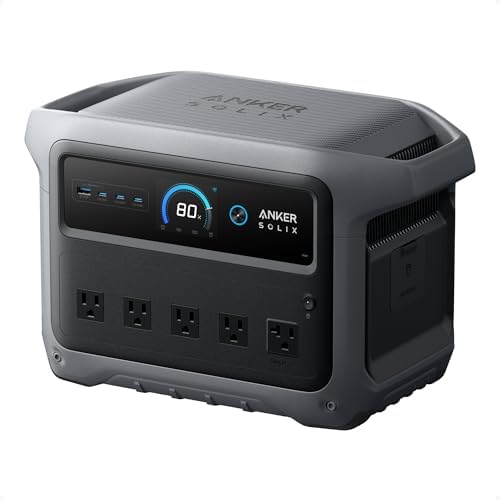
6. Anker SOLIX C1000 Gen 2 Portable Power Station, 1024Wh
4.7
The SOLIX C1000 Gen 2 replaces Anker's original C1000 with a faster, smaller, lighter design, and MacRumors, The Gadgeteer, HowToGeek, BackupPowerHub and TheSolarLab all reviewed it favorably, calling out the same headline upgrade: a 49-minute 0-100% AC recharge thanks to Anker's UltraFlash Charge mode, down from roughly 58 minutes on the original. The 1024Wh LiFePO4 battery delivers 2,000W of continuous output (3,000W surge), up from 1,800W on the prior generation, and feeds nine total ports including five AC outlets, two 140W USB-C ports capable of fast-charging a laptop at full speed, and a dedicated 15W USB-C port. A sub-10ms UPS switchover keeps sensitive electronics like a CPAP machine or router running through a power blip, and Anker rates the cells for 4,000-plus charge cycles at 80 percent retained capacity, backed by a 5-year warranty. At 24.9 lbs it is about 11 percent lighter and 14 percent smaller than the original C1000, though reviewers note two tradeoffs from that redesign: it drops the built-in light that shipped on the original, and it no longer supports add-on battery expansion packs.
Capacity1024Wh (LiFePO4)
AC output2,000W continuous / 3,000W surge, 5 outlets
USB-C output2 ports at 140W, 1 port at 15W
Weight24.9 lbs
Output ports9 total
AC recharge time0-100% in about 49 minutes
Warranty5 years (4,000+ charge cycles)
Pros
49-minute 0-100% AC recharge, among the fastest at this capacity
2,000W continuous output (3,000W surge) beats the original C1000's 1,800W rating
Two 140W USB-C PD 3.1 ports can fast-charge a laptop at full speed
Sub-10ms UPS switchover protects CPAP machines, routers and other sensitive electronics
About 11 percent lighter and 14 percent smaller than the original C1000 it replaces
Cons
Dropped the built-in light that shipped on the original C1000
No longer supports add-on battery expansion packs
Five AC outlets is one fewer than the six on the previous generation
Who is it for?
Buyers who want Anker's fastest-charging mid-size station yet for home backup, camping or job-site use.
Who is it not for?
Anyone who relied on the original C1000's expandable battery packs or built-in light, or who wants the single largest capacity in this lineup.
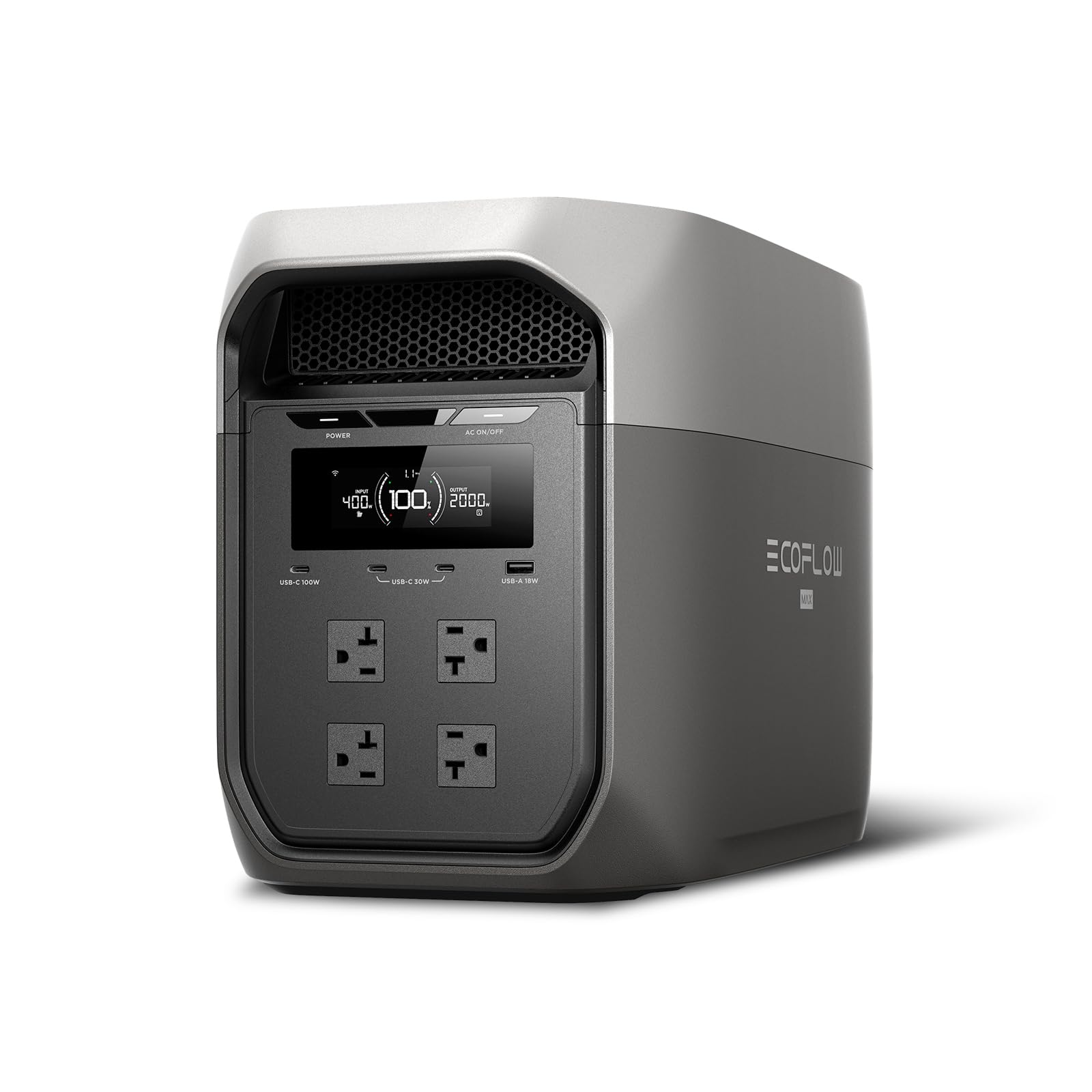
7. EF ECOFLOW DELTA 3 Max Portable Power Station, 2048Wh
4.6
The DELTA 3 Max is our Best for Home Backup pick and the home-backup specialist of this comparison, with 2048Wh of LiFePO4 capacity - roughly seven times the smallest units here - enough to keep a fridge, WiFi router and several lights running through an extended outage. Reviews of EcoFlow's DELTA 3 Max series from StorageReview, Trusted Reviews and AppleInsider (largely covering the closely related Max Plus variant) praise the front-mounted outlet layout and fast charging as real upgrades over prior EcoFlow generations, while noting the trade-off of real heft at this capacity tier. X-Boost technology lets it push output beyond its standard AC rating to run higher-draw appliances that would otherwise trip a lower-powered unit, and it recharges from 0-80% in about 1.13 hours on AC power. It supports up to 1,000W of solar input for off-grid recharging and is expandable with add-on battery packs as backup needs grow.
Capacity2048Wh (LiFePO4)
AC outputUp to 3,400W with X-Boost
USB-C output140W fast charging
WeightAbout 48.7 lbs
AC outlets4
AC recharge time0-80% in about 1.13 hours
WarrantyExpandable battery system
Pros
Largest capacity in this lineup at 2048Wh - built for whole-room home backup
X-Boost output up to 3,400W runs higher-draw appliances other units can't
0-80% AC recharge in about 1.13 hours, fast for this capacity class
4 AC outlets plus a 140W USB-C port
Expandable with add-on battery packs as backup needs grow
Cons
At about 48.7 lbs it's a two-person or wheeled-cart move, not a grab-and-go unit
Highest price in this comparison by a wide margin
Most third-party testing found covers the closely related Max Plus variant rather than this exact model
Who is it for?
Homeowners who want serious whole-room backup capacity for extended power outages.
Who is it not for?
Campers or anyone who needs a station they can carry easily - the compact 288Wh models here are a better fit.
The stars you see are the Graded Picks cumulative score, not a single retailer's average. It blends verified buyer reviews aggregated across major retailers, assessments from professional reviewers and expert testers, and how prominently the product features in leading category lineups.
Advertising Disclosure
Our rankings are compiled by aggregating several independent signals, including verified buyer feedback, how popular a product currently is with shoppers, and evaluations published by professional reviewers. Editorial opinions are our own.
Please note that we participate in affiliate marketing programs. When you purchase through links on our site, we may earn a commission. As an Amazon Associate we earn from qualifying purchases. This comes at no additional cost to you and helps support the resources required to provide valuable content.