A red light therapy mask promises firmer, calmer, brighter skin from ten quiet minutes on the couch, and the idea genuinely has science behind it. But the category is crowded with lookalike shells, and a mask covered in glowing LEDs can still be using the wrong colors of light to do anything useful. We analyzed thousands of verified buyer reviews, recent sales data, and expert evaluations to find eight red light therapy masks that emit the wavelengths that matter and hold up to daily use.
Every product we compared, in ranked order. Tap through to Amazon to check today's price, or jump to the full review below.
1
INTEO 680-LED Mask
Best Overall$10 COUPON
INTEO 680-LED Face & Neck Mask
5.0
680 LEDs · Face & neck coverage · 850nm NIR/660nm Red
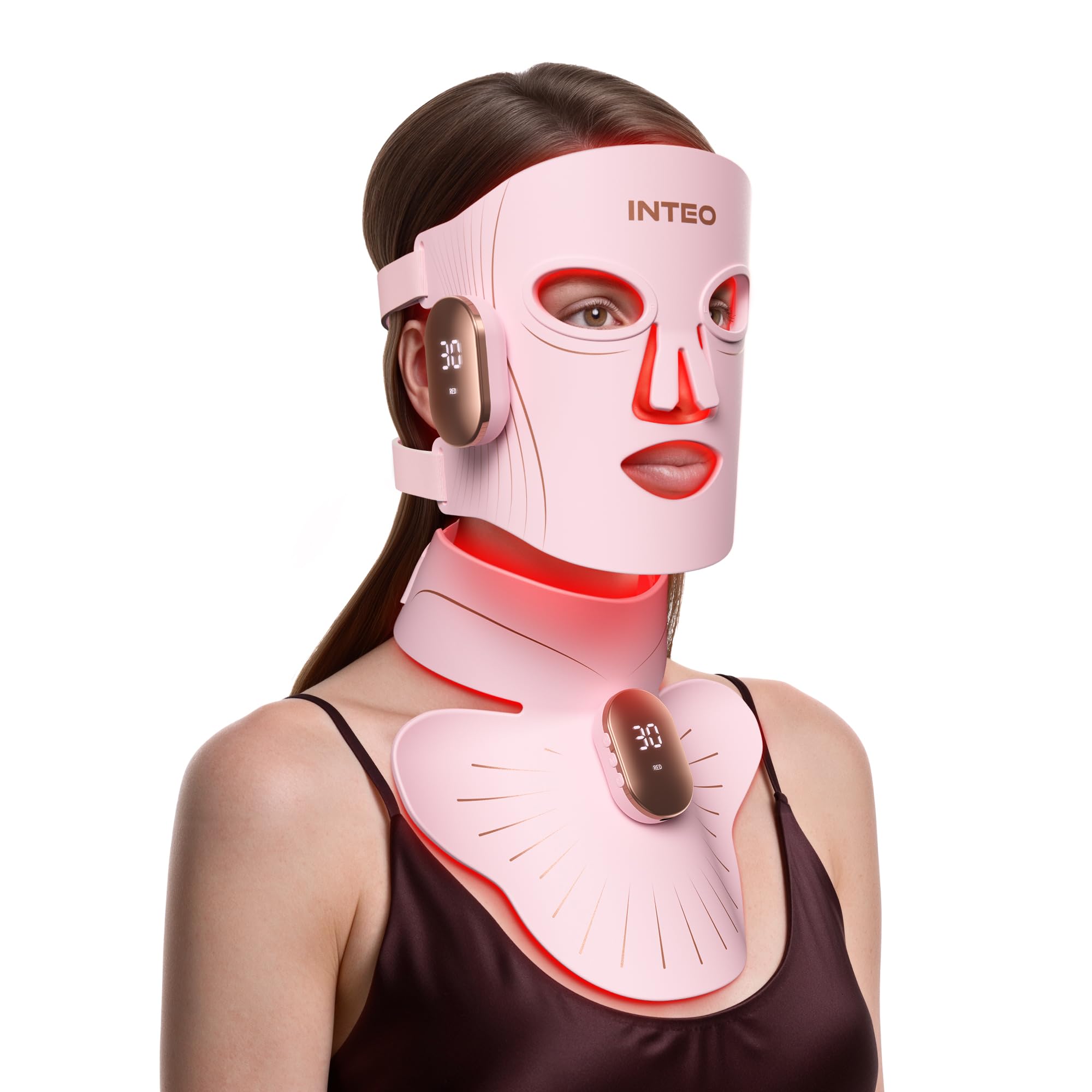
Our Best Overall pick: a face-and-neck mask claiming more than five times the LED density of leading brands, with four wavelengths and a wired remote timer. It extends treatment down to the neck and chest, an area most face-only masks skip.
324 LEDs · 630nm Red/850nm NIR/415nm Blue · FDA-cleared Class II
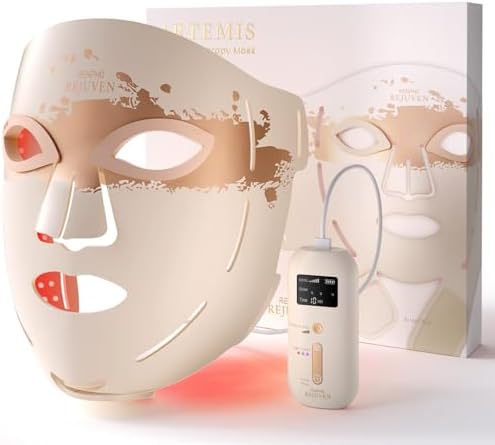
A Class II FDA-cleared mask that undercuts pricier rivals on cost while matching or beating their LED density, reviewed positively by mainstream tech outlets. Five intensity levels and three wavelength combinations cover anti-aging and acne in one soft silicone shell.
680 LEDs · Face & neck coverage · 850nm NIR/660nm Red
A 680-LED face-and-neck mask with 850nm near-infrared and 660nm red light at a price well below the flagship masks. It treats the neck and chest as well as the face, which most masks here skip.
A dense 456-LED array spanning four light types, red, blue, amber and near-infrared, in a straightforward wired-remote mask that costs meaningfully less than several rivals in this lineup.
Shark CryoGlow LED Face Mask with Under-Eye Cooling (FW312)
4.7
Red, blue & deep infrared · FDA-cleared · Under-eye cooling
Shark's FDA-cleared mask combines red, blue and deep infrared LEDs with clip-on under-eye cooling pads. Dedicated Better Aging and Blemish Repair modes make it our pick for anti-aging and acne.
A two-piece set with a face mask and a neck-and-chest mask, each with seven light colors including 630nm red and 850nm infrared, extending treatment below the jaw where most masks in this comparison stop at the chin.
456 LEDs · Red 630nm/NIR 850nm/Blue 415nm · FDA-cleared
Wavytalk's FDA-cleared sibling to its Glow Time mask elsewhere in this comparison, built around a dedicated acne-fighting mode backed by an independent 28-day clinical study. Buyer sentiment trails most of the rest of this lineup despite that research backing.
MEGELIN 7-Color LED Light Therapy Facial Mask (White)
4.6
7 colors · 288 LEDs · Face only
The face-only version of MEGELIN's 7-color mask: flexible silicone, 630nm red and 850nm infrared among seven wavelengths, at a lower price than the face-and-neck set.
Short on time? These three cover most buyers: our top-graded pick, the best value for money, and the most clinically grounded option for anti-aging and acne.
Red Light Therapy Masks 101: What They Do & How to Choose
Understand the category before you buy - what the science actually says, and which specs matter.
Every mask in this lineup floods your face with LED light, but the specific wavelengths, the strength of the light, and whether the device is FDA-cleared separate the real tools from the pretty gadgets. Here is how the light actually works on your skin, the one spec most shoppers overlook, and the features worth comparing before you buy.
What does a red light therapy mask actually do?
A red light mask sits over your face and shines specific colors of LED light onto and into your skin. Different wavelengths reach different depths and do different jobs:
Red light, roughly 630nm to 660nm in this lineup, is absorbed near the surface and is the wavelength most associated with collagen support, tone, and fine lines.
Near-infrared light, around 830nm to 850nm here, is invisible to your eye and penetrates deeper, which is why it is paired with red for firming and recovery.
Blue light, around 415nm to 470nm, stays at the surface and targets the bacteria involved in breakouts.
Some masks add amber, yellow, or orange light for tone and redness.
You wear the mask for a short session, most models here run 10, 15, 20, or 30 minutes with an automatic shutoff, and repeat it several times a week.
The wavelengths are the whole product, not the LED count
This is the part most shoppers get backwards. It is easy to compare masks by how many LEDs they pack in, and the range here is wide, from 180 LEDs on the compact INTEO 3-mode mask up to 680 LEDs on the face-and-neck mask. But the number of diodes is not what makes light therapy work. The color of the light does.
For anti-aging and firming, you want true red in the 630nm to 660nm band paired with near-infrared at 830nm to 850nm, because those are the wavelengths research ties to collagen and deeper tissue. Several masks here name their wavelengths precisely, such as the RENPHO 4D at 630nm red and 850nm NIR, the iRestore at 635nm and 830nm, and the face-and-neck mask at 660nm and 850nm. Others list only vague color names like "red" and "infrared" without the nanometer figure, which makes it impossible to know whether you are getting therapeutic red or just a warm-looking glow.
Two things matter alongside the right wavelengths. The first is irradiance, the actual power delivered to your skin, which decides whether a session does enough in the time you give it. Very few masks in this category publish a figure at all, so ask for one before you buy if you can't find it listed. The second is consistency: light therapy is cumulative, so a mask you will actually wear several times a week beats a more powerful one that lives in a drawer.
Which specs actually matter?
Once you understand the light, a few features decide which mask fits your face and your routine:
Named wavelengths: Look for stated figures like 630nm to 660nm red and 830nm to 850nm near-infrared. A mask that lists only "red and infrared" without numbers is asking you to trust it blindly.
FDA clearance: This is a meaningful credential in this category. FDA-cleared devices, including the Ulike ReGlow, the RENPHO 4D Class II device, and the 7-in-1 face-and-neck mask, have been reviewed for their claims. Others in this lineup are not listed as cleared.
Light modes: More colors mean more uses. Masks here run from three modes up to a seven-color spectrum, letting you target aging with red and NIR one day and breakouts with blue another.
Session timer: A built-in auto shutoff, whether a fixed 10-minute session or a selectable 10, 20, or 30 minutes, keeps sessions consistent and hands-free.
Fit and comfort: Soft silicone shells like the RENPHO and Ulike conform to your face, while rigid shells sit farther off the skin. Face-and-neck designs extend coverage below the jaw.
Rechargeable and cordless: Most masks here use a USB-C rechargeable battery, so you can wear them anywhere. Runtimes and charge times vary, so check that a charge covers several sessions.
How we grade products
Graded Picks rankings are aggregated from several independent signals: verified buyer ratings and the size of the review base for credibility, recent monthly purchase volume for relevance, assessments from trusted skincare and health publications, and how each product places in leading category lineups. For red light therapy masks we weigh:
Named, therapeutic wavelengths (red and near-infrared)
FDA clearance and manufacturing standards
Light output and range of modes
Comfort, fit, and coverage
Battery life and ease of charging
Session controls and safety features
Overall value for the price
Safety and consistency note: Always use the included eye protection or keep your eyes closed during sessions, since concentrated LED light can strain your eyes. If you take medication that increases light sensitivity, such as certain acne, antibiotic, or other photosensitizing drugs, check with your doctor before starting. Results build gradually, so the mask only works if you use it consistently over weeks, not once in a while.
In-Depth Reviews
Everything we learned from buyer reviews and expert testing, product by product.
INTEO 680-LED Mask
Best Overall$10 COUPON
1. INTEO 680-LED Face & Neck Mask
5.0
INTEO's 680-LED mask is our Best Overall pick because it delivers the most light coverage in this lineup at a mid-range price: 170 four-LED beads spread across the face and down to the neck and upper chest, an area most competing masks in this comparison don't treat. Four wavelengths, 850nm near-infrared, 660nm red, 600nm orange and 460nm blue, are selected through a wired remote and timer handle, with session lengths adjustable from 10 to 30 minutes. The 2000mAh battery charges over USB-C and is rated for roughly two hours of cumulative use per charge. INTEO has picked up coverage in mainstream deal roundups, but independent hands-on testing is thin compared to the more established brands here, and it lists no FDA clearance, so the Shark and RENPHO are the safer picks for buyers who want a cleared device. It shares its hardware with the black INTEO ranked below it; the choice between them comes down to finish and current price.
RENPHO's Artemis mask (sold here as the '4D' 324-LED model) punches above its price bracket: reviewers at a UK tech-and-lifestyle outlet and a longtime gadget-review blog both concluded it delivers comparable LED coverage to masks costing two to three times as much, while staying comfortable across different face shapes. Three combined-wavelength modes - Red+NIR at 630nm/850nm for firming, Blue+NIR at 415nm/850nm for acne, and all three together - plus five adjustable intensity levels let buyers dial treatment to their skin's sensitivity. It's a Class II FDA-cleared medical device, charges via USB-C in about 2.5 hours for roughly 45 minutes of runtime, and ships with detachable eye cups for hygiene. Reviewers' main gripe is the accessory kit: no case, stand or pouch is included, just the mask, controller and a flimsy card packaging insert.
INTEO's 680-LED mask delivers the most light coverage in this lineup at a mid-range price: 170 four-LED beads spread across the face and down to the neck and upper chest, an area most competing masks leave untreated. Four wavelength settings led by 850nm near-infrared and 660nm red, with orange and blue also available, are selected through a wired remote and timer handle, with sessions adjustable from 10 to 30 minutes. The 2000mAh battery charges over USB-C for roughly two hours of cumulative use per charge, and the soft silicone shell is light enough to wear lying down. The tradeoffs are honest ones: INTEO has appeared in mainstream deal roundups but has less independent hands-on testing than the established brands here, and it lists no FDA clearance, so the Shark and RENPHO are the safer picks for buyers who want a cleared device. This black version shares its hardware with the pink INTEO ranked above it.
The Wavytalk Glow Time stands out for its wavelength breadth: 456 medical-grade LEDs deliver red, blue, amber and near-infrared light from one mask, more light types than most of the pricier options in this comparison offer. Testers who tracked results over several weeks reported visibly clearer, more radiant skin by around the three-week mark, with more pronounced improvement by week six. The included wired remote lets you switch between red, blue and yellow modes on 10, 15 or 20-minute timers without removing the mask, and a 2500mAh battery handles multiple sessions per charge over USB-C. The honest tradeoff for that breadth and value is fit: the mask doesn't sit flush against every face, and the eye and mouth openings don't always align perfectly, which can let light escape at the edges during longer sessions.
5. Shark CryoGlow LED Face Mask with Under-Eye Cooling (FW312)
4.7
The Shark CryoGlow is our Best for Anti-Aging & Acne pick because it is an FDA-cleared mask that pairs red, blue and deep infrared LEDs with dedicated treatment modes for each concern: a 6-minute Better Aging program aimed at fine lines and an 8-minute Blemish Repair program for breakouts. Shark cites clinical studies of once-daily use behind both modes, and reviewers at TechRadar, Tom's Guide and Who What Wear who tested it for weeks to months reported brighter, calmer skin and less under-eye puffiness. Clip-on chill pads add three adjustable levels of under-eye cooling, and a remote runs the programs. The honest tradeoffs are weight and price: at about 675 grams the hard shell feels rigid and a little claustrophobic to some testers, and it costs far more than most masks here. Shark backs it with a 2-year limited warranty.
Wavelengths & LEDsRed, blue & deep infrared (iQLED)
6. MEGELIN 7-Color LED Face & Neck Mask Set (White)
4.6
This MEGELIN listing is a two-piece set: a flexible silicone face mask plus a second mask for the neck and chest, extending treatment below the jaw where most masks in this comparison stop at the chin. Seven wavelengths run from 420nm purple and 490nm cyan through 550nm green, 590nm yellow and 630nm red to 850nm infrared, and the brand lists 288 LEDs and a power density of about 35mW/cm2. Reviewers at Wareable and The Gadgeteer call it flexible, comfortable and much cheaper than premium beauty-tech names, with adjustable velcro straps and eye pads, but describe the results as modest, gradual and in part self-perceived. The seven-color marketing also outruns what most skin routines need, since red and near-infrared do the main work. Treatment times of 10, 15 and 20 minutes are offered, and MEGELIN lists a 1-year warranty.
Wavelengths & LEDs288 LEDs; 7 colors from 420nm to 850nm incl. 630nm red, 850nm NIR
Wavytalk's anti-acne mask shares its 456-LED, four-wavelength hardware, 630nm red, 850nm near-infrared, 415nm blue and 590nm amber, with the brand's Glow Time mask elsewhere in this comparison, but leads with an FDA-cleared Anti-Acne mode that pairs blue and red light. An independent, Intertek-verified 28-day study of 23 participants found an 81.5% reduction in acne breakouts alongside a 70.4% boost in skin radiance, backing up the Anti-Fine Line and Rejuvenation modes rounding out the three-mode lineup. The flexible medical-grade silicone shell uses adjustable straps for fit, and a 2500mAh battery charges over USB-C for 10, 15 or 20-minute timed sessions. The honest catch is sentiment: even with the clinical backing and FDA clearance, buyer reaction to this specific listing trails most other masks in this lineup, a gap worth weighing against the research behind it.
8. MEGELIN 7-Color LED Light Therapy Facial Mask (White)
4.6
This is the face-only MEGELIN, a flexible silicone mask with seven wavelengths including 630nm red and 850nm near-infrared, and the same listed 288 LEDs as the face-and-neck set ranked above it. Reviewers at Wareable and The Gadgeteer describe it as comfortable, with adjustable velcro straps and eye pads, and as a cheap way to try home LED skincare. They also note that results are modest and gradual, and one reviewer finds the seven-color marketing ahead of what most users need. Sessions run 10, 15 or 20 minutes, and MEGELIN lists a 1-year warranty and FDA clearance for the device. Choose this version if you do not need the neck and chest mask in the other listing, since it costs far less.
Wavelengths & LEDs288 LEDs; 7 colors from 420nm to 850nm incl. 630nm red, 850nm NIR
The stars you see are the Graded Picks cumulative score, not a single retailer's average. It blends verified buyer reviews aggregated across major retailers, assessments from professional reviewers and expert testers, and how prominently the product features in leading category lineups.
Advertising Disclosure
Our rankings are compiled by aggregating several independent signals, including verified buyer feedback, how popular a product currently is with shoppers, and evaluations published by professional reviewers. Editorial opinions are our own.
Please note that we participate in affiliate marketing programs. When you purchase through links on our site, we may earn a commission. As an Amazon Associate we earn from qualifying purchases. This comes at no additional cost to you and helps support the resources required to provide valuable content.