Red yeast rice is one of the few supplements with real pharmacology behind it, a traditional fermented rice that people take to help support healthy cholesterol. But that power cuts both ways, and the milligram number splashed across the front of the bottle tells you far less than most shoppers assume. We analyzed thousands of verified buyer reviews, recent sales data, and expert evaluations to find seven red yeast rice supplements that pair honest formulation with the testing that actually keeps them safe.
Our Best Overall pick: a complete formula pairing 1,215mg of red yeast rice with CoQ10, alpha lipoic acid and organic flaxseed in one capsule, backed by third-party lab testing for citrinin and potency.
Natures Craft Red Yeast Rice with CoQ10 (1,200mg, 120 Capsules)
4.9
1,200mg RYR · 100mg CoQ10 · Citrinin-free formula
A straightforward 1,200mg red yeast rice and 100mg CoQ10 formula at a price noticeably lower than most competitors offering a similar combination, non-GMO and citrinin-free.
A concentrated 20:1 extract rather than raw powder, paired with CoQ10 and backed by one of the more rigorously documented citrinin-free claims here thanks to ISO-certified lab testing.
Our pick for heart health support: a sugar-free, vegan gummy that layers 2,400mg of red yeast rice with 200mg of CoQ10 plus citrus bergamot and plant sterols and stanols, the most complete cardiovascular stack in this comparison.
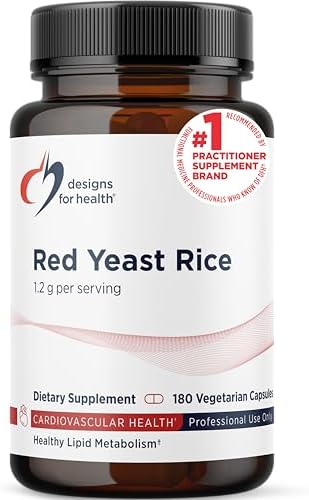
Designs for Health Organic Red Yeast Rice Capsules (1,200mg, 180 Count)
4.7
1,200mg organic RYR per serving · Citrinin-tested · US-grown organic
A practitioner-grade formula built around 1,200mg of US-grown organic red yeast rice per serving, tested specifically for citrinin and monacolin content rather than relying on a generic purity claim, with no added CoQ10.
Our Best Value pick: the lowest price in this comparison for a 4-in-1 formula that layers flush-free niacin and fat-soluble vitamin C on top of the standard red yeast rice and CoQ10 combination, in the largest capsule count here.
Short on time? These three cover most buyers: our Best Overall capsule that bundles red yeast rice with CoQ10, alpha lipoic acid and flaxseed for a complete cardiovascular formula, the gummy pick for heart health support that layers in CoQ10, citrus bergamot and plant sterols for the broadest ingredient stack in this comparison, and our Best Value pick, a 4-in-1 capsule that adds flush-free niacin and vitamin C to the standard red yeast rice and CoQ10 combination at the lowest price in this comparison.
Best Overall
ForestLeaf RYR + CoQ10
ForestLeaf Red Yeast Rice with CoQ10 (1,215mg, 180 Capsules)
Understand the category before you buy - what the science actually says, and which specs matter.
Every bottle promises heart and cholesterol support, but the way these products are made, tested, and dosed varies more than the labels let on. Here is how red yeast rice works, why the active compound matters far more than the total milligrams, and the features genuinely worth comparing before you buy.
What does a red yeast rice supplement actually do?
Red yeast rice is white rice fermented with a specific yeast, and that fermentation produces a family of compounds called monacolins. The most important one, monacolin K, is what gives the supplement its cholesterol-lowering effect. Taken daily, it works in the body much the way a low-dose statin does.
Here is the short version of what these products are built to do:
Deliver monacolin K and related compounds from fermented rice
Support healthy total and LDL cholesterol as part of a broader routine
Often pair the rice with CoQ10 or other heart-focused ingredients
Every capsule product in this lineup is meant to be taken as two capsules daily, usually in the evening, which is when your body makes most of its cholesterol.
The milligrams on the label are not the real dose
This is the single most important thing to understand, and almost no shopper knows it. The active ingredient is monacolin K, and monacolin K is chemically identical to lovastatin, a prescription statin. That means the true strength of any red yeast rice supplement is the amount of monacolin K it contains, not the milligrams of red yeast rice printed on the front.
The catch is that two bottles can both say 1,200 mg and deliver wildly different amounts of monacolin K, because fermentation batches vary and manufacturers do not all standardize the same way. Worse, most labels do not disclose the monacolin K content at all, and US products are limited in how much they are permitted to contain. Look across this lineup and you will notice the pattern: the Designs for Health 1,200 mg, the ForestLeaf 1,215 mg, the Nextdia gummies at 2,400 mg, and the rest all lead with total rice, not monacolin K. The Organic Red Yeast Rice Powder is the extreme case, a whole-food powder whose potency is not isolated on the label at all.
The practical takeaway: treat the milligram figure as a rough guide only, favor brands that are transparent about testing and sourcing, and let a healthcare provider help you judge actual potency. Transparency is everything here, because the number you can see is not the number that matters.
Which specs actually matter?
Once you understand where the real dose hides, a few features decide which product fits you:
Citrinin-free testing: Fermentation can produce citrinin, a byproduct that is toxic to the kidneys. Independent, verified testing is the most important safety spec. Zazzee lists ISO-certified lab testing and Designs for Health is certified citrinin-free, which is stronger than a plain label claim like the one on Natures Craft and the gummies.
Added CoQ10: Statin-like compounds can deplete the body's CoQ10. Several picks add it back, from 60 mg in the ForestLeaf up to 200 mg in the gummies, with Zazzee (80mg) and Micro Ingredients (100mg) in between.
Red yeast rice amount: Servings here run from 1,200 mg up to a 2,400 mg herbal equivalent, but read this alongside the transparency point above rather than as a simple more-is-better scale.
Testing and manufacturing standard: Look for cGMP, NSF, or FDA-registered US facilities. Designs for Health is practitioner-grade from an NSF-certified facility, and Zazzee runs a cGMP facility.
Format and serving: Most are capsules taken twice daily. The gummies and the mix-in powder are gentler on people who dislike pills, though the powder gives up dose precision.
Diet and certifications: If it matters to you, the Zazzee and gummies are vegan, several are non-GMO, and the ForestLeaf adds gluten-free.
How we grade products
Graded Picks rankings are aggregated from several independent signals: verified buyer ratings and the size of the review base for credibility, recent monthly purchase volume for relevance, assessments from trusted health and wellness publications, and how each product places in leading category lineups. For red yeast rice we weigh:
Citrinin-free and third-party testing rigor
Transparency about sourcing and potency
Presence and dose of added CoQ10
Manufacturing standard and facility certifications
Formulation quality and added heart-support ingredients
Format and ease of daily use
Overall value for the price
Health and safety note: Red yeast rice acts like a statin because its active compound is chemically the same as one. Do not combine it with a prescription statin, and be aware it can affect the liver and interact with many medications. Avoid it during pregnancy and while breastfeeding. Talk to a healthcare provider before starting, especially if you take other medications or have liver concerns, and treat this supplement as something to use under real medical guidance, not on your own.
In-Depth Reviews
Everything we learned from buyer reviews and expert testing, product by product.
ForestLeaf RYR
Best Overall30% COUPON
1. ForestLeaf Red Yeast Rice with CoQ10 (1,215mg, 180 Capsules)
5.0
Our Best Overall pick. ForestLeaf builds its formula around the idea that red yeast rice works better alongside supporting nutrients rather than alone: each two-capsule serving delivers 1,215mg of red yeast rice plus 60mg of CoQ10, 225mg of alpha lipoic acid and 300mg of organic flaxseed, giving it one of the more complete cardiovascular-support stacks in this comparison. Independent quality-tracking sites that audit supplement testing cite third-party lab verification for both potency and citrinin-free status. Buyer feedback is largely positive on how the combination fits a daily heart-health routine, though any red yeast rice supplement's effect on individual cholesterol numbers varies person to person, and a small number of users report no measurable change and return to a prescription option instead. The formula is non-GMO, vegetarian and free of common allergens including gluten, dairy, egg, nuts and soy, and is manufactured in an FDA-registered US facility.
Red yeast rice per serving1,215 mg per 2-capsule serving
Combines red yeast rice with CoQ10, alpha lipoic acid and flaxseed in one formula
Third-party lab tested for both potency and citrinin-free status
Free of common allergens including gluten, dairy, egg, nuts and soy
Manufactured in an FDA-registered US facility
Strong independent trust rating from supplement-quality tracking sites
Cons
Individual response to red yeast rice varies, and a handful of buyers report no measurable cholesterol change
The added ingredients mean a larger capsule than RYR-only formulas
Costs more per serving than simpler, single-ingredient competitors
Who is it for?
Most buyers who want our Best Overall pick: red yeast rice bundled with CoQ10 and complementary antioxidants in a single, independently tested formula.
Who is it not for?
Anyone who wants the lowest-cost option or prefers to source CoQ10 and other actives separately.
2. Natures Craft Red Yeast Rice with CoQ10 (1,200mg, 120 Capsules)
4.9
Natures Craft pairs 1,200mg of red yeast rice with a generous 100mg of CoQ10 per serving, at a price noticeably lower than most competitors offering a similar combination. Buyer feedback mentions steadier energy and improvements in routine cholesterol checks after consistent use, with some longtime users crediting it with helping them avoid starting a prescription statin. Independent supplement-safety reviewers rate its real-world efficacy as moderate and flag the same monacolin-related caution that applies across the category, potential muscle aches or liver enzyme changes at higher intakes, so it is not a substitute for medical guidance if you are managing diagnosed high cholesterol. The formula is citrinin-free and non-GMO.
Red yeast rice per serving1,200 mg per serving
CoQ10 / other actives100mg CoQ10
Citrinin / testing statusCitrinin-free formula
Container size120 capsules (~60-day supply)
Recommended serving2 capsules daily
Key certificationsNon-GMO
Manufacturing standardMade in USA
Pros
Generous 100mg CoQ10 alongside a full 1,200mg red yeast rice dose
Noticeably lower price per serving than most CoQ10-combination competitors
One of the most widely purchased formulas in this category
Citrinin-free and non-GMO
Cons
Independent safety reviewers rate real-world efficacy as moderate rather than exceptional
Same monacolin-related caution applies as with any red yeast rice supplement - consult a doctor if on other cholesterol medication
Fewer independent lab-verification details published than some higher-priced competitors
Who is it for?
Budget-conscious buyers who want a proven red yeast rice and CoQ10 combination without paying practitioner-brand pricing.
Who is it not for?
Anyone who wants the most rigorously documented independent lab testing should look at the Designs for Health or Zazzee formulas instead.
3. Zazzee Organic Red Yeast Rice 20:1 Extract with CoQ10 (1,200mg, 120 Capsules)
4.9
Zazzee stands out on the strength of ISO-certified citrinin-free testing, documentation reviewers say is more specific and verifiable than the general purity language some competitors use. The formula uses a 20:1 concentrated extract rather than raw red yeast rice powder, so each 1,200mg serving is derived from a much larger amount of raw material, plus 80mg of CoQ10 per serving, at a competitive price among the CoQ10-combination formulas in this comparison. Buyers describe it as effective for routine cholesterol maintenance as part of a broader diet and exercise approach, and manufacturing is done in the USA under cGMP standards with globally sourced raw ingredients. As with any brand in this category without deep name recognition on major consumer-testing sites, some of the confidence here comes from the manufacturing and testing documentation itself rather than a decades-long track record.
Concentrated 20:1 extract rather than raw powder for a more standardized dose
ISO-certified lab testing backs the citrinin-free claim with real documentation
80mg CoQ10 included alongside the red yeast rice extract
Made in the USA under cGMP manufacturing standards
Cons
Less established brand name recognition than the most well-known names in this comparison
No independent third-party publication review found specifically testing this SKU
60-day supply means more frequent reordering than the larger-count competitors here
Who is it for?
Buyers who want a concentrated 20:1 extract with clearly documented, ISO-certified citrinin testing.
Who is it not for?
Buyers who specifically want the reassurance of a long-established, widely recognized brand name, or who prefer a raw-powder format over a concentrated extract.
4. Nextdia Red Yeast Rice Gummies with CoQ10 (2,400mg, 60 Count)
4.8
Our pick for heart health support. Nextdia takes red yeast rice in a different direction than every capsule and powder formula here: a sugar-free, vegan gummy delivering 2,400mg of red yeast rice alongside 200mg of CoQ10, plus citrus bergamot and plant sterols and stanols, two additional compounds with their own cholesterol-support research behind them. That combination gives it the broadest set of heart-support ingredients in this comparison, and strong buyer sentiment on the gummy format has kept it near the top of this lineup. The formula is positioned for adults 50 and older and layers general energy and immune-support claims on top of the core cardiovascular angle. Independent supplement-comparison coverage has called out the formula favorably relative to other red-yeast-rice gummies, though a gummy makes it harder to standardize potency the way a fixed-dose capsule does, and dedicated third-party lab testing specific to this SKU is thin. Nextdia manufactures in a GMP-compliant US facility, and the product ships as two 60-count bottles per pack.
5. Designs for Health Organic Red Yeast Rice Capsules (1,200mg, 180 Count)
4.7
Designs for Health is best known as a practitioner-distributed brand, and its red yeast rice formula reflects that positioning: 1,200mg of US-grown organic red yeast rice per two-capsule serving, with testing specifically aimed at confirming citrinin-free status and a clinically relevant monacolin content rather than just listing a raw milligram number. That distinction matters in a category where health authorities have flagged wide, unlabeled variation in actual active-ingredient levels between brands claiming similar doses. The formula skips added CoQ10, alpha lipoic acid or other extras, keeping the focus on the red yeast rice itself for buyers who prefer to source complementary nutrients separately or are already taking a CoQ10 supplement. Recommended use is two capsules in the evening, and the organic, non-GMO sourcing plus practitioner-grade manufacturing standards give it a credibility edge over mass-market competitors in this comparison.
Red yeast rice per serving1,200 mg (1.2 g)
CoQ10 / other activesNone added
Citrinin / testing statusTested and certified citrinin-free
Container size180 capsules (~90-day supply)
Recommended serving2 capsules daily, in the evening
Key certificationsNon-GMO, US-grown organic
Manufacturing standardPractitioner-grade, NSF-certified US facility
Pros
US-grown organic red yeast rice with specific citrinin testing, not just a general purity claim
Simple, focused formula without unnecessary filler ingredients
Non-GMO and organic certifications back up the label claims
90-day supply per bottle keeps reordering infrequent
Cons
No added CoQ10, so buyers wanting that combination need a separate supplement
Priced above several mass-market competitors in this comparison
Sold mainly through practitioners and specialty retailers rather than everyday storefronts
Who is it for?
Buyers who want a straightforward, rigorously tested red yeast rice formula from a practitioner-grade brand, with or without a separate CoQ10 supplement.
Who is it not for?
Anyone who specifically wants CoQ10 bundled into the same capsule should look at the CoQ10-formula picks in this comparison instead.
6. Micro Ingredients Red Yeast Rice with CoQ10 (1,200mg, 240 Capsules)
4.6
Our Best Value pick. Micro Ingredients builds its formula around a 4-in-1 approach: each three-capsule serving delivers 1,200mg of red yeast rice alongside 100mg of CoQ10, 100mg of flush-free niacin and 60mg of fat-soluble vitamin C, layering two additional heart-health actives on top of the red-yeast-rice-and-CoQ10 combination most competitors in this comparison stick to, at the lowest price of any product here. Independent supplement-tracking coverage rates the formula as average rather than exceptional, and the brand's broader catalog has drawn mixed independent lab results on other products, so buyers should weigh the added niacin, vitamin C and low price against a track record that's solid but not best-in-class. It's manufactured without soy, dairy, gluten, wheat or tree nuts and is third-party tested for purity, and the 240-capsule bottle is the largest count in this comparison at roughly 80 days per bottle. A steep limited-time discount at the time of our scan made it one of the least expensive ways into a four-ingredient formula.
Red yeast rice per serving1,200 mg per 3-capsule serving
CoQ10 / other actives100mg CoQ10, 100mg flush-free niacin, 60mg vitamin C
Citrinin / testing statusNon-GMO; third-party lab tested for purity
Container size240 capsules (~80-day supply at 3/day)
Recommended serving3 capsules daily
Key certificationsNon-GMO; soy-, dairy-, gluten- and tree-nut-free
Manufacturing standardMade in USA
Pros
Lowest price in this comparison for a four-ingredient formula with CoQ10, niacin and vitamin C
Four-ingredient formula adds flush-free niacin and vitamin C to the standard red yeast rice and CoQ10 combination
Largest capsule count in this comparison at 240 per bottle
Free of soy, dairy, gluten, wheat and tree nuts
Third-party lab tested for purity
Cons
Independent supplement-tracking coverage rates the formula as average rather than exceptional
Brand's broader catalog has drawn mixed independent lab results on other products
Three-capsule serving is a larger daily pill count than several single-dose competitors
Who is it for?
Budget-conscious buyers who want the lowest price in this comparison, with red yeast rice, CoQ10, niacin and vitamin C bundled into one formula.
Who is it not for?
Anyone who wants the most rigorously documented independent lab testing should choose the Designs for Health or Zazzee formulas instead, or who prefers a simpler two-capsule daily serving.
7. aSquared Nutrition Red Yeast Rice (1,800mg, 180 Capsules)
4.6
aSquared Nutrition takes the straightforward, high-potency route: 1,800mg of red yeast rice per serving, higher than every other capsule formula in this comparison, with no CoQ10, niacin or other additions mixed in. It's been named a best-in-category pick for potency by independent supplement roundups, and buyers consistently describe the capsules as easy to swallow with no notable aftertaste, along with positive impressions of overall effectiveness and value for the price. The formula is vegan, gluten-free and third-party tested for quality and purity, though as with any higher-dose red yeast rice product, a bigger milligram number doesn't necessarily mean a proportionally higher monacolin K content, since that active compound isn't independently verified on the label. It's manufactured in the USA and sold in a straightforward 180-capsule bottle without the accessory ingredients some competitors bundle in.
Red yeast rice per serving1,800 mg per serving
CoQ10 / other activesNone added
Citrinin / testing statusThird-party tested for quality and purity
Container size180 capsules (~90-day supply)
Recommended serving2 capsules daily
Key certificationsVegan, gluten-free
Manufacturing standardMade in USA
Pros
1,800mg per serving is the highest single-ingredient dose in this comparison
Named a best-in-category potency pick by independent supplement roundups
Easy-to-swallow capsules with no notable aftertaste, per buyer feedback
Vegan, gluten-free and third-party tested for purity
Cons
No added CoQ10, so it's a red-yeast-rice-only formula rather than a combination product
A higher raw milligram dose doesn't guarantee a proportionally higher monacolin K content
Fewer citrinin-specific testing details published than the most rigorously documented competitors here
Who is it for?
Buyers who specifically want a higher-dose, single-ingredient red yeast rice formula without CoQ10 or other additions.
Who is it not for?
Anyone who wants CoQ10 bundled in, or who prioritizes the most detailed published citrinin-testing documentation.
The stars you see are the Graded Picks cumulative score, not a single retailer's average. It blends verified buyer reviews aggregated across major retailers, assessments from professional reviewers and expert testers, and how prominently the product features in leading category lineups.
Advertising Disclosure
Our rankings are compiled by aggregating several independent signals, including verified buyer feedback, how popular a product currently is with shoppers, and evaluations published by professional reviewers. Editorial opinions are our own.
Please note that we participate in affiliate marketing programs. When you purchase through links on our site, we may earn a commission. As an Amazon Associate we earn from qualifying purchases. This comes at no additional cost to you and helps support the resources required to provide valuable content.