A good Roborock does the floor work you keep putting off: it maps your home, cleans in tidy rows, empties itself, and washes its own mop pad so you barely think about it. But it is easy to overpay for a giant suction number when the spec that actually decides how clean your floors get is something else entirely. We analyzed thousands of verified buyer reviews, recent sales data, and expert evaluations to find seven Roborock robot vacuums that match their features to real homes.
22,000 Pa suction · 3.14 in slim body · 180 min runtime
Our Best Overall pick: Roborock's turret-free flagship, with 22,000 Pa suction in a 3.14-inch body that slides under furniture, StarSight 2.0 navigation that testers found avoided every obstacle, and a dock that empties, washes, refills and hot-air dries.
Roborock Qrevo S Pro Robot Vacuum and Mop (18,500 Pa)
4.9
18,500 Pa suction · 200 RPM spinning mops · 240 min runtime
Our Best for Most Homes pick: Roborock's 2026 refresh of the Qrevo S, with 18,500 Pa suction, a 167°F hot-water mop wash and a 65-day self-empty dock that covers most homes without flagship pricing.
22,000 Pa suction · 3.14 in slim body · hot water mop wash
The slimmest Qrevo yet: flagship-grade 22,000 Pa suction and a 3.14-inch profile, plus an 80°C hot-water mop-washing dock and AdaptiLift chassis - 33% off at our last scan.
Roborock Qrevo S5V Robot Vacuum and Mop (12,000 Pa)
4.8
12,000 Pa suction · dual spinning mops · 180 min runtime
12,000 Pa suction, FlexiArm edge mopping and a dock that self-empties, washes, refills and warm-air dries, with lab-tested cleaning that punches well above its mid-range price, at roughly half of what Roborock's flagship Saros costs.
10,000Pa suction · 70-day self-empty dock · Sonic mopping
A strong budget pick: 10,000Pa suction that TechGearLab measured as the fourth-highest of more than 150 robot vacuums it has tested, a 70-day self-empty dock and ultrasonic carpet detection that auto-lifts the mop and boosts suction.
Roborock Saros Z70 Robot Vacuum with OmniGrip Arm (22,000 Pa)
4.7
22,000 Pa suction · OmniGrip robotic arm · 3.14 in slim body
The moonshot: the first robot vacuum with a folding OmniGrip arm that picks up socks and towels, plus 22,000 Pa suction and class-leading obstacle avoidance - now $999.99, well below its headline-grabbing $1,999+ launch price.
Roborock Q7 M5+ Self-Emptying Robot Vacuum and Mop (10,000 Pa)
4.6
10,000 Pa suction · 7-9 week self-empty dock · 150 min runtime
Our Best Affordable pick: 10,000 Pa suction, LiDAR mapping and a self-empty dock that goes 7 to 9 weeks between bag changes, named a Wirecutter top pick, at the lowest price here.
Short on time? These three cover most buyers: our Best Overall pick with flagship-grade suction in a turret-free slim body, the budget favorite that lands at the lowest price here, and the most accessible all-in-one dock for most homes.
Understand the category before you buy - what the science actually says, and which specs matter.
Roborock is best known for high suction and clever docks, and both matter, but the feature that separates a robot that truly cleans from one you constantly rescue is navigation. Here is how these robots work, why the way they see your home matters more than the headline pascal count, and which features are worth comparing.
What does a Roborock robot vacuum actually do?
A Roborock rolls across your floors on a schedule you set, vacuums debris into an onboard bin, and on most models drags or spins a damp mop pad behind it to clean hard floors in the same pass. When it finishes, it returns to a dock that can empty the bin and, on the higher models, wash and dry the mop pad for you. Day to day it does a few things:
Maps each room and cleans in efficient back-and-forth rows instead of wandering
Vacuums carpet and hard floors, lifting or raising the mop when it detects carpet
Mops hard floors with a spinning or vibrating pad and refills its own water
Avoids cords, shoes, and pet messes it spots along the way
Takes commands and schedules from a phone app
Navigation is the spec that decides whether it actually cleans
Suction gets the headlines, but navigation is what turns a robot into something that cleans your whole floor instead of missing half of it. Nearly every model here uses laser-based mapping to build an accurate map of your home. That map is what lets the robot clean in straight, efficient rows, remember the layout of multiple levels, and know where it has and has not been. A cheaper bump-and-go robot without real mapping wanders semi-randomly, misses spots, and re-covers others.
The lineup shows how navigation has grown up. The Qrevo S5V pairs LiDAR with ReactiveTech obstacle avoidance to steer around clutter. The Qrevo CurvX steps up to Reactive AI obstacle recognition, and the Saros 10R uses StarSight 2.0 solid-state LiDAR with 3D obstacle detection. At the top, the newest Saros 20 Sonic pushes further still with a tri-laser Reactive AI 3.0 stack plus a VertiBeam side sensor and an RGB camera that recognizes and remembers obstacles between cleaning runs, one of the most thorough obstacle-recognition stacks in this lineup. Better navigation is the difference between a robot that finishes the job unattended and one you keep untangling from a phone cable.
After navigation, look at suction in pascals for the messes you have, then at the dock, because a dock that empties the bin and washes and dries the mop is what turns the robot from a gadget you tend into weeks of hands-off cleaning.
Which specs actually matter?
Once navigation is settled, a handful of features decide which Roborock fits your floors and pets:
Navigation and obstacle avoidance: This is the accuracy lever. LiDAR mapping is the baseline here; sensor-stacked systems like the tri-laser Reactive AI 3.0 and VertiBeam combo on the Saros 20 Sonic avoid smaller obstacles more reliably than sensor-only models.
Suction power: Pascals matter most for carpet and pet hair. This lineup ranges from 8,000 Pa on the QV 35A up to 36,000 Pa on the newest Saros 20 Sonic, with the Saros 10R and Qrevo CurvX both at 22,000 Pa. More suction helps deep carpet and thick fur; for mostly hard floors, the lower end is plenty.
Dock functions: This is where the money goes. Simpler docks like the Q7 M5+ only auto-empty the bin, holding debris for up to 7-9 weeks per bag. Fuller docks add mop washing and warm or hot air drying, and the Qrevo CurvX and Qrevo Edge wash the pad with hot water so it does not go back on your floor dirty.
Mopping system: Spinning pads, like the dual 200 RPM mops on the Qrevo S5V, scrub in circles to work stuck-on grime loose. Edge features such as FlexiArm extend the mop into corners a round robot would otherwise miss.
Mop lifting: If you mix carpet and hard floors, a robot that raises its mop keeps rugs dry. Lift ranges from 10 mm on the Qrevo S5V to 17 mm on the Qrevo CurvX, with auto-lift on carpet.
Runtime: A single charge runs from 150 to 190 minutes across this lineup, which covers most homes; larger floor plans benefit from the longer end.
App control: Every model here is run from a phone app for scheduling, no-go zones, and room-by-room cleaning.
How we grade products
Graded Picks rankings are aggregated from several independent signals: verified buyer ratings and the size of the review base for credibility, recent monthly purchase volume for relevance, assessments from trusted home and cleaning publications, and how each product places in leading category lineups. For Roborock robot vacuums we weigh:
Navigation quality and obstacle avoidance
Suction power for carpet and pet hair
Dock capability, from auto-empty to mop wash and dry
Mopping system and edge coverage
Mop lifting for mixed floors
Runtime and app reliability
Overall value for the price
Setup and maintenance note: A self-emptying, self-washing dock cuts your chores but does not remove them. You still refill and empty the dock's water tanks, swap the dust bag every few weeks to months depending on the model, and rinse the mop pads and filters periodically so odors do not build up. For the best mapping, do a slow first run in good lighting and pick up loose cords and small objects before the robot learns your floor plan.
In-Depth Reviews
Everything we learned from buyer reviews and expert testing, product by product.
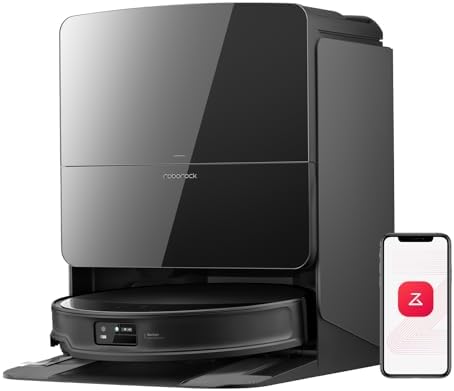
Our Best Overall pick. The Saros 10R is Roborock's turret-free flagship, and it earned strong expert coverage alongside a 38% discount at our last scan. Vacuum Wars called it the best robot vacuum they had seen so far, and TechGearLab handed it a Best Obstacle Avoidance award after its StarSight Autonomous System 2.0, a solid-state LiDAR stack that recognizes 108 obstacle types, weaved around every cable, toy and sock in testing. Because there is no LiDAR turret, the whole robot stands just 3.14 inches tall and cleans under beds and sofas that stop conventional robots. Lab results back the hardware: 92% flattened pet-hair pickup on carpet against an 80% average, with 0% brush tangling thanks to the DuoDivide split roller. The dock self-empties, washes the dual spinning mops, refills the tank and dries with hot air. Testers' honest caveats: mopping is good rather than class-leading, and the claimed 44 mm threshold crossing fell short at around 36 mm in testing.
Suction power22,000 Pa HyperForce
Mopping systemDual spinning mops with FlexiArm edge reach
Dock functionsSelf-empty, mop wash, hot air drying, tank refill
Navigation & obstaclesStarSight 2.0 solid-state LiDAR, 3D obstacle detection
Max runtime180 minutes
Noise level65 dB
In the boxRobot, multifunctional dock, dock base, 2 mop modules, dust bag
Pros
Award-winning obstacle avoidance - avoided every test obstacle at TechGearLab
3.14-inch turret-free body cleans under low furniture
92% pet-hair pickup on carpet with 0% brush tangling in lab tests
Fully automated dock: empty, wash, refill and hot-air dry
180-minute max runtime covers large homes in a single session
Cons
Premium price even after the 38% discount at our last scan
Mopping is good but not class-leading in expert tests
Claimed 44 mm threshold crossing measured closer to 36 mm in testing
Who is it for?
Buyers who want flagship-grade navigation, under-furniture reach and a fully hands-free dock, and are willing to pay flagship money for it.
Who is it not for?
Budget-focused buyers (the Q10 S5+ covers the vacuuming basics for a fraction of the price) and anyone whose main goal is deep mopping, where the Qrevo CurvX's hot-water dock routine is the stronger fit.
2. Roborock Qrevo S Pro Robot Vacuum and Mop (18,500 Pa)
4.9
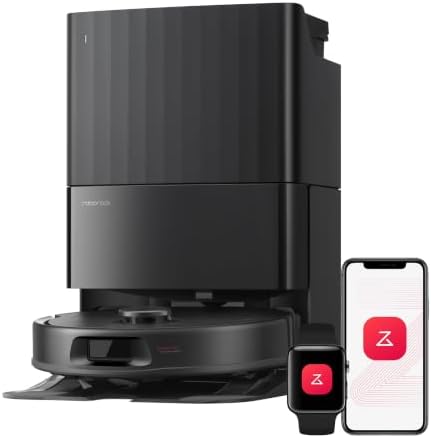
Our Best for Most Homes pick. The Qrevo S Pro is Roborock's 2026 refresh of the original Qrevo S, keeping a mid-range price while raising suction to 18,500 Pa and adding a fuller dock routine. Vacuum Wars found its 200 RPM spinning mops the strongest part of the package, posting a stain-removal score roughly 40 points above the category average on both dried-on and fresh stains, and T3 called it one of the easiest, most effortless robot vacuum and mop combos it had tested. The dock empties into a disposable bag for up to 65 days, washes the mop pads with 167°F hot water, dries them with 113°F warm air, and tops off the robot's water tank automatically, the kind of hands-off routine most homes want without flagship pricing. Testers were less impressed by two things: Reactive Tech obstacle avoidance missed the majority of objects in independent testing, and pet-hair pickup trailed the DuoDivide-equipped Saros and Qrevo CurvX. At $429.99 after a 39% Prime-exclusive discount at our last scan, it undercuts every flagship in this lineup while matching their dock automation.
Suction power18,500 Pa HyperForce
Mopping systemDual spinning mops (200 RPM), 10 mm lift
Dock functionsHot water (167°F) mop wash, self-empty (65-day bag), warm air drying, tank refill
The Qrevo CurvX is essentially Saros hardware wearing a Qrevo badge: the same 22,000 Pa HyperForce suction and 3.14-inch ultra-slim body, at $1,199.99 after a 47% discount at our last scan. Expert testing was emphatic - TechGearLab put it in a top spot in its lineup, single-pass pickup of rice, coffee grounds and flour on tile was effectively complete, and in the 7-inch hair-tangle test 0% of hair wrapped the brush against a 28% category average. The extending FlexiArm arc brush flushed crumbs out of baseboard gaps, and the AdaptiLift chassis raises the robot over 4 cm thresholds. Its dock is the most capable in the Qrevo line, washing mop pads with 80°C hot water, self-emptying, refilling and warm-air drying. Two things to plan around: reviewers found combined vacuum-and-mop runs could streak fine debris until they switched to a vac-then-mop routine, and the dock is huge at 17.6 inches tall and 16.4 inches deep.
Suction power22,000 Pa HyperForce
Mopping systemDual spinning mops, FlexiArm arc brush, 17 mm lift
Dock functionsHot water mop wash, self-empty, warm air drying, tank refill
Navigation & obstaclesPreciSense LiDAR, Reactive AI obstacle recognition
Max runtime150 minutes
Noise level65 dB
In the boxRobot, docking station, 2 mop cloths, mop mount, dust bag
Pros
Flagship 22,000 Pa suction and 3.14-inch slim body for under-furniture cleaning
0% hair tangling in lab tests vs a 28% category average
80°C hot-water mop washing - the best dock in the Qrevo line
AdaptiLift chassis climbs 4 cm thresholds
47% off at our last scan undercuts the Saros flagships
Cons
Mopping can streak in combined mode - testers recommend a vac-then-mop routine
Very large dock (17.6 in tall, 16.4 in deep) dominates its corner
150-minute max runtime trails the 180-240 minutes of other models here
Who is it for?
Buyers who want Saros-grade slimness and suction plus the best mop-washing dock here, at a meaningful discount to the flagship.
Who is it not for?
Anyone short on dock space - the 17.6-inch station needs real clearance - and cluttered homes that would benefit more from the Saros Z70's class-leading obstacle avoidance.
4. Roborock Qrevo S5V Robot Vacuum and Mop (12,000 Pa)
4.8
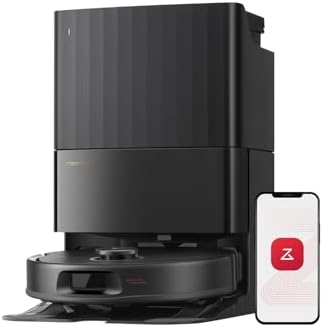
The Qrevo S5V delivers the full self-maintaining dock experience at roughly half the price of Roborock's flagships, and the combination of results and value makes it one of the strongest buys in this comparison. Android Authority summed it up as half the price of Roborock's best and still top-tier, and the lab data backs that: it removed 92% of embedded carpet debris with zero tangled hair, and its 200 RPM FlexiArm spinning mops scored 217 points overall against a 188-point average, including 120 versus 93 on dried stains. The dock does the whole routine, self-empty, mop wash, warm-air dry and tank refill, the feature set that was flagship-only two years ago. The honest trade-offs from testing: obstacle avoidance is its weak spot, so pre-tidy the floor, and the 325 ml dustbin fills fast in pet-heavy homes.
Mopping scored well above average (217 vs 188 points) with dried-stain strength
Full wash-dry-refill-empty dock at a mid-range price
Zero hair tangling in testing - strong pet-home credentials
44% off at our last scan - roughly half of flagship money
Cons
Weak obstacle avoidance (6 of 24 test objects) - clear the floor first
Small 325 ml dustbin fills quickly with pet hair
No hot-water mop washing - that starts higher in the Qrevo line
Who is it for?
Buyers who want the full self-maintaining dock experience and excellent carpet cleaning without paying flagship prices.
Who is it not for?
Cluttered households that need premium obstacle avoidance (look at the Saros Z70 or Qrevo CurvX) and buyers on a strict budget who can live without mop washing (the Q10 S5+ saves roughly $270).
5. Roborock Q10 S5+ Robot Vacuum and Mop (10,000 Pa)
4.7
The Q10 S5+ is Roborock's newest budget upgrade from the Q8 Max+, and independent testing backs up the low price: TechGearLab recorded the fourth-highest suction of more than 150 robot vacuums it has tested, and Vacuum Wars called it surprisingly powerful for the price. Ultrasonic carpet detection automatically lifts the VibraRise sonic mop and boosts suction the moment the robot senses carpet underfoot, so hard-floor and rug transitions need no manual switching. The auto-empty dock runs up to 70 days between bag changes, and LiDAR navigation with ReactiveTech obstacle avoidance handles everyday mapping and clutter. The honest caveat from reviewers: sonic mopping adds useful vibration-based scrubbing for dried spills on sealed hard floors, but testers describe it as capable rather than best-in-class, and it isn't a substitute for occasional manual spot-cleaning of heavy grease. At $329.99 after a 49% discount at our last scan, it remains one of the most affordable ways into Roborock's lineup, just behind the even lower-priced Q7 M5+.
Suction power10,000Pa HyperForce
Mopping systemVibraRise 2.0 sonic mop, ultrasonic auto-lift on carpet
Dock functionsAuto-empty only, up to 70 days per bag (no mop washing)
6. Roborock Saros Z70 Robot Vacuum with OmniGrip Arm (22,000 Pa)
4.7
The Saros Z70 is the most technically ambitious robot vacuum ever sold: a five-axis OmniGrip mechanical arm unfolds from the 3.14-inch body to pick up socks, sandals, tissues and small towels and drop them in a bin you designate. Underneath the party trick is a legitimately excellent Saros flagship - reviewers measured 99.8% obstacle avoidance from the StarSight 2.0 and VertiBeam sensor stack, the best on record, plus industry-leading mopping with 22 mm lift, a 4 cm-climbing AdaptiLift chassis and a dock that hot-water washes, dispenses detergent and self-empties. The catch is the arm itself: across multiple expert tests it succeeded roughly half the time and only recognizes four object types, leading Trusted Reviews to conclude the arm is not quite there and others to call the Z70 easier to admire than to recommend at its $1,999+ launch price. At our last scan it was tagged as a limited-time deal at $999.99 - still a steep discount from that launch price - but it remains the enthusiast's pick rather than the mainstream one.
Suction power22,000 Pa HyperForce
Mopping systemDual spinning mops, 22 mm lift, FlexiArm riser
Dock functionsHot water mop wash, self-empty, detergent dispenser, warm air drying
Navigation & obstaclesStarSight 2.0, VertiBeam, OmniGrip robotic arm
Max runtime180 minutes
Noise level55 dB
In the boxRobot, multifunctional dock, dock base, 2 mop modules, storage box
Pros
First-of-its-kind OmniGrip arm actually picks up socks and towels
Best measured obstacle avoidance on record (99.8%)
Industry-leading mopping with 22 mm lift and detergent-dispensing dock
Full Saros hardware: 22,000 Pa, 3.14-inch slim, 4 cm thresholds
Tagged as a limited-time deal at $999.99, well under its $1,999+ launch price
Cons
The arm succeeds only about half the time and knows just four object types
Reviewers concluded it is easier to admire than to recommend as an everyday cleaner
At $999.99 it still costs substantially more than the fully-featured Qrevo S5V
Who is it for?
Early adopters and tech enthusiasts who want the most advanced robot in the industry - and who will enjoy the arm as a glimpse of the future rather than depend on it.
Who is it not for?
Pragmatists: if you just want floors cleaned, the Qrevo CurvX does everything except the arm at a lower price, with a stronger dock.
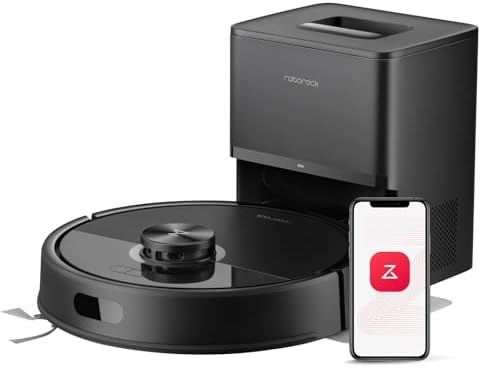
Our Best Affordable pick. The Q7 M5+ is the value anchor of Roborock's range. The pedigree is real: Wirecutter named it a top pick in November 2025, and in bench testing it pulled 2.24 kPa of measured suction against a 0.83 kPa category average, clearing about 90% of mixed debris on both hard floors and carpet. PreciSense LiDAR gives it the same reliable mapping, no-go zones and multi-floor support as its more expensive siblings, and the dual anti-tangle brush system handles pet hair without wrapping. What you give up is the mopping automation: the drag-along mop is passive and the dock only empties dust, it does not wash or dry, the auto-empty cycle is loud, and real-world runtime on high power lands nearer 70 to 80 minutes than the rated 150.
Dock functionsAuto-empty only, 7-9 weeks per bag (no mop washing)
Navigation & obstaclesPreciSense LiDAR mapping
Max runtime150 minutes
Noise level65 dB
In the boxRobot, auto-empty dock, mop module, moisture-proof mat, power cord
Pros
Named a Wirecutter top pick in November 2025
Measured suction of 2.24 kPa - nearly triple the category average
About 90% mixed-debris pickup on hard floors and carpet in tests
Self-empty dock runs 7-9 weeks per bag
Regularly sells around $250 - a quarter of flagship money
Cons
Mopping is passive and underwhelming - no mop washing or drying
Auto-empty cycle is very loud
Real-world runtime on high power is closer to 70-80 minutes than the rated 150
Who is it for?
Budget buyers and vacuum-first households, especially those with pets, who want proven Roborock cleaning and hands-off dust disposal at the lowest price here.
Who is it not for?
Anyone who actually wants their floors mopped: every Qrevo above washes and dries its own pads, which this dock simply cannot do.
The stars you see are the Graded Picks cumulative score, not a single retailer's average. It blends verified buyer reviews aggregated across major retailers, assessments from professional reviewers and expert testers, and how prominently the product features in leading category lineups.
Advertising Disclosure
Our rankings are compiled by aggregating several independent signals, including verified buyer feedback, how popular a product currently is with shoppers, and evaluations published by professional reviewers. Editorial opinions are our own.
Please note that we participate in affiliate marketing programs. When you purchase through links on our site, we may earn a commission. As an Amazon Associate we earn from qualifying purchases. This comes at no additional cost to you and helps support the resources required to provide valuable content.