A single-serve coffee maker gives you a fresh cup in about a minute with no pot to babysit and no half-carafe going stale by noon. But the cheap ones brew weak, lukewarm coffee, and the pod costs add up fast. We analyzed thousands of verified buyer reviews, recent sales data, and expert evaluations to find seven single-serve machines that actually make a cup worth drinking.
Every product we compared, in ranked order. Tap through to Amazon to check today's price, or jump to the full review below.
1
Tastyle Mini 2.0
Best Overall20% OFF
Tastyle Mini Hot & Iced Coffee Maker 2.0
5.0
6-14 oz fill-to-line · hot & iced modes · 1.9 lb
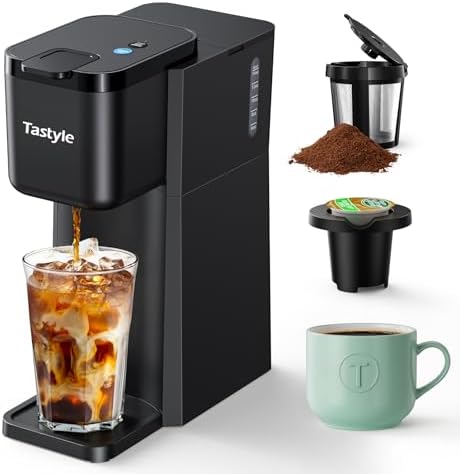
Our Best Overall pick: a compact hot-and-iced machine with a recipe book and continuous 6 to 14 oz fill, priced well below most full-featured machines in this lineup.
Tastyle Single Serve Hot & Iced Coffee Maker (40 oz Tank)
4.9
40 oz tank · 6-24 oz brew range · K-Cup & grounds
The widest brew-size range in this lineup, from a 6 oz shot to a 24 oz travel-mug fill, with both hot and iced modes on a 40 oz tank that cuts down on refills.
Chefman Caffeinator Single Serve Coffee Maker (45 oz)
4.8
45 oz tank · 5 brew sizes · K-Cup & grounds
Independently tested by both Consumer Reports and Tom's Guide, with five brew sizes, three strength levels and three temperature settings on a 45 oz tank.
COWSAR Single Serve Coffee Maker (40 oz, Instant-Heat)
4.7
40 oz tank · instant-heat · K-Cup & grounds
Our Best Affordable pick: the lowest price in this lineup, pairing a 40 oz tank and instant-heat brewing with a genuinely strong score - though COWSAR's own support pages flag some quality-control issues worth knowing about going in.
12 oz fill-per-brew · under 5" wide · any K-Cup pod
Our Best for Small Spaces pick: the most compact Keurig made, under 5 inches wide with built-in cord storage, a long-established Keurig design, though testers flag it as the loudest Keurig they measured.
Pantrymade Dual Brew Coffee Maker (12-Cup & Single Serve)
4.6
12-cup carafe · 6-14 oz single serve · touchscreen
A dual-brew machine that pairs a 12-cup glass carafe with a single-serve K-Cup side, tested by Consumer Reports though flagged as too new a brand for a reliability track record.
Cuisinart SS-10P1 Single Serve Coffee Maker (72 oz)
4.6
72 oz tank · 5 brew sizes · hot water dispenser
The largest reservoir in this lineup at 72 oz, paired with a dedicated hot water dispenser and an X-Hot setting built to hit the Specialty Coffee Association's recommended extraction range, at a price well under comparable Keurig models.
Single-Serve Coffee Makers 101: What They Do & How to Choose
Understand the category before you buy - what the science actually says, and which specs matter.
Single-serve machines are built around convenience, but they are not all the same. Some lock you into expensive pods, some brew too cool to taste good, and some refill after every single cup. Here is how they work, the one spec that quietly decides whether your coffee tastes great, and the features actually worth comparing.
What does a single-serve coffee maker actually do?
A single-serve maker heats water and pushes it through a coffee pod or a small basket of grounds, brewing one cup directly into your mug. There is no carafe and no measuring, so you get a fast, consistent cup and almost nothing to clean afterward.
Most machines in this lineup accept both K-Cup pods and your own ground coffee through a reusable basket. That flexibility matters more than it sounds, because pods and grounds are very different in cost and waste:
Pods are the most convenient, but they run roughly 50 cents to over a dollar per cup and pile up in the landfill.
A reusable basket lets you brew any ground coffee for pennies per cup, and you can dial in exactly how strong it is.
If you drink coffee every day, a machine that takes both gives you the convenience of pods when you want it and the savings of grounds when you don't.
The spec that quietly makes or breaks your cup: brew temperature
Here is the thing most shoppers never check. Coffee extracts properly only in a narrow temperature window, roughly 195 to 205°F, which is the range the Specialty Coffee Association points to for a well-balanced cup. Brew below it and you get weak, sour, underextracted coffee, which is the single most common complaint about cheap single-serve machines.
You usually can't see a temperature number on the box, so use two proxies. First, look for actual temperature or strength controls, which the TWOMEOW's Bold setting offers. Second, pay attention to heating power: the higher-wattage machines here reach up to 1,470W on the Keurig K-Mini, while the budget models sit around 1,000W and can struggle to hit and hold a proper brew temperature. If your current single-serve makes coffee that tastes thin, this is almost always why.
Which specs actually matter?
Once you've sorted out temperature, a few features decide how well the machine fits your kitchen:
Pod and grounds compatibility: A reusable basket alongside K-Cup support is the money-saver. Every machine here takes pods, and most also brew your own grounds.
Reservoir size: This determines how often you refill. The compact models fill to a line for each cup, which is fine for one person, while a large tank like the TWOMEOW's 52-ounce reservoir brews many cups before it needs more water. Match it to how many drinkers are in the house.
Brew sizes and iced settings: Across this lineup you can pull anything from a 4-ounce concentrated shot to a 24-ounce travel mug. If you like iced coffee, look for a dedicated over-ice setting, which brews a hotter, stronger concentrate so melting ice doesn't leave you with watered-down coffee.
Extras that earn their space: A few models go further, like a built-in hot water dispenser for tea or instant oatmeal, or a dual-brew machine that adds a full 12-cup carafe for when company comes over. Pay for these only if you'll actually use them.
Cleaning and descaling: Minerals from tap water are what kill these machines. The better ones include descaling reminders and a self-clean cycle, which make the difference between a maker that lasts years and one that clogs.
Warranty: Coverage here ranges from 1 year up to 2 years on the TWOMEOW, with several Tastyle models offering 18 months. For an appliance with a heating element and a pump running daily, a longer warranty is worth real money.
How we grade products
Graded Picks rankings are aggregated from several independent signals: verified buyer ratings and the size of the review base for credibility, recent monthly purchase volume for relevance, assessments from trusted kitchen and coffee publications, and how each product places in leading category lineups. For single-serve coffee makers we weigh:
Brew temperature and taste
Speed and consistency
Pod and grounds flexibility
Reservoir size and refill convenience
Ease of cleaning and descaling
Useful extras for the price
Reliability and warranty
Overall value
Maintenance note: Hard-water mineral buildup is the number one reason single-serve makers slow down, brew cooler, or quit early. Descale every two to three months (more often if your water is hard), run a plain-water cycle after descaling, and empty the drip tray regularly. A machine that reminds you to descale makes this easy to keep up with.
In-Depth Reviews
Everything we learned from buyer reviews and expert testing, product by product.
Tastyle Mini 2.0
Best Overall20% OFF
1. Tastyle Mini Hot & Iced Coffee Maker 2.0
5.0
The Tastyle Mini 2.0 is our Best Overall pick, a longtime buyer favorite that pairs genuine hot-and-iced flexibility with one of the most accessible prices among full-featured machines in this lineup. It pares the brand's format down to a compact 8.2" x 4.2" x 10.3" footprint that weighs under 2 lbs, brewing anywhere from 6 to 14 oz by simply filling to the line you want rather than pressing a size button. It accepts K-Cup pods or ground coffee, brews hot coffee at over 175°F or a notably cooler iced version, and ships with a recipe book for both hot and iced customization. A descaling reminder and self-clean function, plus dishwasher-safe removable parts, keep upkeep simple, and Tastyle backs it with an 18-month warranty, longer than the 1-year standard most rivals here offer. Like the rest of the Tastyle lineup, it hasn't drawn coverage from major appliance-testing publications, so its performance claims rest mainly on the brand's own materials and general Tastyle-line owner feedback rather than independent lab tests; its larger 40oz sibling below trades this compact fill-to-line design for a standing tank and a wider 6-24 oz brew range if you'd rather refill less often.
Water reservoirFill-to-line (no standing tank)
Brew size range6-14 oz (continuous fill-to-line)
Pod compatibilityK-Cup pods and ground coffee
Dimensions (D x W x H)8.2" x 4.2" x 10.3" (1.9 lb)
Heating & auto-off featuresIced mode, descaling reminder, self-clean function, auto shutoff after brew
WattageDeep-extraction compact heating element
Warranty18 months
Pros
One of the most accessible full-featured machines in this lineup
Compact, lightweight footprint under 2 lbs
Continuous 6-14 oz fill-to-line brewing, hot or iced
Descaling reminder, self-clean function and dishwasher-safe parts
18-month warranty, longer than most rivals here
Cons
No professional lab-testing coverage found for this specific model
Fill-to-line brewing is less precise than discrete size buttons
Smaller footprint means a smaller reservoir needing more frequent refills than the larger machines here
Who is it for?
Most buyers: anyone who wants hot-and-iced flexibility and an accessible price without giving up K-Cup or grounds compatibility.
Who is it not for?
Anyone who wants a large standing water tank, since the Tastyle 40oz below and the COWSAR need far fewer refills.
2. Tastyle Single Serve Hot & Iced Coffee Maker (40 oz Tank)
4.9
The Tastyle 40oz stands out for the widest brew-size range in this comparison: six sizes from 6 to 24 oz cover everything from a quick espresso-style pour to a full travel mug, and it accepts both K-Cup pods and loose ground coffee in a reusable basket. Three brew styles (Classic, Bold and Over Ice) adjust extraction for the drink you're making, and two adjustable drip trays cut down on the counter drips that some smaller single-serve machines struggle with. Tastyle is a newer, Amazon-native brand without the professional lab-testing coverage that Keurig's machines in this lineup have earned, so independent verification of its claims is thinner; the brand does back it with an 18-month warranty, longer than the 1-year standard most rivals here offer. Owners of the wider Tastyle lineup report the pump can run louder than expected and that light plastic housings can shift slightly on smooth counters during brewing.
Water reservoir40 oz, removable
Brew size range6-24 oz (6 sizes)
Pod compatibilityK-Cup pods and ground coffee (reusable basket)
The widest brew range in this lineup: 6 to 24 oz in one machine
Accepts both K-Cup pods and ground coffee
Three brew styles (Classic, Bold, Over Ice) plus two drip trays
18-month warranty, longer than most rivals here
40 oz tank means fewer refills than fill-per-cup machines
Cons
No professional lab-testing coverage found for this specific model
Pump reported louder than expected by some owners
Light plastic housing can shift slightly on smooth counters
Who is it for?
Buyers who want one machine that covers everything from an espresso-size shot to a full travel mug, hot or iced.
Who is it not for?
Anyone who wants the reassurance of independent lab testing - the Keurig K-Mini below has far more professional test coverage than any Tastyle model here.
3. Chefman Caffeinator Single Serve Coffee Maker (45 oz)
4.8
The Chefman Caffeinator has drawn extensive independent testing, with Consumer Reports lab-testing it directly and Tom's Guide spending a week brewing with it before publishing a full review. Testers praised the adjustable mug lift, which raises or lowers to fit anything from a small 4 oz cup to a 16 oz travel mug without splashing, and found the ground-coffee side brewed a cup indistinguishable from a standard drip machine. The dedicated over-ice function pulls a concentrated hot extraction, then cools it before it hits the ice, though testers noted the result can run a little watered down once the ice fully melts. Three strength levels and three temperature settings cover a wide range of customization, and a 45 oz reservoir with a built-in charcoal filter means fewer refills than the smaller machines in this lineup. Chefman backs it with a 5-year warranty, and reviewers flagged only minor consistency gaps between cups and slightly budget-feeling buttons as the honest drawbacks.
Water reservoir45 oz, removable with charcoal filter
Brew size range4-12 oz (5 sizes)
Pod compatibilityK-Cup pods and ground coffee (reusable basket)
4. COWSAR Single Serve Coffee Maker (40 oz, Instant-Heat)
4.7
Our Best Affordable pick. The COWSAR pairs the lowest price in this comparison with real capability: a 40 oz removable tank that means fewer refills than the fill-per-cup machines here, and instant-heat brewing that skips the wait for a reservoir to warm up. It accepts both capsule-style pods and ground coffee, giving it more flexibility than most machines at this price point. An independent review at The Coffee Aficionados found the resulting coffee reasonably good for the price and brewing consistently under 90 seconds, praising the compact footprint and adjustable cup holder. The one thing to go in with eyes open: COWSAR's own repair and support pages acknowledge recurring issues across this coffee-maker line, including units that don't heat properly, stiff buttons needing repeated presses, premature descale-light triggers, and leaking that the brand's own troubleshooting guide addresses by recommending seal replacement. COWSAR backs it with a 1-year warranty, worth using given the documented failure patterns - the tradeoff behind a machine this affordable scoring this well.
Water reservoir40 oz, removable
Brew size rangeUp to 5 sizes, up to 14 oz
Pod compatibilityK-Cup-style capsules and ground coffee
WattageInstant-heat thermoblock (exact wattage undisclosed by COWSAR)
Warranty1 year
Pros
The lowest price in this lineup, with real capability to back it up
Instant-heat brewing skips the reservoir warm-up wait
40 oz tank holds enough water for multiple cups before refilling
Independent review found brewing consistently under 90 seconds
Accepts both capsule-style pods and ground coffee
Cons
COWSAR's own support pages acknowledge recurring heating and leaking issues on this line
Buttons reported as stiff, sometimes needing repeated presses
Descale-light reported triggering earlier than expected on some units
Who is it for?
Buyers who want the best all-around combination of price, capacity and speed in this lineup, and are comfortable relying on the 1-year warranty if a unit ever needs a repair.
Who is it not for?
Anyone who wants zero quality-control risk - the Tastyle 40oz above has a cleaner reported track record, just at a higher price.
The Keurig K-Mini is our Best for Small Spaces pick: at just under 5 inches wide with a 12 oz fill-per-brew design and no standing reservoir, it's Keurig's slimmest brewer and genuinely disappears on a tight counter, dorm desk or office cart. It accepts any standard K-Cup pod and includes built-in cord storage for portability. Tom's Guide and Home Grounds both tested it and confirmed a consistent 2 to 2.5 minute brew depending on cup size, and Taste of Home rated it the best budget option among Keurig models, though it noted a lighter-tasting brew than pricier siblings. The honest tradeoffs from testers: it measured around 80 decibels at the end of the brew cycle, the loudest Keurig any of them tested, and it skips a programmable clock or adjustable strength setting entirely. Wirecutter, which is broadly skeptical of Keurig's cost-per-cup and durability versus other brewing methods, still preferred Keurig's larger K-Classic for ease of use over the K-Mini's fill-per-cup design.
Water reservoir12 oz (fill-per-brew, no standing tank)
Brew size range6-12 oz
Pod compatibilityAny standard K-Cup pod
Dimensions (D x W x H)12.1" x 4.5" x 11.3"
Heating & auto-off featuresAuto-off 90 seconds after last brew, built-in cord storage
Wattage1470W
Warranty1 year
Pros
Best for Small Spaces pick: Keurig's most compact model - under 5 inches wide with cord storage
Accepts any standard K-Cup pod
Consistent 2 to 2.5 minute brew time confirmed by independent testers
Rated best budget Keurig option by Taste of Home
Cons
Testers measured about 80 dB at the end of the brew cycle - the loudest Keurig tested
No programmable clock or adjustable strength setting
Fill-per-brew design means refilling before every single cup
Who is it for?
Small-space buyers - dorms, offices, RVs - who want the smallest possible Keurig and standard K-Cup compatibility.
Who is it not for?
Anyone bothered by brewing noise or who wants a standing reservoir - the COWSAR above or the Pantrymade Dual Brew below hold significantly more water at once.
6. Pantrymade Dual Brew Coffee Maker (12-Cup & Single Serve)
4.6
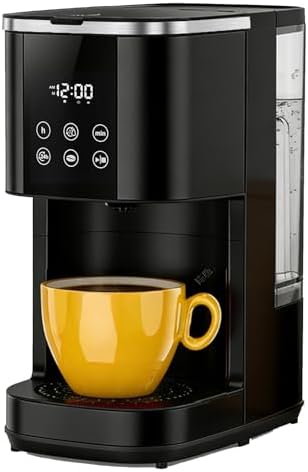
The Pantrymade Dual Brew covers two use cases in one machine: a full 12-cup glass carafe with a cone filter for a houseful of guests, and a single-serve side that takes K-Cup pods or ground coffee for solo cups sized from 6 to 14 oz. A programmable touchscreen handles scheduling on either side, a 2-hour auto shut-off and keep-warm function manage the carafe, and a small-batch setting handles a partial pot without over-extracting. Consumer Reports lab-tested this exact model - its review page is filed under a naming pattern that suggests Pantrymade is a private-label rebrand of a base design sold under other names - and while CR ran the full test, it explicitly flags Pantrymade as having insufficient data in its reliability and owner-satisfaction surveys, since the brand has no track record yet. Buyers should treat it as an unproven brand for now, whatever the feature set promises on paper.
Water reservoirAbout 56.6 oz (carafe-fill reservoir, lab-measured)
Brew size range6, 8, 10, 14 oz (single-serve side)
Pod compatibilityK-Cup pods and ground coffee (both carafe and single-serve sides)
Dimensions (D x W x H)Compact dual-brew footprint (exact dimensions undisclosed by Pantrymade)
7. Cuisinart SS-10P1 Single Serve Coffee Maker (72 oz)
4.6
The Cuisinart SS-10P1 pairs the largest water reservoir in this comparison, a 72 oz removable tank good for roughly 6 to 8 cups before a refill, with a dedicated hot water dispenser for tea, cocoa or instant oatmeal. Reviewers at CoffeeBrewsHub tested its two temperature settings and found the X-Hot mode is built to reach the Specialty Coffee Association's 195-205°F extraction window, while a long-term review at HomeAndTome credited the slower brew cycle with a richer, less watery cup than faster machines tend to produce, and noted the metal-reinforced body has outlasted competitors for some owners. It accepts any standard K-Cup pod plus ground coffee through the included reusable HomeBarista filter cup, and five brew sizes from 4 to 12 oz cover most everyday cups. Both reviewers flagged the same tradeoff: the pump produces a distinct hum and pulsing sound while brewing, noticeably louder than Keurig's machines in this lineup, and CoffeeBrewsHub noted the piercing needle can occasionally clog, requiring a manual clear. Cuisinart backs it with a 3-year warranty, the longest in this comparison.
Water reservoir72 oz, removable (charcoal filter)
Brew size range4-12 oz (5 sizes)
Pod compatibilityAny standard K-Cup pod and ground coffee (reusable HomeBarista filter cup)
Dimensions (D x W x H)11.03" x 9.33" x 12.13"
Heating & auto-off featuresHot/X-Hot temperature settings, programmable auto-brew, auto-off, hot water dispenser
Wattage1200W
Warranty3 years
Pros
Largest reservoir in this lineup at 72 oz, brewing roughly 6 to 8 cups before a refill
Accepts any standard K-Cup pod plus ground coffee via the included reusable HomeBarista filter cup
Dedicated hot water dispenser for tea, cocoa or instant oatmeal
X-Hot setting built to hit the Specialty Coffee Association's recommended extraction range
3-year warranty, the longest in this comparison
Cons
Reviewers found it noticeably slower and louder than Keurig alternatives, with a distinct pump hum
Only two temperature settings and no dedicated strength control
Piercing needle can occasionally clog, per professional testing
Who is it for?
Buyers who'd rather refill a tank once and get days of flexibility between K-Cup pods, grounds and a hot-water tap, without paying Keurig K-Elite prices.
Who is it not for?
Anyone bothered by brewing noise or who wants the fastest possible cup - the Keurig machines in this lineup brew faster and quieter, just with a smaller tank.
The stars you see are the Graded Picks cumulative score, not a single retailer's average. It blends verified buyer reviews aggregated across major retailers, assessments from professional reviewers and expert testers, and how prominently the product features in leading category lineups.
Advertising Disclosure
Our rankings are compiled by aggregating several independent signals, including verified buyer feedback, how popular a product currently is with shoppers, and evaluations published by professional reviewers. Editorial opinions are our own.
Please note that we participate in affiliate marketing programs. When you purchase through links on our site, we may earn a commission. As an Amazon Associate we earn from qualifying purchases. This comes at no additional cost to you and helps support the resources required to provide valuable content.