A standing fan is the cheapest way to make a hot room livable, and the good ones do it without the window-rattling drone you remember from childhood. The trouble is that spec sheets lead with speed counts and big oscillation angles, while the things that actually decide how cool you feel and how well you sleep sit further down the page. We analyzed thousands of verified buyer reviews, recent sales data, and expert evaluations to find seven standing fans that move real air, spread it across the room, and stay quiet enough to run all night.
Every product we compared, in ranked order. Tap through to Amazon to check today's price, or jump to the full review below.
1
DREO DR-HPF013
Best Overall13% OFF
DREO DR-HPF013 Compact Pedestal Fan
5.0
90ft airflow throw · 8 speeds · 38-42" adjustable
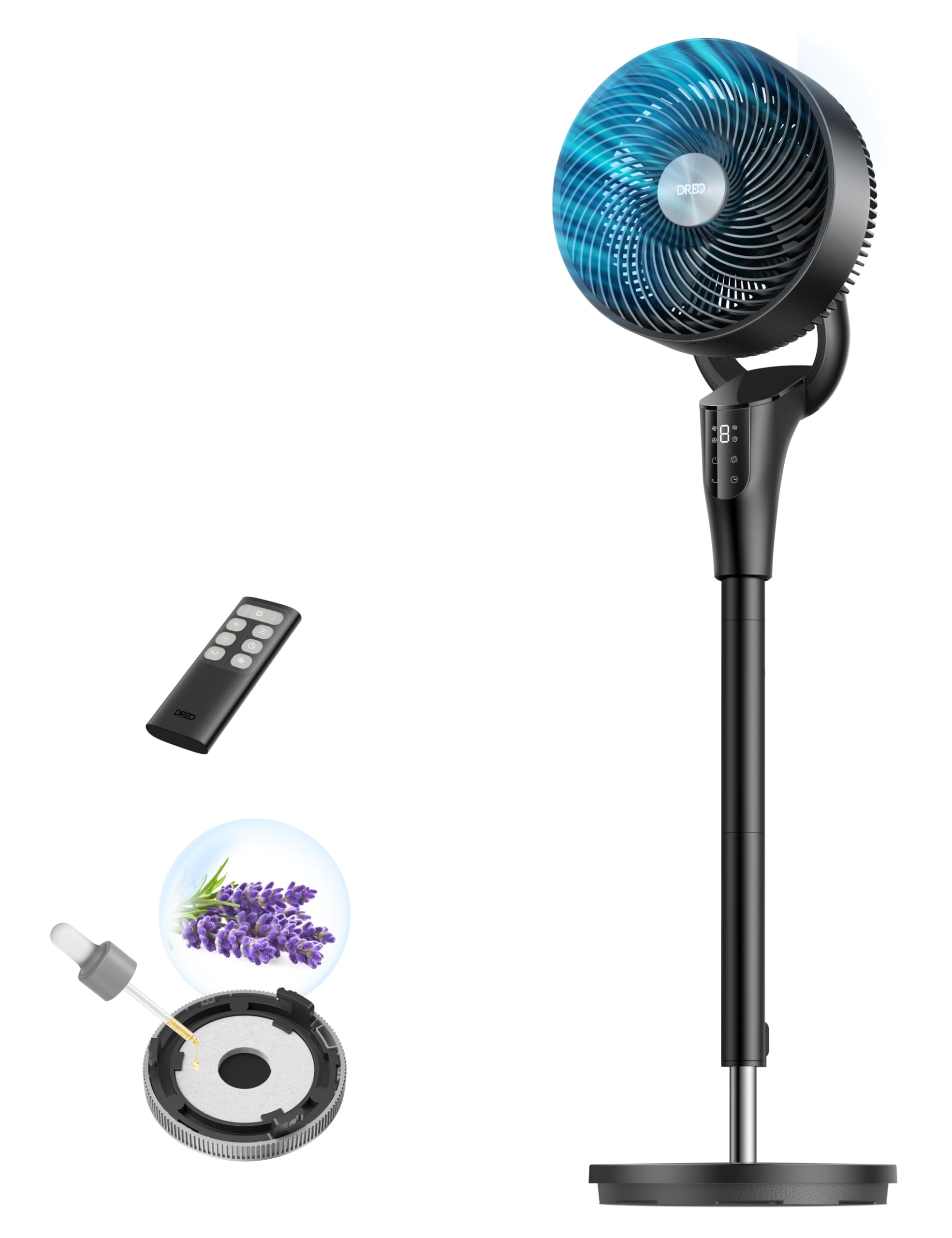
Our Best Overall pick: a compact pedestal fan aimed squarely at bedside and small-room use, with real circulating power and a detachable blade design that's easier to keep clean than sealed tower fans.
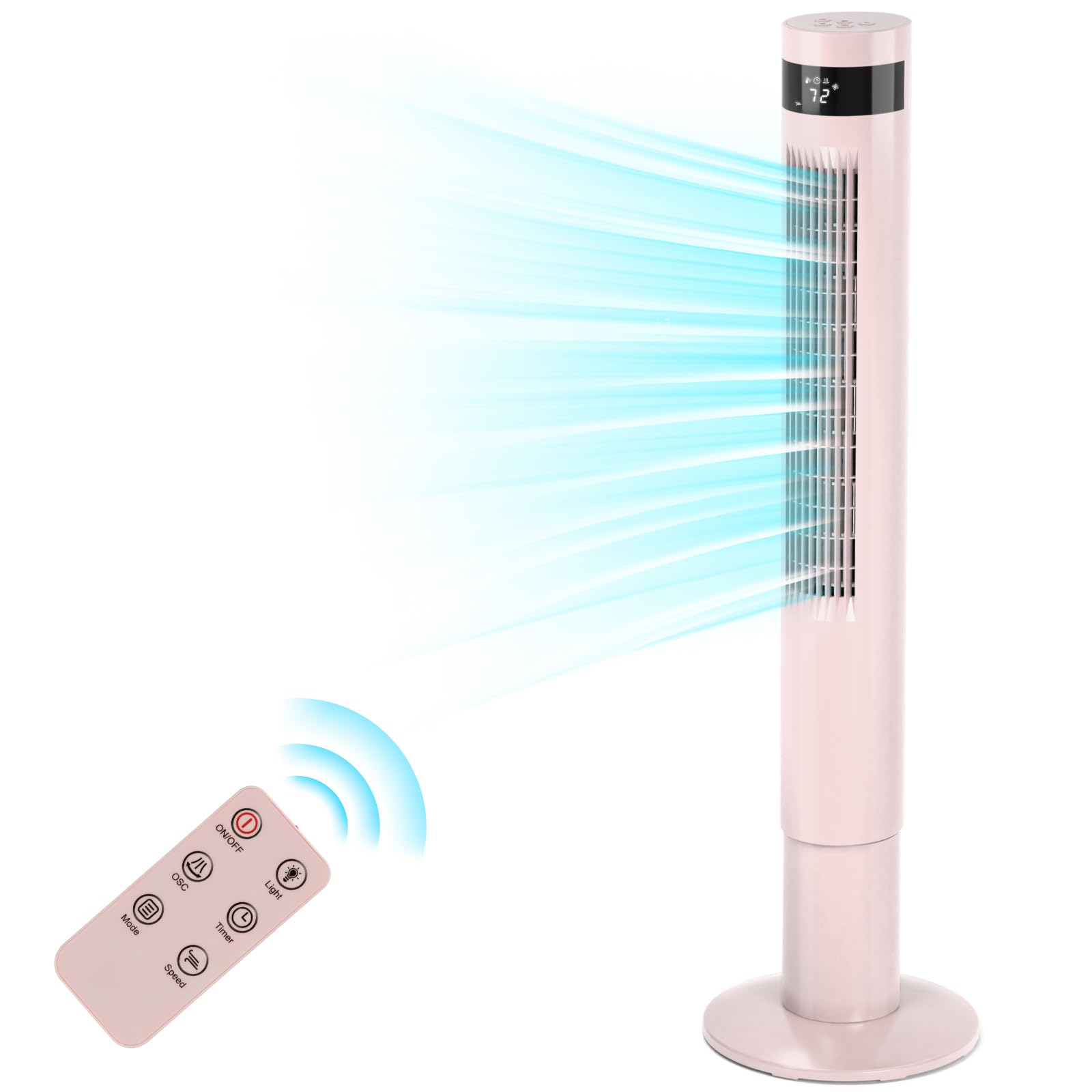
A slim tower fan with the broadest independent coverage in this comparison, backed by quiet, powerful whole-room airflow, three ways to control it, and a price well below most full-size competitors here.
Our pick for tight bedrooms and small rooms: a slim-based LEVOIT pedestal fan that pushes a genuinely strong 1,024 CFM through a narrower footprint than the other pedestal fans in this lineup, while staying at a claimed 20 dB on its lowest setting. FanTwirl's coverage highlights its detachable grille for easy cleaning and locking caster wheels for moving it between rooms.
A budget pedestal fan with an unusually high 15-speed range and a wide height-adjustable stand, from a newer brand still building its independent track record.
A tall, ETL-listed bladeless tower fan with a child-and-pet-safe enclosed design, aimed at bedrooms and offices that want straightforward three-speed cooling.
Our Best Affordable pick: a long-running Lasko pedestal fan with a 38-54 inch adjustable height, an 18-inch blade and a manufacturer-claimed 1,854 CFM top-speed airflow, all at the lowest price in this comparison, plus a remote and a 4-hour timer.
DREO's Wi-Fi and app-connected pedestal fan, built on the same brushless DC platform as the brand's other models here but adding Alexa/Google voice control, an RGB accent light and a six-mode smart feature set. Independent coverage of DREO's smart fan lineup consistently praises the app's automation options and the fan's quiet, high-velocity airflow.
Short on time? These three cover most buyers: our top-graded choice, the best value pick for whole-room cooling, and the pick built for tight bedrooms and small rooms.
Understand the category before you buy - what the science actually says, and which specs matter.
Every standing fan promises to cool a room, but the amount of air it moves, how widely it spreads that air, and how loud it gets vary a lot from model to model. Here is how they work, the one spec that separates a great fan from a noisy one, and the features worth comparing before you buy.
What does a standing fan actually do?
A standing fan does not lower the temperature of a room the way an air conditioner does. It moves air across your skin so sweat evaporates faster, which is what makes you feel cooler. A pedestal fan puts a spinning blade on an adjustable pole, while a tower fan pulls air through a tall column, sometimes bladeless, for a smoother and often quieter stream.
It pushes a column of air, measured in cubic feet per minute (CFM), toward you or across the room.
It oscillates side to side, and sometimes up and down, to spread that air instead of aiming it at one spot.
Most add speeds, preset modes, a timer, and a remote so you can set it and forget it.
The spec that decides how well a fan cools is airflow and how it is spread, not the number of speeds
This is the part most shoppers get backward. A high speed count looks impressive on the box, but it tells you nothing about how much air the fan actually moves. In this lineup the omnidirectional pedestal fan offers 15 speeds yet moves 950 CFM, the lowest independently corroborated airflow here, while the DREO pedestal fan reaches the highest DC-motor airflow at 1,150 CFM with just 9 speeds, and the classic Lasko Cyclone pedestal fan claims an even higher 1,854 CFM on its spec sheet with just 3 speeds - though that figure is Lasko's own published number rather than one benchmarked against the rest of this lineup. Airflow, measured in CFM, is what fills a room. Extra speeds only slice that airflow into smaller steps.
The bigger lever is the motor. Five of these seven fans use a brushless DC motor, and two - the LEVOIT tower and the Lasko Cyclone pedestal fan - use a traditional AC motor. A DC motor is the quiet upgrade: it moves as much air as an AC fan while running noticeably quieter and drawing far less power. The LEVOIT CoreBreeze pushes 1,024 CFM while pulling only 20 to 25 watts, and the DREO 2026 model moves 1,000 CFM on 36 watts. That low draw is exactly what you want for a fan that runs all night in a bedroom.
After motor type, coverage decides whether the whole room benefits. Wide oscillation and adjustable height carry the air where you need it, and a low decibel figure is what lets you sleep through it.
Which specs actually matter?
Motor type: Choose DC if you can. It runs quieter, sips power, and usually adds finer speed control. The two AC models here, the LEVOIT tower and the Lasko Cyclone pedestal fan, draw 39 and 96 watts respectively, while comparable DC fans move similar air on 20 to 36 watts.
Airflow: This is the cooling number. The independently corroborated DC fans here run from 950 to 1,150 CFM; the Lasko Cyclone's own spec sheet claims 1,854 CFM, well above that range, though it is an unverified manufacturer figure. Higher CFM fills a larger room, so weigh it ahead of speed count.
Oscillation width: Wider sweep covers more of the room. These span 85 degrees on the Antarctic Star up to 255 degrees combined on the Becvtoz pedestal fan (180° horizontal plus 75° vertical tilt), and several add vertical tilt, such as the DREO pedestal fan's 120 degrees of horizontal plus 120 degrees of vertical.
Adjustable height: A pedestal fan that raises and lowers, like the DREO at 37 to 42 inches or the omnidirectional model at 15 to 38 inches, aims air at a bed or a desk. Tower fans here are fixed, from 36 to 43 inches.
Noise level: For sleep, look for a low decibel figure at the lowest speed. Several here claim 20 dB at their quietest, the LEVOIT tower lists 28 dB, and the Lasko Cyclone runs loudest on its top AC-motor speed, staying reasonably quiet only on its lowest.
Timer and remote: An 8 to 12 hour timer shuts the fan off after you fall asleep, and a remote saves you standing up. Most models here include both.
How we grade products
Graded Picks rankings are aggregated from several independent signals: verified buyer ratings and the size of the review base for credibility, recent monthly purchase volume for relevance, assessments from trusted home and appliance publications, and how each product places in leading category lineups. For standing fans we weigh:
Motor type and power efficiency
Airflow and real cooling reach
Oscillation width and tilt
Quietness at low and high speeds
Height adjustment and stability
Timer, remote, and mode usefulness
Overall value for the price
Placement and safety note: A fan cools by moving air, not by chilling it, so pointing one at yourself helps while running it in an empty room only uses power. Set a standing fan on a level, hard floor so the base cannot tip, keep the cord clear of walkways, and if children or pets are around, favor a bladeless tower or a model with a fine safety grille.
In-Depth Reviews
Everything we learned from buyer reviews and expert testing, product by product.
DREO DR-HPF013
Best Overall13% OFF
1. DREO DR-HPF013 Compact Pedestal Fan
5.0
The DR-HPF013 takes our Best Overall pick on the strength of stronger bedroom or small-room airflow without constant motor noise: independent reviewers describe it as a very good buy for sleepers and apartment dwellers who want real circulation rather than a gentle bedside breeze. Its brushless DC motor claims a whisper-quiet low setting, though it's worth noting Amazon's own spec sheet lists a higher noise figure than the fan's marketing copy - worth confirming against your own quiet-room expectations rather than assuming the lowest advertised number. Ninety degrees of horizontal oscillation and a 105-degree manually adjustable head cover a wide seating or bed area, and the detachable blade with front and rear grilles gives it a more practical dusting and cleaning path than many sealed bladeless towers. At 38-42 inches with an adjustable base, it fits bedsides and living rooms without dominating the room the way a taller pedestal does.
Noise level20 dB claimed (Amazon spec sheet lists 25 dB)
The Classic 36-inch stands out for the broadest independent coverage of any fan here, and that coverage is consistent: quiet, powerful airflow at a price well below most of its full-size competitors. Independent testers clocked it cooling a room in minutes with minimal noise, aided by a Turbo mode that automatically ramps down once the room drops a few degrees, and an Advanced Sleep mode that dims lights and sound for overnight use. Three ways to control it - a touchpad on the unit, an included remote, and a mobile app - cover every use case, and its slim 36-inch tower footprint fits into tighter spaces than a wide pedestal base would. It carries CA65, ETL and FCC certifications, and reviewers across multiple outlets consistently frame it as an easy, well-rounded recommendation in this category - one that also costs less than most full-size fans in this comparison.
Noise level28 dB
Airflow1,044 CFM (25 ft/s)
Speeds & modes5 speeds, 4 modes
Oscillation90°
Height36" (fixed tower)
MotorAC
Wattage39 watts
Pros
Broad independent coverage across home and tech publications, more than any other fan here
Automatic Turbo mode ramps down once the room cools
Advanced Sleep mode dims lights and sound overnight
Three control methods: touchpad, remote and mobile app
Slim tower footprint fits tighter spaces than a pedestal, at a price below most full-size competitors
Cons
Fixed 36-inch height with no pedestal-style height adjustment
AC motor draws a bit more power than the DC tower fans nearby
Oscillation caps at 90°, narrower than the widest pedestal fans here
Who is it for?
Anyone who wants the most broadly reviewed, easy-to-control fan in this comparison, with real cooling power for the money.
Who is it not for?
Anyone who specifically wants adjustable height or wider-than-90 degree oscillation.
The CoreBreeze 382 is LEVOIT's answer to the problem every full-size pedestal fan shares in a small bedroom or apartment: floor space. Its base measures a slim roughly 6.7 inches across, noticeably narrower than the wider stands on the DREO pedestal fans in this comparison, while still standing tall enough to circulate air across a real room rather than just a desk. FanTwirl's hands-on coverage calls it a modern, quiet and efficient air circulator, pointing to a detachable front grille and fan blades that make cleaning simpler than sealed tower and bladeless designs, plus locking wheels on the base that make it easy to roll between rooms. Rated output is a strong 1,024 CFM at 22 ft/s, with 5 speeds, 90-degree oscillation, push-button and remote control, and a claimed 20 dB noise floor on the lowest setting, rising to roughly 25 watts of draw at the top speed. As a newer listing in LEVOIT's CoreBreeze line, it has less accumulated independent testing than the brand's more established models, though early buyer sentiment is strong.
Noise level20 dB (lowest speed)
Airflow1,024 CFM (22 ft/s)
Speeds & modes5 speeds
Oscillation90° horizontal
HeightApprox. 35" tall on a compact ~6.7" base
MotorBrushless DC
Wattage20 watts (low) - 25 watts (high)
Pros
Slim ~6.7" base takes up noticeably less floor space than the other pedestal fans here
Strong 1,024 CFM output and 22 ft/s velocity despite the compact footprint
Detachable grille and fan blades make cleaning easier than sealed tower designs, per FanTwirl's testing
Locking caster wheels make it easy to roll between rooms
Claimed 20 dB noise floor on the lowest of 5 speeds
Cons
Newer listing in LEVOIT's CoreBreeze line with less accumulated independent testing than the brand's established models
90° oscillation is narrower than the widest pedestal fans in this lineup
Power draw climbs to roughly 25 watts at the top speed
Who is it for?
Small bedrooms, apartments and shared rooms that need real pedestal-fan airflow without a wide, space-hogging base.
Who is it not for?
Buyers who want the widest oscillation sweep or the longest independent testing history - the DREO pedestal fans above have both.
The FC20-RDS72 stands out on paper for its granular 15-speed range and a height-adjustable stand running from 15 to 38 inches, letting it work as either a low tabletop fan or a full pedestal depending on how it's set up. It pairs 180-degree horizontal oscillation with a 75-degree vertical tilt and a 12-hour timer, and Becvtoz markets it as year-round versatile, positioning it to pair with a portable AC, humidifier or heater to help distribute conditioned air around a room. As a newer, less established brand, it has far less accumulated independent testing than the DREO and LEVOIT models in this comparison, so treat the granular speed control and flexible height as the main draws rather than a long-proven reputation.
Noise level20 dB
Airflow950 CFM
Speeds & modes15 speeds, 3 modes
Oscillation180° horizontal + 75° vertical tilt
Height15" - 38" adjustable
MotorDC
Wattage20 watts
Pros
Unusually granular 15-speed range for fine airflow control
Height-adjustable from 15 to 38 inches, doubling as tabletop or pedestal
180° horizontal oscillation plus 75° vertical tilt
12-hour timer with remote control
Cons
Newer brand with limited independent testing and track record
Lowest airflow rating among the pedestal-style fans in this lineup
Height range tops out lower than the dedicated pedestal fans here
Who is it for?
Buyers who want fine-grained speed control and the flexibility to use one fan as both a low tabletop unit and a taller pedestal.
Who is it not for?
Buyers who prioritize a long-established, heavily independently tested brand.
At 43 inches, this Antarctic Star tower fan is among the taller bladeless towers in this comparison, using a vortex cross-flow air duct design intended to spread airflow across a room rather than in a single narrow stream. Its enclosed housing is built with a narrow-gap grille that keeps curious kids and pets from reaching the internals, a genuine safety plus for households with both. Three speeds and three modes plus an 85-degree oscillation and a 12-hour timer cover the basics, and it's ETL listed for safety compliance. Independent professional coverage of this specific model is limited compared to the more established brands in this lineup, so the strongest evidence for its performance comes from its enclosed safety design and buyer sentiment rather than dedicated lab testing.
Noise level36 dB
CertificationETL listed
Speeds & modes3 speeds, 3 modes
Oscillation85°
Height43" (fixed tower)
MotorBrushless
Wattage60 watts
Pros
Enclosed, narrow-gap grille design is safer around kids and pets
ETL listed for safety compliance
Tall 43-inch profile spreads airflow across a room
12-hour timer and remote control included
Cons
Limited independent professional testing on this specific model
Only 3 speeds versus 5-9 on other fans in this lineup
Highest noise level in this comparison at 36 dB
Who is it for?
Households with kids or pets who want a tall, safety-enclosed tower fan for straightforward bedroom or office cooling.
Who is it not for?
Buyers who want the widest range of speed settings or the quietest possible operation.
The Cyclone 1843 is our Best Affordable pick: one of the longest-running pedestal fans in this comparison, and reviewers keep coming back to the same verdict: it moves a genuinely large volume of air for its price. Lasko rates the 18-inch blade at up to 1,854 CFM on its top speed, well above every other fan in this lineup, though that figure comes from Lasko's own spec sheet rather than an independent bench test, so treat it as a directional claim rather than an apples-to-apples number against the DC-motor fans here. The pedestal extends from 38 to 54 inches with a tilt-back head, a remote handles power, speed and the 4-hour timer from across the room, and buyers consistently describe assembly as a quick, tool-light job. The tradeoff for that airflow and price is the traditional AC motor, which reviewers note runs noticeably louder at the top of its three speeds than the whisper-quiet DC motors elsewhere in this lineup, even though the low speed stays reasonably quiet for a bedroom. At about $45 after its 25% discount, it undercuts every other fan in this comparison, making it the pick for buyers who want proven, no-frills cooling power over the newest smart features.
Noise levelQuiet on low; noticeably louder on high (no independent dB rating)
Airflow1,854 CFM claimed at top speed (manufacturer spec, not independently tested)
Speeds & modes3 speeds
OscillationWide-angle oscillation, exact degree unspecified by Lasko
Height38" - 54" adjustable, tilt-back head
MotorAC
Wattage96 watts
Pros
Lowest price in this comparison at about $45 after discount
Manufacturer-rated 1,854 CFM top-speed airflow, the highest claimed figure in this lineup
Pedestal adjusts from 38 to 54 inches with a tilt-back head
Remote control handles power, speed and the 4-hour timer
Long track record with consistently strong buyer sentiment
Cons
Traditional AC motor runs noticeably louder at top speed than the DC motors elsewhere in this lineup
Only 3 speeds versus 5-15 on other fans here
The 1,854 CFM figure is Lasko's own spec-sheet claim, not an independently benchmarked test
Who is it for?
Buyers who want proven, powerful, no-frills cooling at the lowest price in this comparison and don't mind a traditional AC motor.
Who is it not for?
Anyone who wants the quietest possible operation or the finest speed control - the brushless DC fans elsewhere in this lineup offer both.
The DR-HPF008S is DREO's connected pedestal fan, pairing the brand's familiar brushless DC motor and 120° horizontal plus 120° vertical 3D oscillation with Wi-Fi, Alexa/Google voice control and a dedicated smartphone app. Reviewers covering DREO's smart fan lineup, including FanboyRadio and Tom's Guide, consistently highlight the app's scheduling and temperature-based Auto mode as genuinely useful rather than gimmicky, and note the fan reaches a claimed 90 ft of throw at 1,000 CFM, enough to circulate a full room in about a minute. Nine speeds and six modes, including Auto and Sleep, cover everything from a gentle breeze to a strong direct blast, and an RGB accent light adds a nightlight option the rest of this lineup skips. As with its DREO DR-HPF013 sibling in this comparison, the fan's marketed 20 dB low-speed claim sits below the 28.2 dB figure on Amazon's own spec sheet, so treat the quietest-setting number as optimistic rather than independently verified. At 11.5 pounds with an adjustable pedestal, it's easy to reposition between rooms, and a 10% discount at the time of our scan makes the smart feature set a more reasonable add over DREO's non-connected models.
Noise level20 dB claimed (Amazon spec sheet lists 28.2 dB)
Airflow1,000 CFM (90 ft throw)
Speeds & modes9 speeds, 6 modes
Oscillation120° horizontal + 120° vertical (3D)
Height37" - 42" adjustable
MotorBrushless DC
Wattage24 watts
Pros
Wi-Fi app plus Alexa/Google voice control - the only fan in this lineup with smart-home integration
Nine speeds and six modes including a temperature-based Auto mode
Claimed 90 ft throw at 1,000 CFM circulates a room quickly, per independent coverage
120° horizontal plus 120° vertical 3D oscillation covers more of a room than single-axis fans
RGB accent light doubles as a nightlight option
Cons
Marketed 20 dB low-speed claim is well below the 28.2 dB figure on Amazon's own spec sheet
Wi-Fi/app setup adds a step that non-connected fans in this lineup skip
Smart features and RGB light push it to a higher price than DREO's simpler pedestal fan in this comparison
Who is it for?
Buyers who specifically want app and voice control, scheduling automation or an RGB nightlight option layered onto a proven DREO pedestal fan.
Who is it not for?
Anyone who just wants straightforward remote-controlled cooling without a Wi-Fi setup step or extra cost.
The stars you see are the Graded Picks cumulative score, not a single retailer's average. It blends verified buyer reviews aggregated across major retailers, assessments from professional reviewers and expert testers, and how prominently the product features in leading category lineups.
Advertising Disclosure
Our rankings are compiled by aggregating several independent signals, including verified buyer feedback, how popular a product currently is with shoppers, and evaluations published by professional reviewers. Editorial opinions are our own.
Please note that we participate in affiliate marketing programs. When you purchase through links on our site, we may earn a commission. As an Amazon Associate we earn from qualifying purchases. This comes at no additional cost to you and helps support the resources required to provide valuable content.