Your voice is the one thing every viewer, listener, and teammate judges you on, and the laptop mic you have been using makes it sound like you are calling from inside a closet. A good streaming mic fixes that instantly, but the cheap ones often overcorrect, picking up your keyboard and the fan across the room as clearly as your voice. We analyzed thousands of verified buyer reviews, recent sales data, and expert evaluations to find seven streaming microphones that sound clean, set up fast, and match the room you actually record in.
Every product we compared, in ranked order. Tap through to Amazon to check today's price, or jump to the full review below.
1
FIFINE AM8T
Best Overall
FIFINE AmpliGame AM8T XLR/USB Microphone Kit
5.0
USB-C and XLR · Cardioid dynamic capsule · Boom arm kit included
Our Best Overall pick: FIFINE's dynamic USB/XLR mic bundled with a boom arm, clamp and windscreen in a single complete kit, with testers calling its sound quality a clear step above cheaper USB-only competitors.
USB-C and XLR · Cardioid dynamic capsule · Desktop stand included
Our Best Affordable pick: the same praised dynamic capsule and dual USB-C/XLR connectivity as our Best Overall AM8T, in a lower-cost desktop-stand package with the broadest independent test coverage in this comparison.
USB-C · Cardioid capsule · Sonar streaming software included
A premium condenser mic with a large one-inch capsule, on-mic mute/gain/volume controls and SteelSeries' Sonar software, aimed at streamers who want a polished, all-in-one setup.
USB / USB-C · Cardioid condenser capsule · Boom arm and pop filter included
Our Best for Beginners pick: a true plug-and-play condenser mic with no software required, one-tap noise cancellation, a boom arm and pop filter in the box, and controls simple enough for a first-time streamer.
A high-resolution condenser mic recording at up to 192kHz/32-bit, with four polar patterns, tap-to-mute and RGB lighting - specs reviewers call overkill for most streamers but genuinely excellent to use.
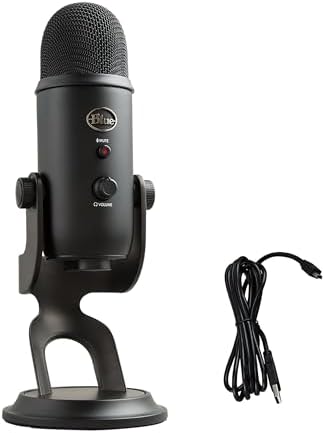
The all-black finish of the category-standard Blue Yeti: the same tri-capsule condenser with four selectable polar patterns and Blue VO!CE voice effects, for buyers who want the matte-black look.
USB-A and USB-C · Cardioid condenser · 192kHz/24-bit recording
An all-metal USB condenser mic with a high 192kHz/24-bit recording spec and a complete kit in the box, aimed at buyers who want clean sound without a big spend.
Short on time? These three cover most buyers: our Best Overall FIFINE dynamic XLR/USB kit with a boom arm included, the more affordable FIFINE sibling that skips the boom arm, and a true plug-and-play MAONO condenser that's the easiest pick for a first streaming setup.
Streaming Microphones 101: What They Do & How to Choose
Understand the category before you buy - what the science actually says, and which specs matter.
Every streaming mic promises broadcast-quality audio, but two choices you make before reading a single spec sheet decide most of how you will sound. Here is how these microphones work, why connection and capsule type matter more than the fancy numbers, and the features actually worth comparing.
What does a streaming microphone actually do?
A streaming microphone captures your voice at far higher quality than any built-in laptop or headset mic, then feeds it to your computer for a livestream, podcast, video, or call. It does a few things a laptop mic cannot:
Sits close to your mouth on a stand or boom arm, so your voice is loud and the room is quiet
Uses a focused pickup pattern to hear you and reject sound coming from the sides and back
Adds onboard controls like a mute button, a gain dial, and a headphone jack so you can adjust and monitor without touching software
Connects over USB for plug-and-play use, or over XLR into an audio interface for a more upgradeable setup
The two choices that shape your sound: connection and capsule
Before you compare frequency numbers, settle two things, because they matter more than any spec on the box.
The first is connection. A USB microphone plugs straight into your computer and works in seconds, which is exactly what most streamers want. The Logitech Blue Yeti, the SteelSeries Alias, and the MAONO AU-A04 are all USB and need nothing else. An XLR microphone needs a separate audio interface to work, which adds cost and a cable, but it gives you room to upgrade your gear later without replacing the mic. The smart middle ground is a hybrid: the FIFINE AmpliGame AM8, the MAONO PD200XS, and the MAONO PD200W all offer both USB-C and XLR, so you can start plug-and-play today and move to an interface whenever you are ready.
The second, and more important, choice is capsule type, and it is the one shoppers miss. A dynamic capsule is deliberately less sensitive. It hears what is close and in front of it and rejects room echo, the hum of a PC, and background noise, which makes it forgiving in an untreated bedroom or a shared space. The FIFINE AM8, the MAONO PD200XS, and the MAONO PD200W all use dynamic capsules for exactly this reason. A condenser capsule is far more sensitive and captures more detail and warmth, which sounds fantastic in a quiet, treated room, but it will also capture your fan, your keyboard, and your neighbor. The Blue Yeti, the MAONO A04, and the HyperX QuadCast 2 S are condensers. So the "better" mic depends on your space, not the price. Record somewhere noisy, go dynamic. Record somewhere quiet and want richer detail, go condenser.
One thing nearly every mic here agrees on is the pickup pattern: cardioid, which hears only what is in front of it and ignores the sides and back. That is what most solo creators want. The Blue Yeti is the exception, offering four selectable patterns for when you need to record two people or the whole room.
Which specs actually matter?
Once connection and capsule are settled, these features separate the lineup:
Onboard controls: A physical mute button and a gain dial let you kill your audio or adjust your level mid-stream without alt-tabbing. Most mics here have them; the minimalist MAONO A04 has no mute or gain dial at all, so plan for software control.
Headphone jack and monitoring: A built-in headphone jack, like on the SteelSeries Alias and the FIFINE AM8, lets you hear yourself with zero latency, which is the fastest way to catch a problem before your audience does.
Sample rate and bit depth: Most of these run at 48kHz, the standard for streaming and video. Bit depth ranges from 16-bit to 24-bit here, with the MAONO A04 reaching 192kHz at 24-bit. Higher numbers add headroom, but 48kHz at 24-bit already covers what listeners will ever hear.
Frequency response: The range runs from 50Hz to 16kHz on the dynamic FIFINE and MAONO PD200W up to 20Hz to 20kHz on the Blue Yeti and A04. A wider range captures more low rumble and high air, though it also captures more room.
RGB and looks: The FIFINE AM8, the MAONO PD200XS, and HyperX QuadCast 2 S add RGB lighting for an on-camera look. It changes nothing about the sound, so weigh it only if the mic will be in frame.
Mounting: Some kits, like the MAONO PD200XS and the MAONO PD200W, include a boom arm; others ship with a desktop stand. A boom arm clears your desk and lets you position the mic close to your mouth, which is where dynamic mics perform best.
How we grade products
Graded Picks rankings are aggregated from several independent signals: verified buyer ratings and the size of the review base for credibility, recent monthly purchase volume for relevance, assessments from trusted audio and streaming publications, and how each product places in leading category lineups. For streaming microphones we weigh:
Voice clarity and background-noise rejection
Connection flexibility (USB, XLR, or both)
Capsule type suited to real rooms
Onboard controls and headphone monitoring
Build quality and included mounting
Setup speed and software support
Overall value for the price
Placement note: The best microphone in the world sounds thin if it is too far away. Position the mic within a hand's width of your mouth, speak slightly across it rather than straight into it to soften harsh pops, and if you record in a noisy or echoey room, favor a dynamic mic and a boom arm over adding software noise removal after the fact.
In-Depth Reviews
Everything we learned from buyer reviews and expert testing, product by product.
FIFINE AM8T
Best Overall
1. FIFINE AmpliGame AM8T XLR/USB Microphone Kit
5.0
The AM8T is our Best Overall pick: a genuinely complete package pairing FIFINE's praised dynamic capsule and dual USB-C/XLR connectivity with everything you need to get on air in the box, a boom arm, C-clamp, windscreen and cable, so there's nothing extra to buy. Independent reviewers who tested it against USB-only rivals consistently rate its clarity and background-noise rejection as noticeably better, crediting the built-in windscreen and dynamic capsule design. The XLR connector is a standout addition at this price, letting you upgrade to a full mixer or audio interface later without replacing the mic itself. A mute button, headphone volume dial and RGB ring round out the control set. Reviewers note the one real weak point is plosive rejection when the mic is positioned directly in front of your mouth rather than slightly off-axis, and buyers who already own a boom arm and don't need the extra hardware can save a little with FIFINE's own AM8 desktop-stand sibling, which shares the same capsule and connectivity.
ConnectivityUSB-C and XLR
Polar patternCardioid (unidirectional)
Frequency response50Hz - 16kHz
Sample rate / bit depth48kHz / 16-bit
Onboard controlsMute button, headphone volume, RGB control
Item weight1254 grams (2.76 lbs, with boom arm and clamp)
Warranty1 year
Pros
Noticeably clearer, cleaner sound than USB-only rivals in independent testing
Complete kit included - boom arm, clamp and windscreen, nothing extra to buy
XLR connector adds a real upgrade path to a mixer or audio interface
Hardware mute button and headphone volume dial
Strong value relative to its sound quality
Cons
Plosive rejection suffers if the capsule isn't angled slightly off-axis
Heavier and bulkier than USB-only desktop mics once the boom arm is mounted
RGB ring adds desk clutter some buyers don't want
Who is it for?
Streamers and podcasters who want dynamic-mic clarity and a complete boom-arm kit without paying for a premium condenser setup.
Who is it not for?
Anyone who wants a compact desktop mic with no boom arm to mount, or who plans to never touch an XLR interface - the AM8 covers the same core sound for less if you don't need the boom arm.
The AM8 is our Best Affordable pick: the lower-cost sibling to our Best Overall AM8T, built around the same praised dynamic capsule and dual USB-C/XLR connectivity but without a bundled boom arm, so it costs less if a simple desktop stand works for your setup. Dynamic capsules reject room noise and keyboard clatter better than condensers, which is why the AM8 suits voice recording in an untreated home studio. It pairs that cardioid dynamic capsule with RGB lighting and a hardware mute button, all on a stand that keeps the footprint small on a crowded desk. Independent testers at goughlui, Podcastage, TechPowerUp and others gave it the broadest professional coverage of any mic in this comparison, consistently rating its clarity as clearly better than typical budget USB mics, and the XLR connector adds a genuine upgrade path to a mixer or audio interface as a show grows. The honest tradeoff: FIFINE sells the boom arm and XLR cable separately rather than bundling them in the box, so buyers who want a complete kit out of the box should budget a little extra or step up to the AM8T.
ConnectivityUSB-C and XLR
Polar patternCardioid (unidirectional)
Frequency response50Hz - 16kHz
Sample rate / bit depth48kHz / 16-bit
Onboard controlsMute button, monitor volume, RGB control
Item weight600 grams (with desktop stand)
Warranty1 year
Pros
The broadest independent test coverage of any mic in this comparison
Dynamic capsule rejects room noise and keyboard clatter better than the condensers here
Dual USB-C and XLR connectivity for a future mixer or interface upgrade
Hardware mute button, monitor volume dial and RGB lighting
Compact desktop stand keeps the footprint small on a crowded desk
Cons
Boom arm and XLR cable are sold separately, not bundled in the box
RGB ring adds desk clutter some buyers don't want
Desktop stand sits lower than a boom arm, so positioning takes a little more care
Who is it for?
Streamers and podcasters who want the most independently tested dynamic mic in this comparison at a lower price, with room to grow into XLR later.
Who is it not for?
Buyers who want a complete kit with a boom arm and XLR cable already included - the AM8T above adds those - or who need a condenser's extra detail in a quiet, treated room.
The Alias is SteelSeries' bid for streamers who want a single premium mic rather than a modular XLR setup, and reviewers largely agree it earns its price. A large one-inch condenser capsule with a cardioid pattern captures crisp, rich vocals, and on-mic controls for mute, gain and headphone volume - plus a five-step LED level meter - mean you rarely need to open software mid-stream. When you do want the software, SteelSeries' Sonar app handles routing audio to different streaming and chat apps with a genuinely intuitive drag-and-drop interface. The most consistent critique across reviews is price: at roughly $140 before discount, it costs more than several condenser and dynamic alternatives in this comparison that get closer to its sound quality.
ConnectivityUSB-C
Polar patternCardioid
Frequency response50Hz - 20kHz
Sample rate / bit depth24-bit / 48kHz
Onboard controlsMute, gain, volume, headphone jack, LED level meter
Item weight750 grams
Warranty1 year
Pros
Large one-inch condenser capsule delivers crisp, rich vocal capture
On-mic mute, gain and volume controls plus a 5-step LED level meter
The DGM20S is our Best for Beginners pick, built for buyers setting up their very first streaming or podcasting rig: plug it in and it works immediately, no drivers or software required. One-key noise cancellation, gain control and zero-latency headphone monitoring are all handled with physical controls on the mic body, and the box includes a pop filter, shock mount and boom stand so there's nothing extra to source. Independent reviewers consistently describe the sound as clear and present, well above typical gaming-headset microphones, while noting sensitivity runs a touch high if you don't dial in your positioning. It's priced and positioned as an entry-level pick, and reviewers are candid that pricier mics in this comparison sound noticeably better - which is exactly the tradeoff a first mic should make.
ConnectivityUSB and USB-C
Polar patternCardioid (unidirectional)
Frequency response50Hz - 20kHz
Sample rate / bit depth48kHz / 24-bit
Onboard controlsOne-tap mute, gain control, RGB, zero-latency monitoring
Item weight268 grams (mic only)
Warranty24 months
Pros
True plug-and-play - no drivers or software needed to start streaming
Boom arm, pop filter and shock mount included in the box
One-tap noise cancellation and zero-latency monitoring built in
Clear, present sound well above typical gaming-headset microphones
Among the lowest prices in this comparison
Cons
Sensitivity runs a little high without careful positioning
Reviewers note pricier mics in this comparison sound noticeably better
RGB lighting can't be fully disabled on some firmware versions
Who is it for?
First-time streamers and podcasters who want a complete, no-fuss kit that works the moment it's plugged in.
Who is it not for?
Experienced creators chasing the cleanest possible audio - the FIFINE AM8 above delivers more headroom.
The QuadCast 2 S pushes recording resolution well past what streaming platforms compress down to - up to 192kHz/32-bit, a sizable jump from the 48kHz/16-bit most mics in this comparison use - and reviewers are upfront that most Twitch or Discord use won't reveal a difference from that headroom alone. What buyers actually notice day to day is the excellent out-of-box sound across all four polar patterns, HyperX's satisfying tap-to-mute control, a removable shock mount and adjustable RGB lighting that syncs with other HyperX gear. It's a premium price for specs most streamers won't fully use, but the fundamentals - build quality, ease of setup and everyday controls - are consistently well reviewed independent of the headline resolution number.
Onboard controlsTap-to-mute, gain dial, headphone volume, pattern selector, RGB
Item weight0.84 kilograms
Warranty2 years
Pros
Recording resolution (192kHz/32-bit) well beyond what streaming platforms need, with real headroom for editing
Excellent out-of-box sound across all four polar patterns
Satisfying tap-to-mute control and removable shock mount
Adjustable RGB lighting syncs with other HyperX gear
Consistently well-reviewed build quality and setup experience
Cons
Premium price for resolution most streaming platforms will compress away anyway
Heavier and bulkier than the dynamic mics in this comparison
Condenser capsule is more room-noise sensitive than dynamic alternatives here
Who is it for?
Streamers and content creators who want top-tier build quality and multi-pattern flexibility and don't mind paying for headroom they may not fully use.
Who is it not for?
Budget-conscious buyers or anyone who just needs solid, no-frills solo streaming audio - several cheaper mics here cover that well.
6. Logitech for Creators Blue Yeti USB Microphone (Blackout)
4.6
The Blackout is the all-black version of the Blue Yeti that has been a default recommendation in this category for years, and it carries the identical tri-capsule condenser array that covers more use cases out of the box than almost anything else here: cardioid for solo streaming, bidirectional for two-person interviews, omnidirectional for group recording, and stereo for ambient or music capture. Blue VO!CE software adds real-time voice effects and EQ presets, and on-mic controls handle gain, headphone volume and pattern switching without touching software. Reviewers covering the Blue Yeti line are candid that newer mics have closed the audio-quality gap and that its condenser capsule picks up more room noise than the dynamic mics in this comparison, but its versatility across four patterns remains hard to match at its price, whichever finish you pick.
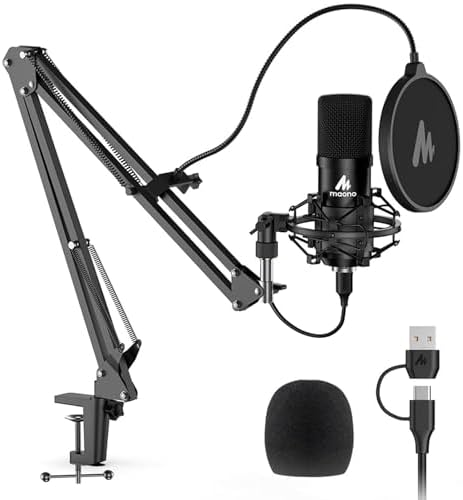
The AU-A04 has become one of the more popular entry points into USB condenser microphones, and reviewers consistently point to the same reasons: an all-metal, minimalist matte-black body that looks and feels more premium than its price suggests, and a 192kHz/24-bit recording spec that outpaces most of the other mics in this comparison on paper. The kit ships complete - scissor arm stand, metal shock mount, pop filter and cable - so there is nothing else to buy before recording. Reviewers do note the tradeoff for that clean, buttonless design: there is no onboard mute, gain or volume control, so all adjustments happen in software, and testers say it suits podcasting, streaming and voiceover better than serious music production.
ConnectivityUSB-A and USB-C
Polar patternCardioid (unidirectional)
Frequency response20Hz - 20kHz
Sample rate / bit depth192kHz / 24-bit
Onboard controlsNone - minimalist plug-and-play design (no mute or gain dial)
Item weight350 grams (mic only)
Warranty1 year
Pros
All-metal build with a clean, minimalist matte-black finish
192kHz/24-bit recording, a meaningfully higher spec than most mics in this comparison
Complete kit included - scissor arm stand, shock mount, pop filter and cable
True plug-and-play with no drivers needed
One of the lowest prices in this comparison
Cons
No onboard mute button, gain dial or volume control - the minimalist design cuts hardware controls
Cardioid-only pattern - no multi-pattern option for co-hosted recording
Reviewers note it suits podcasting and voiceover better than professional music recording
Who is it for?
Budget-conscious streamers and podcasters who want a clean-looking all-metal condenser mic and a complete kit in one box.
Who is it not for?
Anyone who wants onboard mute/gain controls or plans to record co-hosted shows needing multiple polar patterns.
The stars you see are the Graded Picks cumulative score, not a single retailer's average. It blends verified buyer reviews aggregated across major retailers, assessments from professional reviewers and expert testers, and how prominently the product features in leading category lineups.
Advertising Disclosure
Our rankings are compiled by aggregating several independent signals, including verified buyer feedback, how popular a product currently is with shoppers, and evaluations published by professional reviewers. Editorial opinions are our own.
Please note that we participate in affiliate marketing programs. When you purchase through links on our site, we may earn a commission. As an Amazon Associate we earn from qualifying purchases. This comes at no additional cost to you and helps support the resources required to provide valuable content.