A good nail lamp is what turns gel polish from a gooey coat into a hard, glossy finish that lasts for weeks. But shoppers tend to chase the biggest wattage number on the box, and that number tells you surprisingly little about whether your polish will actually set. We analyzed thousands of verified buyer reviews, recent sales data, and expert evaluations to find seven UV nail lamps that cure evenly, fit your whole hand, and match the gels people really use.
Every product we compared, in ranked order. Tap through to Amazon to check today's price, or jump to the full review below.
1
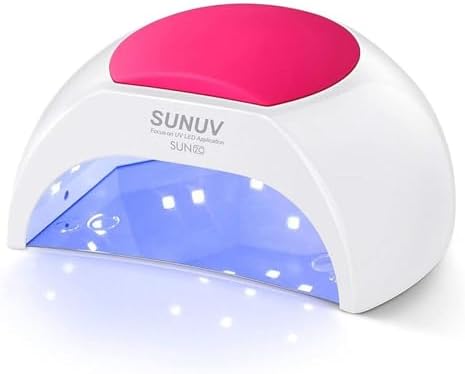
SUNUV SUN2C
Best Overall
SUNUV SUN2C 48W UV LED Nail Lamp
5.0
48W · 30 LEDs · Removable mirrored base
Our Best Overall pick: a well-established 48W dual-spectrum lamp with 30 LEDs, four timer presets and a removable mirrored base that speeds up curing without shortening bulb life.
Our pick for home salon setups: a compact 48W lamp with 30 LEDs and three simple timer settings that independent reviewers describe as rivaling salon equipment for DIY use.
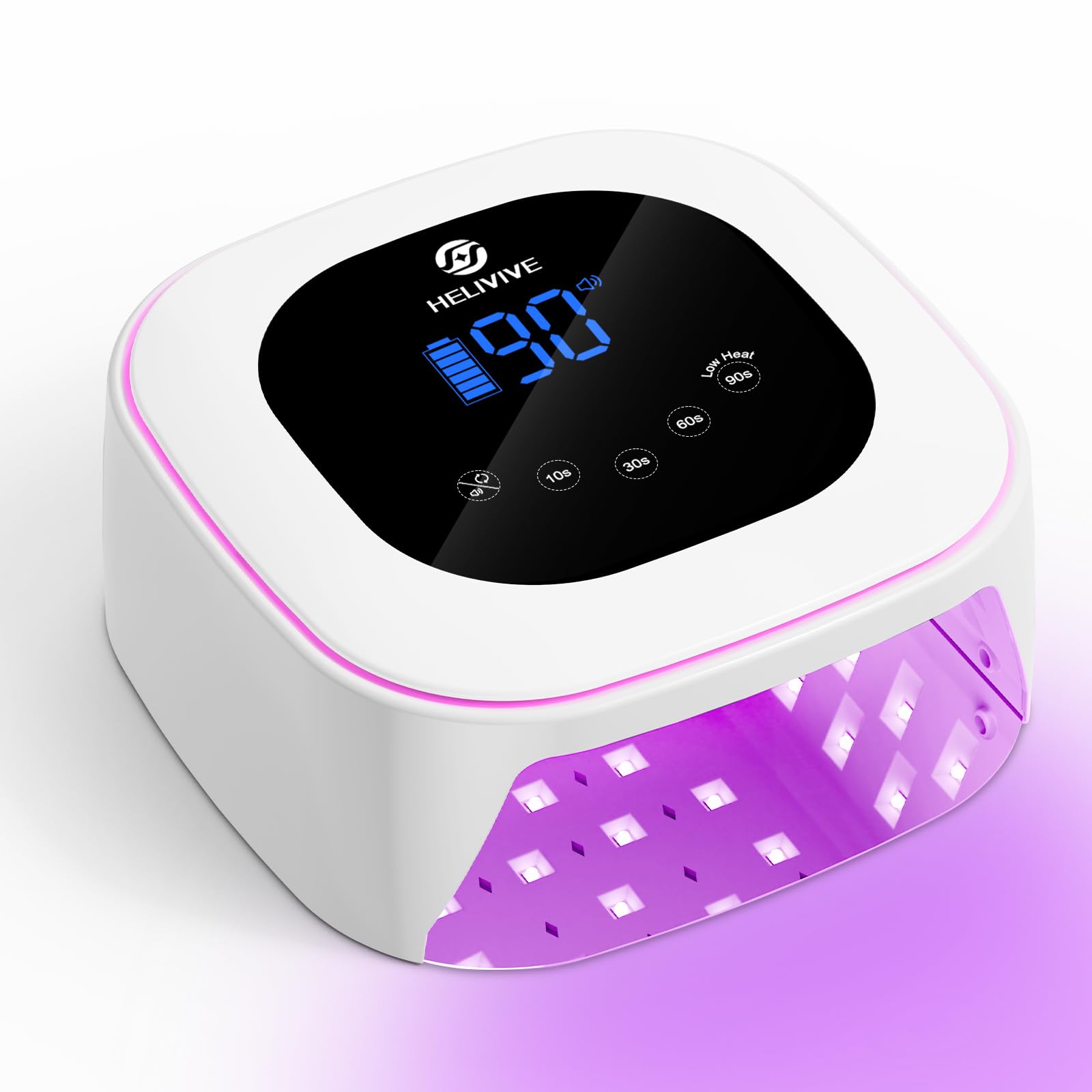
HELIVIVE 80W Cordless Rechargeable UV LED Nail Lamp
4.8
80W cordless · 36 LEDs · Up to 7hrs battery
A cordless, rechargeable 80W lamp with a built-in atmosphere light and mirrored base, aimed at nail-art practice and training rather than heavy daily salon use.
A high-power 180W lamp with 42 LED beads and an LCD display, built for buyers who regularly cure thick or multiple layers of gel and want salon-grade speed at home.
A cordless, rechargeable 54W lamp with 36 dual-spectrum LEDs and a large touch display, positioned as a gentler, all-directional curing option for sensitive eyes.
A 48W, 36-LED salon workhorse with an LCD countdown display, widely used by professional nail techs and praised as an accessible upgrade from a mini lamp.
Understand the category before you buy - what the science actually says, and which specs matter.
Every lamp here promises fast, salon-quality curing, but the way they deliver that light, and whether it matches your polish, matters more than the watts printed on the label. Here is how these lamps actually work, the one compatibility catch that trips up most first-time buyers, and the features worth comparing.
What does a UV nail lamp actually do?
Gel polish stays liquid until light of the right wavelength hits it and triggers the chemical reaction that hardens it. A nail lamp floods your nails with that light so each coat cures in seconds instead of air-drying for hours. In practice, a session looks like this:
You paint on a thin gel layer, then place your hand under the lamp.
The lamp runs a timed burst, often 5 to 120 seconds depending on the preset and the gel.
The light sets that layer, and you repeat for base, color, and top coat.
Here is the part almost no label spells out: nearly every modern "UV" nail lamp is actually an LED lamp. LED units cure faster, run cooler, and never burn out the way the old fluorescent UV bulbs did, so you skip the bulb-replacement chore entirely. Most lamps in this lineup, including the SUNUV SUN2C and the Cordless 80W, use dual-spectrum beads rated at 365nm and 405nm to cover a wider range of gels.
Why wavelength beats wattage
This is the thing to understand before you buy. Gel polish only hardens when the lamp emits the specific wavelength its formula is tuned to. Get that wrong and no amount of power fixes it: a mismatched gel and lamp leaves a soft, tacky, undercured surface that peels within days, even under a 180W lamp like the Gugusure.
That is why wattage is the wrong headline spec. Watts describe how much electricity the lamp draws, not whether the light suits your polish. The numbers here run from the 10W Makartt mini all the way to the 180W Gugusure, and a higher figure mostly means the lamp can drive more beads or shorten a cure, not that it cures anything the light does not match in the first place.
Two things actually decide a clean cure. The first is wavelength compatibility, which is why the dual-spectrum 365nm and 405nm lamps in this lineup are the safe default: they span the range most gel brands are formulated for. The second is having enough beads, placed evenly, so light reaches every nail without shadowed gaps. Bead counts here range from 10 on the Makartt up to 42 on the Gugusure. A well-arranged 36-bead lamp, like the SUNUV 36 LED or the HELIVIVE 80W Cordless, will often cure more evenly than a higher-wattage lamp with thin coverage.
Which specs actually matter?
Once you know light beats power, a few features decide which lamp fits you:
Wavelength: Favor a dual-spectrum lamp rated 365nm and 405nm, like the SUNUV SUN2C, so it works with the widest range of gel brands rather than one narrow formula.
LED bead count and layout: More beads spread across the top and sides mean fewer shadowed spots. This lineup spans 10 to 42 beads; even coverage matters more than the raw count.
Fit for your whole hand: A chamber that lets your hand lie flat cures the thumb and pinky as well as the middle fingers. Larger openings like the 80W Cordless and the Gugusure 180W models suit bigger hands and full-hand curing.
Timer settings: Presets let you match the burst to the gel and coat. Options here range from a simple 5s, 30s, and 60s on the SUNUV SUNone to 10s, 30s, 60s, and 99s on the SUNUV 36 LED.
Auto sensor: A motion sensor starts the cure the moment your hand slides in and stops when you pull it out. The Gugusure, Makartt, and BOLASEN P30 Pro all include one for hands-free use.
Pedicure fit and base: A removable or mirrored base, like the ones on the SUNUV models, lets you slide the lamp over a foot for toes as well as fingers.
Power source: Corded lamps give steady output; rechargeable models like the Cordless 80W and Makartt mini let you cure away from an outlet.
How we grade products
Graded Picks rankings are aggregated from several independent signals: verified buyer ratings and the size of the review base for credibility, recent monthly purchase volume for relevance, assessments from trusted beauty and nail-care publications, and how each product places in leading category lineups. For UV nail lamps we weigh:
Wavelength range and gel compatibility
Bead count and evenness of coverage
Curing speed and timer flexibility
Hand and foot fit
Auto-sensor and ease of use
Build quality, base design, and warranty
Overall value for the price
Skin-safety note: These lamps emit UV light, and repeated exposure adds up on the skin of your hands over years of use. To limit it, apply a broad-spectrum sunscreen to the backs of your hands before a session, or wear fingerless UV-protective gloves that leave only the nails exposed. Keep sessions to the time the gel needs and avoid looking directly into the light.
In-Depth Reviews
Everything we learned from buyer reviews and expert testing, product by product.
SUNUV SUN2C
Best Overall
1. SUNUV SUN2C 48W UV LED Nail Lamp
5.0
SUNUV's SUN2C pairs 30 dual-spectrum (365nm + 405nm) LEDs with a 48W output rated for up to 50,000 hours of bulb life, curing most gel layers in well under a minute on the standard 60-second setting. Independent testing and long-running brand coverage consistently describe curing as even across the full hand, without the bubbling or tacky spots that under-powered lamps can leave behind, and the four timer presets (10s/30s/60s/90s) plus auto on/off sensor make it simple to dial in per polish type. A removable mirrored base doubles the light intensity and pops off cleanly for pedicures, and a built-in power-reduction mode kicks in after 20 minutes of continuous use to keep the lamp from overheating during back-to-back sessions. A minority of buyers have reported cosmetic marks on arrival or slow customer-service responses, though the curing performance itself draws little criticism.
Power output48W
LED beads30 dual-spectrum LEDs (365nm + 405nm)
Power sourceCorded electric
Timer settings10s / 30s / 60s / 90s (4 presets)
Base designRemovable mirrored base for pedicures
Dimensions7.87" x 7.87" x 3.54"
Warranty12 months
Pros
Even, fast curing across the full hand with 30 dual-spectrum LEDs
50,000-hour rated bulb life with minimal upkeep
Removable mirrored base doubles as a pedicure-ready chamber
Four timer presets plus an auto on/off sensor
Backed by a 12-month manufacturer warranty
Cons
A power-reduction mode limits continuous back-to-back sessions past 20 minutes
A minority of buyers report cosmetic marks on arrival
No cordless option - corded electric only
Who is it for?
Buyers who want the most established, best-covered lamp in this comparison and don't need a cordless design.
Who is it not for?
Anyone who specifically needs a battery-powered lamp for use away from an outlet.
SUNUV's SUNone trims down to three curing settings (5s, 30s, 60s) built around 30 dual-spectrum LEDs at 48W, fully curing most gels in 60 seconds or less with an additional low-heat mode aimed at reducing the heat spikes that thicker builder gels can trigger. Independent reviewers describe it as an outstanding choice for DIY nail enthusiasts, delivering fast, consistent curing that holds up against dedicated salon equipment despite its smaller footprint. The magnetic mirrored base detaches for pedicures and doubles light reflection back onto the nail, and the compact size makes it easy to keep on a bathroom counter or vanity rather than a dedicated nail station. The tradeoff for the simplified control scheme is fewer timer options than lamps built for professional or highly varied gel-curing needs.
Power output48W
LED beads30 dual-spectrum LEDs (365nm + 405nm)
Power sourceCorded electric
Timer settings5s / 30s / 60s (3 presets)
Base designMagnetic mirrored base, detaches for pedicures
Dimensions5.9" x 7.5" x 3.5"
Warranty12 months
Pros
Fast, even curing in 60 seconds or less on most gels
Compact footprint suited to a home vanity or bathroom counter
Low-heat mode reduces heat spikes with thicker builder gels
Detachable magnetic mirrored base for pedicures
Backed by a 12-month manufacturer warranty
Cons
Only three timer settings versus four on other SUNUV models
Corded electric only, no cordless option
Smaller curing chamber than higher-wattage salon-style lamps
Who is it for?
Home users who want a compact, easy-to-use lamp for regular DIY manicures without a large curing chamber.
Who is it not for?
Nail techs or heavy users who want maximum timer flexibility or a bigger curing chamber for professional work.
3. HELIVIVE 80W Cordless Rechargeable UV LED Nail Lamp
4.8
HELIVIVE's 80W cordless lamp runs on a built-in rechargeable battery good for up to seven hours of curing time after roughly three hours on the charger, with 36 dual-spectrum LEDs and four timer settings including a 90-second low-heat mode for thicker gels. It's explicitly positioned for training and nail-art practice rather than a full-time salon replacement, with a decorative atmosphere light and a removable mirrored base that boosts light reflection and simplifies cleanup. The USB reverse-charging port doubles as a way to top off a phone or nail drill in a pinch, a convenience feature independent listings highlight for this model. As a newer, smaller brand, it has far less independent, dedicated review coverage than the more established names in this comparison, and buyer feedback is comparatively thin.
Gugusure's 180W lamp packs 42 LED beads into a wide hand chamber, using a high-intensity, narrow-spectrum output that the brand and independent coverage both credit with cutting through hard gels and multiple polish layers faster than lower-wattage lamps. Four timer presets ranging from 30 to 120 seconds are selectable from a large LCD display, and a smart infrared sensor starts and stops curing automatically as hands move in and out of the chamber, with built-in temperature protection to keep the light from feeling too hot on extended sessions. It's corded rather than rechargeable, which trades portability for consistent full power on every cure, and the wide chamber accommodates all five nails at once. Reviewer sentiment is positive, with several describing it as performing like a professional salon unit without the matching price tag.
Power output180W
LED beads42 LED beads
Power sourceCorded electric
Timer settings30s-120s (4 presets)
Base designFixed tabletop chamber with LCD display
Dimensions9" D x 8" W x 4" H
Warranty2 years
Pros
180W output and 42 LED beads handle hard gels and thick layers well
Four timer presets (30-120s) selectable from a large LCD display
Automatic infrared sensor with built-in temperature protection
Wide chamber cures all five nails at once
Backed by a 2-year manufacturer warranty
Cons
Corded electric only - not portable like the rechargeable options here
Higher wattage runs warmer than lower-powered lamps during long sessions
Bulkier footprint than compact or gooseneck-style lamps
Who is it for?
Buyers who regularly cure thick gels or multiple layers and want salon-level curing speed at home.
Who is it not for?
Anyone who wants a portable, cordless lamp or the smallest possible footprint.
Lavinda's 54W cordless lamp arranges 36 dual-spectrum lamp beads to shine UV light from multiple directions rather than straight down, which the brand and independent reviewers describe as a softer, less glaring light that's gentler on the eyes without tanning the surrounding skin. A large full-touch LCD display controls four timer settings, including a 90-second low-heat mode, and an infrared sensor handles on/off automatically as hands enter and leave the chamber. A hands-on review from Prizm Nail Hub rated the curing itself strong, with no tacky spots across a full set at the standard 60-second setting and even results on thicker builder gel using the 90-second cycle, but found real-world battery life fell short of the brand's multi-hour claim, closer to two and a half hours of continuous use per charge - enough for one full set, maybe two quick fills, before it needs to recharge. The magnetic detachable base simplifies cleanup and can be removed to accommodate toes for a pedicure.
SUNUV's SUN4 steps up to 36 dual-spectrum LEDs at 48W with four timer presets (10s/30s/60s/99s), an LCD countdown display and an infrared motion sensor, and independent industry coverage notes it's widely used in professional salons as well as at home. Testers describe it curing gel polish reliably in about half the time of older-style UV lamps, making it a genuinely smart pick for anyone building a first nail setup or upgrading from a smaller mini lamp. Built-in over-temperature protection keeps extended sessions from overheating, and the removable base simplifies both cleaning and pedicure use. As with the SUN2C, it's corded rather than battery-powered, trading portability for consistent full-power curing on every session.
Power output48W
LED beads36 dual-spectrum LEDs
Power sourceCorded electric
Timer settings10s / 30s / 60s / 99s (4 presets)
Base designRemovable base with LCD countdown display
Dimensions7.87" x 4" x 8.38"
Warranty12 months
Pros
36 dual-spectrum LEDs and 48W output favored by professional nail techs
LCD countdown display with four timer presets including a 99-second setting
Cures gel polish in about half the time of older-style UV lamps
Built-in over-temperature protection for extended sessions
Backed by a 12-month manufacturer warranty
Cons
Corded electric only - no cordless option
Larger footprint than the compact or gooseneck lamps in this comparison
No decorative or low-heat-specific mode beyond the standard presets
Who is it for?
Buyers upgrading from a mini lamp or building a first serious home nail setup who want salon-grade, corded reliability.
Who is it not for?
Anyone who wants a cordless lamp or the smallest possible footprint.
7. Makartt Mini Gooseneck Rechargeable UV LED Nail Lamp
4.6
Makartt's mini gooseneck lamp trades a full hand chamber for a flexible, 360-degree adjustable neck that positions 10 dual-spectrum LEDs directly over one or two nails at a time, powered by a rechargeable battery rated for eight to ten full manicures per charge. Independent reviewers praised the design for its portability and reliable curing performance, with several noting it holds up surprisingly well against larger, pricier lamps despite its small size and price point. An auto infrared sensor and touch-based timer selection keep operation simple, and the LCD screen shows both battery level and remaining cure time. Because it cures a smaller area than a full hand-chamber lamp, sessions take longer per full manicure, and the shorter 90-day manufacturer warranty is the thinnest coverage in this comparison.
Power output10W
LED beads10 dual-spectrum LEDs
Power sourceRechargeable battery (USB)
Timer settings4 presets with auto-sensor activation
Base designFlexible 360-degree gooseneck, tabletop mount
Dimensions12.8" gooseneck; 1.18" x 0.79" x 0.79" lamp head
Warranty90 days
Pros
Lowest price in this comparison at a strong curing performance
Flexible 360-degree gooseneck for precise, one-nail-at-a-time curing
Rechargeable battery rated for 8-10 full manicures per charge
Auto infrared sensor with touch timer controls and an LCD battery readout
Compact enough to travel or store easily
Cons
Cures one or two nails at a time rather than a full hand at once
Shortest manufacturer warranty in this comparison at 90 days
Smaller 10-LED array takes longer for a full 10-nail manicure than a chamber lamp
Who is it for?
Budget-focused or space-limited buyers who want a portable, flexible lamp for nail art or one-hand-at-a-time curing.
Who is it not for?
Anyone who wants to cure a full hand of nails at once or needs the longest possible warranty coverage.
The stars you see are the Graded Picks cumulative score, not a single retailer's average. It blends verified buyer reviews aggregated across major retailers, assessments from professional reviewers and expert testers, and how prominently the product features in leading category lineups.
Advertising Disclosure
Our rankings are compiled by aggregating several independent signals, including verified buyer feedback, how popular a product currently is with shoppers, and evaluations published by professional reviewers. Editorial opinions are our own.
Please note that we participate in affiliate marketing programs. When you purchase through links on our site, we may earn a commission. As an Amazon Associate we earn from qualifying purchases. This comes at no additional cost to you and helps support the resources required to provide valuable content.